
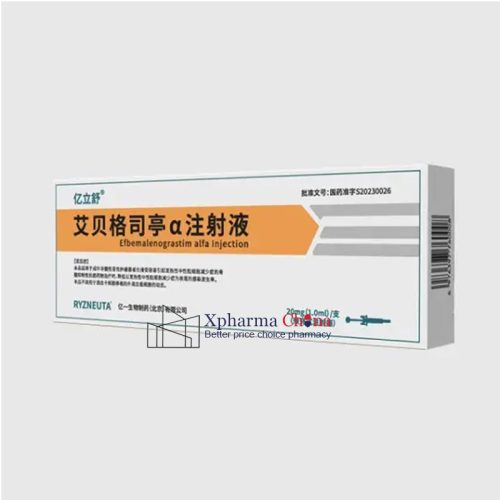
1. Indications and Usage
Chemotherapy-Induced Neutropenia:
Indicated for the reduction of the incidence of infection, as manifested by febrile neutropenia, in adult patients with non-myeloid malignancies receiving myelosuppressive anti-cancer drugs associated with a significant incidence of febrile neutropenia.
Contraindication for Mobilization:
It is NOT indicated for the mobilization of peripheral blood progenitor cells into the peripheral blood for hematopoietic stem cell transplantation.
2. Dosage and Administration
Route of Administration:
Subcutaneous Injection ONLY. Do not administer intravenously.
Recommended Dosage:
Dose: 20 mg administered subcutaneously once per chemotherapy cycle.
Timing: Administer at least 24 hours after the completion of cytotoxic chemotherapy.
Preparation:
Allow the pre-filled syringe to reach room temperature for 30 minutes before use. Do not shake.
3. Mechanism of Action
Fc Fusion Protein Technology:
Efbemalenograstim alfa is a recombinant fusion protein consisting of a dimer of human G-CSF and the Fc fragment of human IgG2.
Neutrophil Stimulation:
It binds to G-CSF receptors on hematopoietic cells, stimulating the proliferation, differentiation, and activation of neutrophils. The Fc fusion extends the plasma half-life, allowing for once-per-cycle dosing.
4. Safety and Warnings
Splenic Rupture:
Rare cases of splenic rupture have been reported. Evaluate spleen size if left upper abdominal pain is reported.
Acute Respiratory Distress Syndrome (ARDS):
Monitor patients for fever and lung infiltrates. Discontinue use if ARDS is suspected.
Severe Allergic Reactions:
Hypersensitivity reactions, including anaphylaxis, can occur.
Latex Sensitivity:
The needle cap of the pre-filled syringe contains natural rubber (latex). Do not use in patients with latex allergy.
5. Adverse Reactions
Based on clinical trial data of 727 patients, the following adverse reactions were observed:
Most Common Adverse Reactions (≥ 5%):
Bone Pain: 11.1%
Back Pain: 5.0%
General Adverse Reactions (by System Organ Class):
Musculoskeletal and Connective Tissue Disorders: Very Common (≥ 1/10): Bone pain, Back pain. Common (≥ 1/100 to < 1/10): Arthralgia, Limb pain. Rare (≥ 1/10,000 to < 1/1,000): Myalgia, Osteoarthrosis, Musculoskeletal discomfort, Neck pain.
Gastrointestinal Disorders: Common: Nausea, Diarrhea, Vomiting. Rare: Stomatitis, Dry mouth, Dyspepsia, Abdominal pain, Dysphagia.
Skin and Subcutaneous Tissue Disorders: Common: Alopecia, Skin reactions (e.g., rash, pruritus). Rare: Angioedema, Cold sweat, Night sweats, Onychoclasis.
General Disorders and Administration Site Conditions: Common: Malaise, Asthenia, Pyrexia. Rare: Peripheral edema, Injection site reactions (e.g., pain, swelling), Chills, Thirst.
Blood and Lymphatic System Disorders: Uncommon: Leukocytosis. Rare: Leukopenia, Neutropenia, Thrombocytopenia, Anemia, Splenomegaly.
Nervous System Disorders: Common: Headache. Rare: Dizziness, Dysgeusia, Muscle spasms, Peripheral neuropathy, Somnolence.
Respiratory, Thoracic, and Mediastinal Disorders: Rare: Epistaxis, Oropharyngeal pain, Cough, Dyspnea, Nasal dryness.
Metabolism and Nutrition Disorders: Rare: Hyperglycemia, Anorexia.
Vascular Disorders: Rare: Vasculitis, Hot flashes.
Infections and Infestations: Rare: Herpes virus infection.
Serious Adverse Reactions:
Splenic rupture, Acute Respiratory Distress Syndrome (ARDS), Severe hypersensitivity reactions (including anaphylaxis), Sickle cell crisis, Glomerulonephritis, Leukocytosis, Capillary leak syndrome, Potential stimulation of malignant tumor growth, Aortitis.
6. Drug Interactions
Myelosuppressive Chemotherapy Agents:
Avoid administration of Efbemalenograstim alfa within 24 hours following cytotoxic chemotherapy to prevent the stimulation of rapidly dividing myeloid cells which may be sensitive to chemotherapy toxicity.
Lithium:
Lithium may potentiate the release of neutrophils. Concomitant use should be monitored closely.
7. Pharmaceutical Information
Chemical Composition:
Active Ingredient: Recombinant fusion protein consisting of a dimer of human Granulocyte-Colony Stimulating Factor (G-CSF) and the Fc fragment of human Immunoglobulin G2 (IgG2) [expressed and purified from Chinese Hamster Ovary (CHO) cells].
Molecular Weight: Approximately 93.4 kDa.
Excipients: Glacial acetic acid, Sodium acetate, Sorbitol, Polysorbate 20, Disodium edetate.
Storage:
Store in a refrigerator at 2-8°C. Do not freeze or shake.
Reviews
There are no reviews yet.