
1. Indications and Usage
Unresectable or Metastatic Melanoma:
Indicated in combination with dabrafenib for the treatment of patients with unresectable or metastatic melanoma with BRAF V600E or V600K mutation.
Metastatic Non-Small Cell Lung Cancer (NSCLC):
Indicated in combination with dabrafenib for the treatment of patients with metastatic NSCLC with BRAF V600E mutation.
Adjuvant Treatment of Melanoma:
Indicated in combination with dabrafenib for the adjuvant treatment of patients with melanoma with BRAF V600E or V600K mutation with involvement of lymph nodes following complete resection.
2. Dosage and Administration
Route of Administration:
For Oral Use ONLY.
Recommended Dosage:
Dose: 2 mg once daily.
Combination: When used in combination with dabrafenib, trametinib and dabrafenib should be taken at the same time.
Timing:
Administer at least 1 hour before or 2 hours after a meal.
Missed Dose:
If a dose is missed, it should be taken as soon as possible unless it is less than 12 hours before the next scheduled dose. In that case, skip the missed dose.
3. Mechanism of Action
MEK Inhibition:
Trametinib is a reversible inhibitor of mitogen-activated protein kinase (MEK)1 and MEK2.
Pathway Blockade:
MEK proteins are upstream regulators of the ERK signaling pathway, which promotes cell proliferation. Trametinib inhibits BRAF V600 mutant-positive tumor cell growth.
Synergistic Effect:
Trametinib and dabrafenib target two different kinases in the MAPK pathway. Their combination leads to greater inhibition of tumor cell growth compared to either agent alone and delays the development of drug resistance.
4. Safety and Warnings
Cardiac Dysfunction (Cardiomyopathy):
Reductions in Left Ventricular Ejection Fraction (LVEF) can occur. Evaluate LVEF prior to initiation and periodically during treatment.
Ocular Toxicity:
Retinopathy, including Retinal Vein Occlusion (RVO) and Retinal Pigment Epithelium Detachment (RPED), can occur. Regular ophthalmologic examinations are recommended.
Pulmonary Toxicity:
Interstitial Lung Disease (ILD)/Pneumonitis has been reported. Discontinue trametinib if confirmed.
Severe Skin Toxicity:
Monitor for cutaneous toxicities.
5. Adverse Reactions
Most Common:
General: Rash, diarrhea, and lymphedema.
With Dabrafenib: Pyrexia (fever), chills, fatigue, nausea, vomiting, cough, headache, arthralgia, and night sweats.
6. Drug Interactions
Metabolic Pathway:
Trametinib is not metabolized by CYP enzymes but is a substrate of P-gp.
CYP3A4/2C8 Substrates:
When used in combination with dabrafenib (a CYP3A4 inducer), trametinib may decrease the exposure of other CYP3A4 or CYP2C8 substrates (e.g., warfarin, cyclosporine), potentially leading to therapeutic failure of the co-administered drug.
7. Pharmaceutical Information
Chemical Composition:
Active Ingredient: Trametinib Dimethyl Sulfoxide.
Appearance:
2 mg: Pink, round, film-coated tablets debossed with “GS HMJ”.
0.5 mg: Yellow, oval, film-coated tablets debossed with “GS TFC”.
Storage: Store at 20°C–25°C (68°F–77°F).
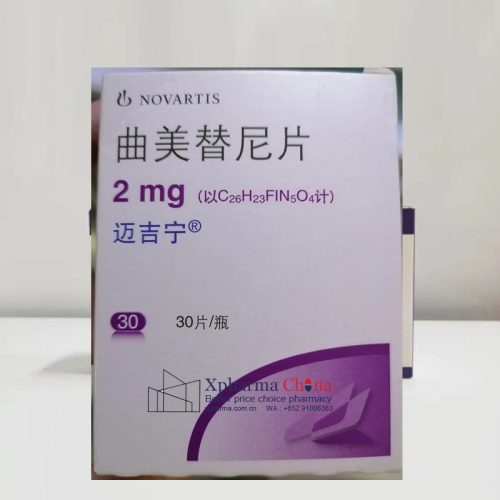
Mekinist Trametinib Tablets
Brand Name: 迈吉宁®(Mekinist®)
Generic Name: Trametinib
Strength: 2mg per tablet, 30 tablets per bottle
Manufacturer: Novartis Pharma Stein AG
Marketing Authorization Holder: Novartis Pharmaceuticals (China) Co., Ltd.
Approval Date in China: March 06, 2019
Registration Number: HJ20190009
Storage: Store below 25℃, sealed and protected from light; keep out of reach of children
Price&Cost:Contact Us now for the best price of Trametinib (Mekinist)
Only logged in customers who have purchased this product may leave a review.

Reviews
There are no reviews yet.