1. Indications and Usage
Acute Pancreatitis:
Treatment of chronic pancreatitis and its exacerbations (in Japan; approved as a disease modifier improving abdominal symptoms and organ dysfunction).
Digestive Bleeding:
Treatment of bleeding from gastric or duodenal ulcers.
Disseminated Intravascular Coagulation (DIC):
Treatment of DIC associated with intra-abdominal infections, obstetric/gynecological emergencies, or trauma.
Hemodialysis:
Anticoagulation during continuous hemodialysis.
2. Dosage and Administration
Route of Administration:
For Intravenous Injection (IV) or Intravenous Infusion (IV/Infusion) ONLY.
Recommended Dosage:
Adults: 20 mg to 40 mg per day (typically divided into 10 mg to 20 mg given twice daily).
Elderly: Start with a lower dose (e.g., 10 mg to 20 mg per day) and titrate carefully.
Critical Administration Instructions:
Injection: Administer slowly (over approximately 1 to 2 minutes).
Infusion: Dilute in appropriate IV fluids. Infusion duration should generally be at least 30 minutes.
Preparation: Reconstitute and dilute with appropriate saline or glucose solutions.
3. Mechanism of Action
Protease Inhibition:
Nafamostat mesilate selectively and reversibly inhibits serine proteases (e.g., trypsin, chymotrypsin, plasmin, kallikrein, factor XIIa).
Therapeutic Effects:
Pancreatitis: Inhibits pancreatic proteases, reducing organ dysfunction and inflammatory responses.
DIC: Inhibits plasmin and thrombin, suppressing fibrinolysis and thrombus formation.
Bleeding: Inhibits plasmin and kallikrein, reducing gastric mucosal damage and bleeding.
4. Safety and Warnings
Severe Hepatic Dysfunction:
Contraindicated in patients with severe liver dysfunction (e.g., decompensated cirrhosis), as the drug is primarily metabolized by the liver.
Hypersensitivity:
Anaphylactic reactions (including bronchospasm, facial edema) may occur. Discontinue immediately if signs of allergy appear.
Blood Count Abnormalities:
May cause thrombocytopenia, leukopenia, or elevated liver enzymes (AST, ALT, ALP, LDH, bilirubin).
Bleeding Risk:
While an anticoagulant, high doses or prolonged infusion may increase bleeding tendencies.
5. Adverse Reactions and Clinical Research
Most Common Adverse Reactions:
Elevated liver enzymes, thrombocytopenia, leukopenia, nausea, vomiting, anorexia, rash, and pruritus.
Clinical Research Highlights:
Clinical studies have demonstrated efficacy in improving organ dysfunction in acute pancreatitis and controlling bleeding in gastric ulcers, with a generally favorable safety profile compared to conventional anticoagulants.
6. Drug Interactions
Anticoagulants/Antiplatelets:
Concomitant use with heparin, warfarin, or aspirin may increase the risk of bleeding.
Other Protease Inhibitors:
Additive effects may occur when used with other serine protease inhibitors.
7. Pharmaceutical Information
Chemical Composition:
Active Ingredient: Nafamostat Mesilate.
Appearance: White to off-white lyophilized cake or powder.
Packaging: Single-use vial (10 mg or 20 mg).
Storage: Store at room temperature (15-30°C). Do not freeze.
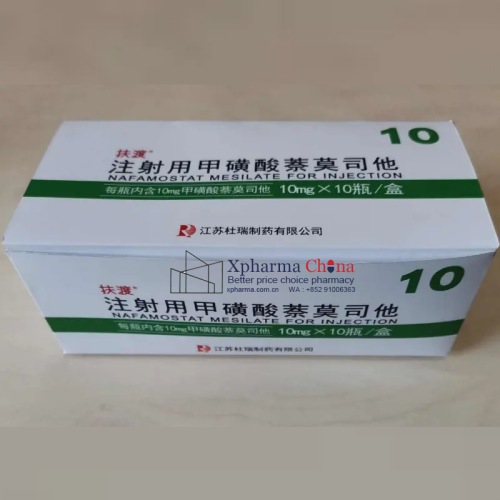
Fudu Nafamostat Mesilate for Injection
Brand Name:扶渡 ®(Fudu®)
Generic Name: Nafamostat Mesilate
Strength: 10 mg per vial, 10 vials per box
Manufacturer: Jiangsu Durui Pharmaceutical Co., Ltd.
Marketing Authorization Holder: Jiangsu Durui Pharmaceutical Co., Ltd.
Approval Date in China: September 30, 2020
Registration Number:国药准字 H20203508
Storage: Store hermetically sealed, protected from light, below 30°C. Avoid high temperature and direct sunlight. Refer to the full package insert for storage after reconstitution.
Price&Cost:Contact Us now for the best price of Nafamostat Mesilate(Fudu)
Only logged in customers who have purchased this product may leave a review.
Reviews
There are no reviews yet.