1. Indications and Usage
Acute Cerebral Infarction: Treatment of acute cerebral infarction to improve neurological symptoms, activities of daily living (ADL), and functional disability.
Amyotrophic Lateral Sclerosis (ALS): Slows the progression of functional disability in adult patients with ALS.
2. Dosage and Administration
Route of Administration: For Intravenous (IV) Infusion ONLY.
Recommended Dosage (Cerebral Infarction): 30 mg administered twice daily. Treatment should ideally be initiated within 24 hours of stroke onset.
Recommended Dosage (ALS): 60 mg administered once daily.
Critical Administration Instructions:
Infusion Time: Typically infused over 30 to 60 minutes.
Compatibility: This is a ready-to-use formulation pre-diluted in saline. Do not add other drugs to the infusion bag or bottle.
Incompatibility: Strictly avoid mixing with antiepileptic drugs (e.g., diazepam, phenytoin sodium), spironolactone, high-energy infusions, or amino acid preparations.
3. Mechanism of Action
Free Radical Scavenging: Edaravone is a potent free radical scavenger that inhibits lipid peroxidation.
Neuroprotection: It suppresses oxidative damage to vascular endothelial and nerve cells following ischemia or neurodegeneration, thereby protecting neuronal integrity and function.
4. Safety and Warnings
Renal Impairment: Contraindicated in patients with severe renal impairment due to the risk of exacerbating renal failure. Use with caution in patients with mild-to-moderate renal impairment, dehydration, or those aged 80 years and older.
Hepatic Impairment: Use with caution in patients with hepatic dysfunction due to the risk of exacerbating liver injury.
Cardiac and Elderly Patients: Use with caution in patients with cardiac disease and the elderly, as they are at higher risk for adverse events.
5. Adverse Reactions and Clinical Research
Most Common Adverse Reactions: Liver function abnormalities (elevated AST, ALT, LDH), increased serum creatinine, and increased blood urea nitrogen (BUN).
Other Common Adverse Reactions: Anorexia, polyuria, hypersensitivity reactions (rash, itching, erythema), and thrombocytopenia.
Clinical Research Highlights: Phase 3 clinical trials demonstrated significant improvement in the ALS Functional Rating Scale (ALS-FRS) scores and neurological deficits compared to placebo.
6. Drug Interactions
Antiepileptic Drugs and Spironolactone: Concomitant use may cause turbidity and is strictly prohibited.
High-Energy Infusions and Amino Acids: Concomitant use may decrease edaravone concentration and is strictly prohibited.
Nephrotoxic Antibiotics: Concomitant use with antibiotics (e.g., cephalosporins, penicillins) may increase the risk of renal impairment; renal function should be monitored closely.
7. Pharmaceutical Information
Chemical Composition: Active Ingredients: Edaravone and Sodium Chloride. Excipients: Sodium metabisulfite, hydrochloric acid, sodium hydroxide, water for injection.
Appearance: Clear, colorless to slightly yellowish liquid.
Packaging: 100 mL ready-to-use bottles or soft bags (containing 30 mg edaravone).
Storage: Store below 30°C, protected from light.
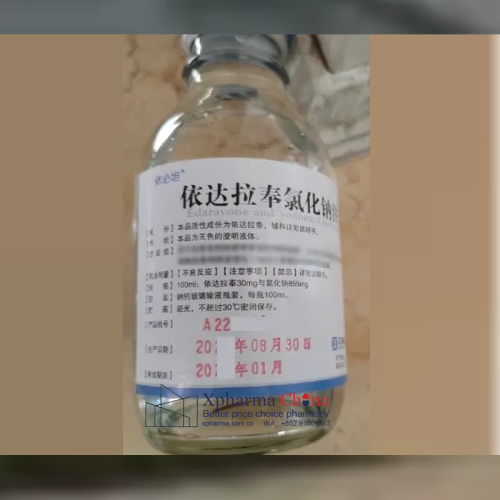
Yibitan Edaravone and Sodium Chloride Injection
Brand Name:依必坦 ®(Yibitan®)
Generic Name: Edaravone and Sodium Chloride
Strength: Each 100 mL bottle contains 30 mg Edaravone and 855 mg Sodium Chloride, 1 bottle per pack
Manufacturer: Jiangsu Chia Tai Fenghai Pharmaceutical Co., Ltd.
Marketing Authorization Holder: Jiangsu Chia Tai Fenghai Pharmaceutical Co., Ltd.
Approval Date in China: December 30, 2019
Registration Number: 国药准字H20193434
Storage: Store tightly sealed, protected from light at temperature not exceeding 30°C. Refer to the full package insert for detailed storage specifications.
Price&Cost:Contact Us now for the best price of Edaravone and Sodium Chloride(Yibitan)
Only logged in customers who have purchased this product may leave a review.
Reviews
There are no reviews yet.