
1. Indications and Usage
Chronic Lymphocytic Leukemia (CLL) / Small Lymphocytic Lymphoma (SLL): Treatment of adult patients with CLL or SLL.
Mantle Cell Lymphoma (MCL): Treatment of adult patients with MCL who have received at least one prior therapy.
Waldenström’s Macroglobulinemia (WM): Treatment of adult patients with WM.
Other Indications: Includes marginal zone lymphoma (MZL), diffuse large B-cell lymphoma (DLBCL), and chronic graft-versus-host disease (cGvHD).
2. Dosage and Administration
Route of Administration: Oral administration ONLY. Capsules must be swallowed whole; do not open, break, or chew.
Recommended Dosage:
CLL/SLL and WM: 420 mg once daily until disease progression or unacceptable toxicity.
MCL: 560 mg once daily until disease progression or unacceptable toxicity.
Critical Administration Instructions:
Timing: Take at approximately the same time each day, with or without water or food.
Missed Dose: If a dose is missed, take it as soon as possible on the same day. Resume the regular schedule the next day. Do not take extra doses to make up for the missed one.
Surgery: Discontinue temporarily before elective surgery and resume when hemostasis is achieved.
3. Mechanism of Action
BTK Inhibition: Ibrutinib is a covalent inhibitor of Bruton’s tyrosine kinase (BTK).
Pathway Blockade: It binds to a cysteine residue in the BTK active site, irreversibly blocking the B-cell receptor (BCR) signaling pathway.
Tumor Suppression: This inhibition disrupts the proliferation, migration, and survival of malignant B-cells.
4. Safety and Warnings
Hemorrhage: Increased risk of bleeding (e.g., ecchymosis, hematoma). Contraindicated in patients with active bleeding or those requiring anticoagulation.
Cardiac Toxicity: New onset or worsening of atrial fibrillation, atrial flutter, or other arrhythmias. Monitor cardiac function regularly.
Hypertension: Monitor blood pressure and manage as clinically indicated.
Infection: Increased risk of infections (e.g., pneumonia). Monitor neutrophil and platelet counts.
Second Primary Malignancies: Increased risk of skin cancers and other secondary malignancies.
5. Adverse Reactions and Clinical Research
Most Common Adverse Reactions: Diarrhea, fatigue, musculoskeletal pain, nausea, rash, neutropenia, thrombocytopenia, anemia, and upper respiratory tract infections.
Clinical Research Highlights: Phase 2 and 3 trials demonstrated significant improvements in overall survival and progression-free survival across CLL, MCL, and WM populations.
6. Drug Interactions
CYP3A Modulators: Ibrutinib is metabolized by CYP3A.
Strong/Moderate Inhibitors (e.g., ketoconazole, clarithromycin): Avoid concomitant use. If unavoidable, reduce ibrutinib dose significantly.
Strong Inducers (e.g., rifampicin, carbamazepine): Avoid concomitant use as they decrease ibrutinib exposure.
P-gp/BCRP Substrates: Avoid narrow therapeutic index P-gp or BCRP substrates (e.g., digoxin) within 6 hours of ibrutinib administration.
Dietary Restrictions: Avoid consumption of grapefruit or Seville oranges during treatment.
7. Pharmaceutical Information
Chemical Composition: Active Ingredient: Ibrutinib.
Appearance: Hard gelatin capsules (140 mg or 420 mg).
Packaging: Blister packaging.
Storage: Store at 20°C to 25°C (68°F to 77°F); protect from moisture.
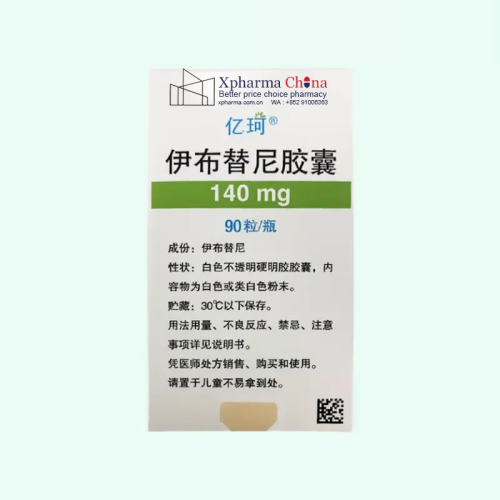
Yike Ibrutinib Capsules
Brand Name:亿珂 ®(Yike®)
Generic Name: Ibrutinib
Strength: 140 mg per capsule, 90 capsules per bottle
Manufacturer: Catalent CTS LLC
Marketing Authorization Holder: Janssen-Cilag International N.V.
Approval Date in China: August 28, 2018
Registration Number: 国药准字H20181066
Storage: Store tightly sealed below 30°C, keep out of reach of children. Refer to the full package insert for detailed storage specifications.
Price&Cost:Contact Us now for the best price of Ibrutinib(Yike)
Only logged in customers who have purchased this product may leave a review.
Reviews
There are no reviews yet.