1. Indications and Usage
Ophthalmic Surgery and Examination: Surface anesthesia for various ophthalmic procedures, including but not limited to corneal foreign body removal, suture removal, tonometry, and cataract extraction.
2. Dosage and Administration
Route of Administration: Ophthalmic use ONLY.
Recommended Dosage:
Short-term Anesthesia: Instill 1-2 drops prior to the procedure; an additional 1 drop may be added if necessary.
Minor Procedures (e.g., foreign body removal, suture removal): Instill 1-2 drops every 10-15 minutes, up to 3-5 times.
Long-term Surface Anesthesia (e.g., cataract extraction): Instill 1-2 drops every 10-15 minutes, up to 3-5 times.
Critical Administration Instructions:
Single-Use: Each unit-dose container is intended for a single application to minimize contamination risks.
Application: Gently pull down the lower eyelid and instill the required amount into the conjunctival sac.
Contact Lenses: Soft contact lenses should be removed prior to application and may be reinserted after the procedure is completed and the eye has recovered.
3. Mechanism of Action
Sodium Channel Blockade: Lidocaine is an amide-type local anesthetic.
Nerve Impulse Inhibition: It works by inhibiting the influx of sodium ions into the neuronal membrane, stabilizing the membrane and preventing the initiation and conduction of nerve impulses.
Surface Anesthesia: The gel formulation allows the drug to adhere uniformly to the ocular surface, delaying drug release and slowing mucosal absorption, thereby extending the duration of the anesthetic effect.
4. Safety and Warnings
Hypersensitivity: Contraindicated in patients with known hypersensitivity to lidocaine, other amide-type local anestives, or any excipients in the formulation.
Corneal Epithelial Damage: Prolonged or frequent use may cause delayed corneal epithelial healing, corneal erosion, or ulceration.
Systemic Absorption: Although systemic absorption from ocular application is low, systemic toxicity (CNS and cardiovascular effects) may occur if excessive amounts are administered.
Infection Risk: Do not use if the solution is discolored or contains particulate matter. Avoid contamination of the dropper tip.
5. Adverse Reactions and Clinical Research
Most Common Adverse Reactions: Transient ocular stinging, burning, irritation, and blurred vision immediately after application.
Serious Adverse Reactions: Allergic reactions (including anaphylaxis), corneal perforation (with chronic abuse), and systemic toxicity (dizziness, drowsiness, tremors) if overdosed.
6. Drug Interactions
Concomitant Ophthalmic Drugs: Caution is advised when used with other ophthalmic preparations; if multiple eye drops are required, a 5-minute interval should be observed between administrations.
CYP1A2 Inhibitors: Systemic absorption of lidocaine may be affected by CYP1A2 inhibitors (e.g., ciprofloxacin, fluvoxamine), potentially increasing the risk of systemic toxicity.
7. Pharmaceutical Information
Chemical Composition: Active Ingredient: Lidocaine Hydrochloride.
Appearance: Clear or slightly yellowish viscous gel.
Packaging: Single-dose plastic tubes (e.g., 5 mg/2.5 mL, 10 mg/5 mL).
Storage: Store at controlled room temperature (20°C to 25°C). Discard the opened single-dose container immediately after use; do not store for later use.
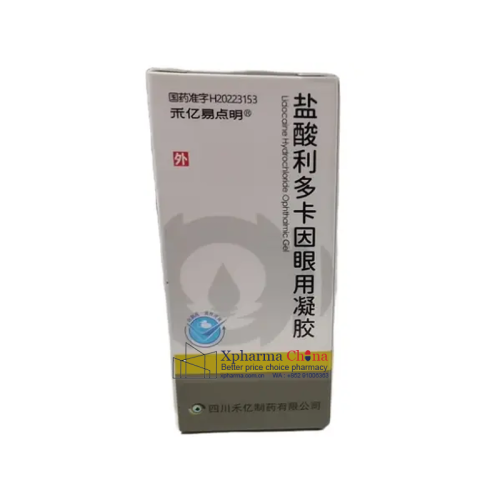
Heyiyi Yidianming Lidocaine Hydrochloride Ophthalmic Gel
Brand Name:禾亿易点明 ®(Heyiyi Yidianming®)
Generic Name: Lidocaine Hydrochloride
Strength: 0.175 g lidocaine hydrochloride per 5 mL tube, 1 tube per box
Manufacturer: Sichuan Heyiyi Pharmaceutical Co., Ltd.
Marketing Authorization Holder: Sichuan Heyiyi Pharmaceutical Co., Ltd.
Approval Date in China: April 02, 2022
Registration Number: 国药准字H20223153
Storage: Store below 25°C, tightly sealed and protected from light; use within 1 month after opening. Refer to the full package insert for detailed storage specifications.
Price&Cost:Contact Us now for the best price of Lidocaine Hydrochloride(Heyiyi Yidianming)
Only logged in customers who have purchased this product may leave a review.

Reviews
There are no reviews yet.