1. Indications and Usage
Type 2 Diabetes Mellitus: As an adjunct to diet and exercise, to improve glycemic control in adult patients with type 2 diabetes mellitus who have inadequate glycemic control with metformin monotherapy or who are already receiving both agents.
2. Dosage and Administration
Route of Administration: Oral administration.
Recommended Dosage: Usually administered twice daily with meals. The specific dosage strength should be individualized based on the patient’s current treatment regimen and tolerance, not exceeding the maximum recommended daily dose of retagliptin (100 mg) and metformin (2000 mg).
Administration Details: To minimize gastrointestinal side effects associated with metformin, the dose should be increased gradually.
Renal Impairment: Use is not recommended in patients with severe renal impairment (eGFR <45 mL/min/1.73m²), and contraindicated in end-stage renal disease.
3. Mechanism of Action
DPP-4 Inhibition: Retagliptin selectively inhibits dipeptidyl peptidase-4 (DPP-4), the enzyme responsible for degrading incretin hormones (GLP-1 and GIP). This increases endogenous incretin levels, stimulating glucose-dependent insulin secretion and suppressing glucagon release.
Glucose-Lowering: Metformin primarily decreases hepatic glucose production, decreases intestinal absorption of glucose, and improves insulin sensitivity by increasing peripheral glucose uptake and utilization.
4. Safety and Warnings
Lactic Acidosis: A rare but serious complication associated with metformin accumulation. Risk increases with renal impairment, acute hypoxic states (e.g., acute myocardial infarction, sepsis), or excessive alcohol intake.
Hypoglycemia: While retagliptin alone carries a low risk, hypoglycemia may occur when combined with insulin or sulfonylureas.
Vitamin B12 Deficiency: Long-term metformin use may decrease vitamin B12 absorption, requiring periodic monitoring.
Acute Pancreatitis: Post-marketing reports of acute pancreatitis have been observed with DPP-4 inhibitors.
5. Adverse Reactions and Clinical Research
Most Common Adverse Reactions: Nasopharyngitis, diarrhea, nausea, vomiting, abdominal pain, dyspepsia, and headache.
Clinical Research Highlights: Clinical trials have demonstrated that the combination significantly reduces HbA1c and fasting plasma glucose compared to monotherapy, with a low risk of hypoglycemia and minimal weight gain.
6. Drug Interactions
Metformin Interactions: Cationic drugs (e.g., amiloride, digoxin, morphine, pramipexole, quinidine, quinine, ranitidine, triamterene, trimethoprim, vancomycin) that are eliminated by renal tubular secretion may compete for transport systems and increase metformin plasma concentrations.
Retagliptin Interactions: P-gp inhibitors may increase retagliptin exposure. Strong CYP3A4 inducers may decrease retagliptin exposure.
7. Pharmaceutical Information
Chemical Composition: Active ingredients: Retagliptin phosphate and metformin hydrochloride.
Appearance: Film-coated tablets.
Packaging: Available in various pack sizes.
Storage: Store at controlled room temperature; protect from moisture.
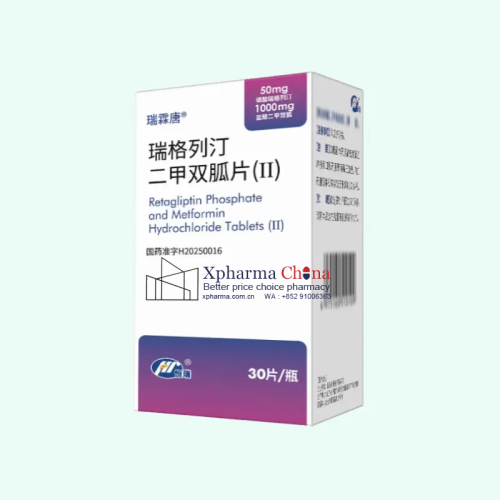
Ruilintang Retagliptin Phosphate and Metformin Hydrochloride Tablets (II)
Brand Name:瑞霖唐 ®(Ruilintang®)
Generic Name: Retagliptin Phosphate and Metformin Hydrochloride
Strength: Each tablet contains 50 mg retagliptin phosphate and 1000 mg metformin hydrochloride, 30 tablets per bottle
Manufacturer: Shandong Shengdi Pharmaceutical Co., Ltd.
Marketing Authorization Holder: Shandong Shengdi Pharmaceutical Co., Ltd.
Approval Date in China: May 22, 2025
Registration Number:国药准字 H20250016
Storage: Seal tightly, store below 30°C, protected from light and moisture. Refer to the full package insert for detailed storage specifications.
Price&Cost:Contact Us now for the best price of Retagliptin Phosphate and Metformin Hydrochloride(Ruilintang)
Only logged in customers who have purchased this product may leave a review.

Reviews
There are no reviews yet.