1. Indications and Usage
Henagliflozin proline and metformin hydrochloride extended-release tablets (II) are indicated as an adjunct to diet and exercise to improve glycemic control in adults with type 2 diabetes mellitus.
2. Dosage and Administration
Recommended Dosage: The dosage is individualized based on the patient’s current antidiabetic regimen, glycemic efficacy, and tolerability. The maximum recommended daily dose is henagliflozin 10 mg and metformin hydrochloride 2000 mg.
Administration: Take once daily with a meal, usually the evening meal, to reduce gastrointestinal discomfort. The tablet must be swallowed whole and should not be crushed, chewed, or split.
Renal Function: Dosage adjustment or discontinuation is required based on estimated glomerular filtration rate (eGFR). The combination is contraindicated in patients with eGFR below 45 mL/min/1.73 m².
3. Mechanism of Action
Henagliflozin: A selective inhibitor of sodium-glucose cotransporter 2 (SGLT-2) in the kidneys. It increases urinary glucose excretion, thereby lowering plasma and urinary glucose levels.
Metformin: A biguanide that decreases hepatic glucose production, decreases intestinal glucose absorption, and improves insulin sensitivity by increasing peripheral glucose uptake and utilization.
4. Safety and Warnings
Lactic Acidosis: Metformin-associated lactic acidosis is a rare but serious complication. Risk is increased in conditions associated with tissue hypoxia, such as renal impairment, sepsis, or dehydration.
Hypoglycemia: May occur when combined with insulin or insulin secretagogues.
Urosepsis and Pyelonephritis: SGLT-2 inhibitors increase urinary glucose, increasing the risk of genitourinary infections.
Volume Depletion: SGLT-2 inhibitors can cause intravascular volume contraction, leading to symptomatic hypotension and acute kidney injury.
5. Adverse Reactions and Clinical Research
Common Adverse Reactions: The most common adverse reactions include genital mycotic infections, urinary tract infections, nasopharyngitis, diarrhea, and increased urination.
Clinical Research: Clinical trials have demonstrated that the combination therapy effectively lowers glycated hemoglobin (HbA1c) and fasting plasma glucose compared to monotherapy.
6. Drug Interactions
Alcohol: Increases the risk of lactic acidosis and may cause disulfiram-like reactions.
Insulin and Insulin Secretagogues: May increase the risk of hypoglycemia; dose reduction of the secretagogue may be necessary.
Drugs Affecting Renal Function: Concomitant use with diuretics, NSAIDs, ACE inhibitors, or ARBs may affect renal function and metformin clearance.
Iodinated Contrast Agents: Must be discontinued at the time of, or prior to, imaging procedures involving iodinated contrast media.
7. Pharmaceutical Information
Composition: The active ingredients are henagliflozin proline and metformin hydrochloride.
Appearance: The tablets vary in color depending on the specific strength (e.g., yellow to brownish-yellow), are double-convex, film-coated, and may be engraved with specific codes.
Storage: Store at controlled room temperature in the original packaging to protect from moisture.
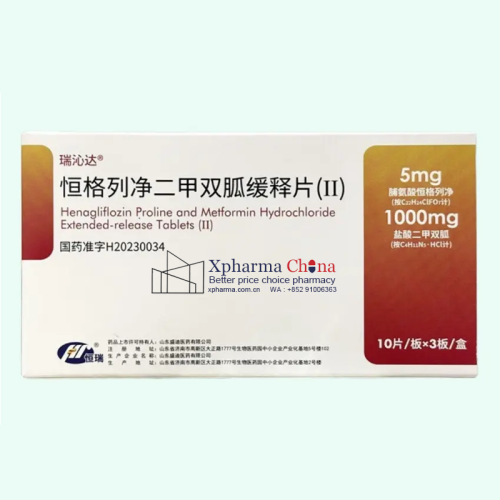
Ruixinda Henagliflozin Proline and Metformin Hydrochloride Extended-release Tablets (II)
Brand Name: 瑞沁达 ®(Ruixinda®)
Generic Name: Henagliflozin Proline and Metformin Hydrochloride
Strength: Each tablet contains Henagliflozin Proline 5 mg and Metformin Hydrochloride 1000 mg; 10 tablets per blister, 3 blisters per box
Manufacturer: Shandong Hengrui Pharmaceutical Co., Ltd.
Marketing Authorization Holder: Shandong Hengrui Pharmaceutical Co., Ltd.
Approval Date in China: March 28, 2023
Registration Number: 国药准字H20230034
Storage: Seal tightly, store below 25°C, protect from light and moisture, keep away from children. Refer to the full package insert for detailed storage specifications.
Price&Cost:Contact Us now for the best price of Henagliflozin Proline and Metformin Hydrochloride(Ruixinda)
Only logged in customers who have purchased this product may leave a review.
Reviews
There are no reviews yet.