
- Indications and Usage Ixazomib citrate capsules are indicated in combination with lenalidomide and dexamethasone for the treatment of adult patients with multiple myeloma who have received at least one prior therapy.
- Dosage and Administration Recommended Dosage: The recommended dosage is 4 mg administered orally once weekly on Days 1, 8, and 15 of each 28-day cycle. Administration: Must be taken on an empty stomach (at least 1 hour before or 2 hours after a meal). Capsules must be swallowed whole with water; do not crush, chew, or open. Missed Dose: If a dose is missed, it may only be made up if the next scheduled dose is at least 72 hours away. Do not take double doses to make up for a missed one. Premedication: Antiemetics should be administered as needed.
- Mechanism of Action Ixazomib is an oral proteasome inhibitor. It selectively inhibits the chymotrypsin-like activity of the 26S proteasome in eukaryotic cells. This inhibition leads to the accumulation of misfolded proteins, disruption of intracellular homeostasis, and ultimately cell cycle arrest and apoptosis in tumor cells.
- Safety and Warnings Hematologic Toxicity: Myelosuppression, including thrombocytopenia and neutropenia, is common. Blood counts should be monitored regularly. Gastrointestinal Disorders: Diarrhea, nausea, vomiting, and constipation are frequent adverse reactions. Peripheral Neuropathy: Both sensory and motor peripheral neuropathy may occur. Hepatotoxicity: Elevations in liver enzymes and bilirubin have been reported and require monitoring. Thromboembolism: The risk of thromboembolism is increased when used in combination with lenalidomide.
- Adverse Reactions and Clinical Research Common Adverse Reactions: The most common adverse reactions (incidence ≥20%) include thrombocytopenia, diarrhea, nausea, rash, peripheral neuropathy, constipation, vomiting, fatigue, and pyrexia. Clinical Research: Efficacy and safety were established in the Phase 3 TOURMALINE-MM1 trial, which demonstrated a significant improvement in progression-free survival compared to placebo plus lenalidomide and dexamethasone.
- Drug Interactions CYP3A Inhibitors: Strong CYP3A inhibitors may increase ixazomib exposure, but dose adjustment is not generally required. CYP3A Inducers: Strong CYP3A inducers (e.g., rifampin) significantly decrease ixazomib exposure and should be avoided. Drugs Affecting Hemostasis: Caution is advised when co-administering drugs that affect bleeding risk. Live Vaccines: Use of live vaccines should be avoided during treatment.
- Pharmaceutical Information Composition: The active ingredient is ixazomib. Appearance: Available as capsules (2.3 mg is light pink, 3 mg is light gray, 4 mg is light orange) with “Takeda” printed on the shell. Storage: Store between 20°C to 25°C (68°F to 77°F) in the original container to protect from moisture.
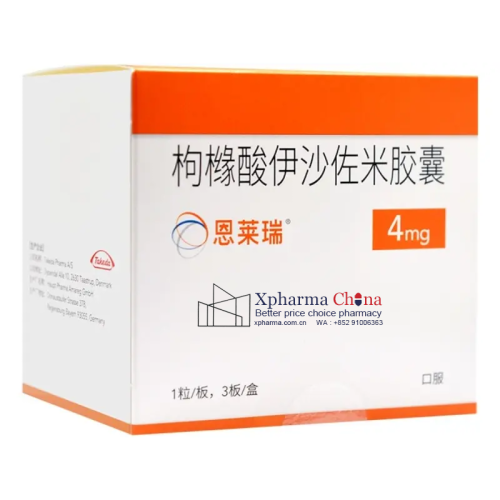
Ninlaro Ixazomib Citrate Capsules
Brand Name: 恩莱瑞 ®(Ninlaro®)
Generic Name: Ixazomib Citrate
Strength: 4 mg per capsule, 1 capsule per blister, 3 blisters per box
Manufacturer: Haupt Pharma Amareg GmbH (Germany)
Marketing Authorization Holder: Takeda Pharma A/S
Approval Date in China: April 17, 2018
Registration Number: 国药准字HJ20180012
Storage: Store refrigerated at 2°C–8°C, protected from light; do not freeze. Keep out of reach of children. Refer to the full package insert for detailed storage specifications.
Price&Cost:Contact Us now for the best price of Ixazomib Citrate(Ninlaro)
Only logged in customers who have purchased this product may leave a review.
Reviews
There are no reviews yet.