
1. Indications and Usage
Migraine Prophylaxis: Preventive treatment of classic (with aura) or common (without aura) migraine.
Vestibular Disorders: Symptomatic relief of vertigo associated with vestibular function disorders.
2. Dosage and Administration
Migraine Prophylaxis: For patients under 65 years, the starting dose is 5-10 mg at night. For patients 65 years and older, the starting dose is 5 mg at night. If maintenance therapy is needed, the frequency may be reduced to 5 days per week.
Vertigo: The daily dose is the same as for migraine prophylaxis. Therapy should be discontinued as soon as symptoms are controlled, usually within 2 months.
Administration: Usually taken at night due to sedative effects.
3. Mechanism of Action
Calcium Channel Blockade: The mechanism of action is primarily mediated through the blockade of calcium ion influx into cells (especially neuronal and smooth muscle cells).
Vasodilation and Neuroprotection: This effect reduces vasospasm, improves microcirculation, and protects neurons from ischemic injury.
4. Safety and Warnings
Depression and Parkinsonism: It may cause depression and parkinsonism, especially in patients with a history of depression or extrapyramidal disorders.
Sedation: Drowsiness is common, particularly in the early stages of treatment.
Elderly Patients: Older patients are more prone to developing depressive symptoms and extrapyramidal disorders.
Driving and Machinery: Patients should exercise caution when driving vehicles or operating machinery.
5. Adverse Reactions and Clinical Research
Common Adverse Reactions: Drowsiness and fatigue (often transient).
Rare Adverse Reactions: Weight gain, depression, extrapyramidal symptoms (e.g., bradykinesia, rigidity, restlessness, orofacial dyskinesia, tremor), insomnia, and anxiety.
Clinical Research: Clinical trials have demonstrated efficacy in reducing the frequency and severity of migraine attacks and vertigo symptoms.
6. Drug Interactions
CNS Depressants: Concomitant use with alcohol, hypnotics, or sedatives can lead to excessive sedation.
Anticonvulsants: Concomitant use with phenytoin or carbamazepine may decrease flunarizine blood concentrations.
7. Pharmaceutical Information
Active Ingredient: Flunarizine Hydrochloride.
Appearance: Hard capsules containing white to off-white powder.
Storage: Store at controlled room temperature, protected from light and moisture.
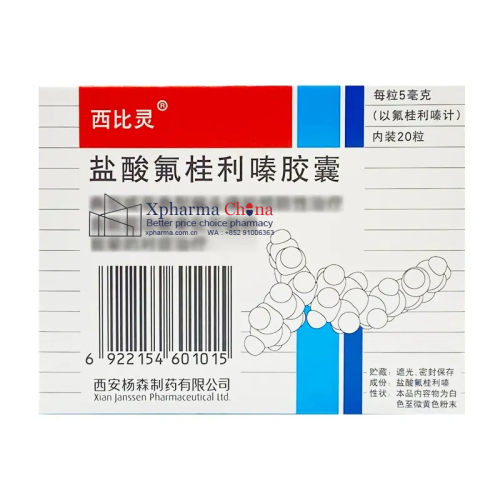
Sibelium Flunarizine Hydrochloride Capsules
Brand Name: 西比灵®(Sibelium®)
Generic Name: Flunarizine Hydrochloride
Strength: 5 mg per capsule (calculated as flunarizine), 20 capsules per box
Manufacturer: Xian Janssen Pharmaceutical Ltd.
Marketing Authorization Holder: Xian Janssen Pharmaceutical Ltd.
Approval Date in China: Domestic listing approval
Registration Number: 国药准字H61020010
Storage: Seal tightly and store away from light; keep out of reach of children, follow full storage instructions in the package insert
Price&Cost:Contact Us now for the best price of Flunarizine Hydrochloride(Sibelium)
Only logged in customers who have purchased this product may leave a review.


Reviews
There are no reviews yet.