1. Indications and Usage
Angiography: Coronary angiography, thoracic and abdominal aortic angiography, cardiovascular angiography, selective visceral angiography, and peripheral angiography.
Digital Subtraction Angiography (DSA): Cerebral, peripheral, and abdominal arterial DSA.
Urography: Intravenous urography.
CT Imaging: Enhanced CT scanning.
2. Dosage and Administration
General Principle: Dosage is determined by the specific X-ray examination requirements.
Angiography: For coronary angiography, 8-15 ml (370 mgI/ml) as a bolus. For cardiovascular, aortic, and peripheral angiography, 1.0-1.2 ml/kg.
Urography: Recommended dose is 30-50 ml for concentrations of 300-370 mgI/ml.
CT Enhancement: 0.5-2.0 ml/kg. The contrast medium can be administered as an intravenous bolus or infusion, or both.
3. Mechanism of Action
X-ray Attenuation: The iodine atoms within the molecule absorb X-rays, increasing tissue contrast for radiographic visualization.
Safety Profile: Being a non-ionic monomer, it has low osmolality and viscosity, which minimizes toxicity to the vascular endothelium and neural tissues compared to ionic contrast media.
4. Safety and Warnings
Hypersensitivity: Application of organic iodine compounds may cause hypersensitivity or anaphylactoid reactions. Severe reactions require immediate discontinuation and emergency symptomatic treatment.
Epilepsy: Use of neuroleptics, analgesics, antihistamines, and phenothiazine sedatives that lower the seizure threshold must be strictly avoided.
Pregnancy and Lactation: Safety during pregnancy has not been determined, and radiation exposure should be avoided. Lactating women should discontinue breastfeeding for 24 hours after administration.
5. Adverse Reactions and Clinical Research
Common Adverse Reactions: Nausea, vomiting, urticaria, pruritus, and dyspnea following intravenous administration.
Rare Adverse Reactions: Severe anaphylactoid reactions, including laryngeal edema and shock; acute renal failure; and cardiac arrhythmias.
Clinical Research: Clinical trials have demonstrated that iodopamidol provides high-quality diagnostic imaging with a favorable safety profile regarding contrast-induced nephropathy compared to high-osmolar agents.
6. Drug Interactions
Thyroid Scintigraphy: The thyroid gland will reduce iodine uptake for several days to two weeks after administration of renally excreted iodine-containing contrast media.
Seizure-Threshold Lowering Drugs: As noted in Safety and Warnings, these drugs must be stopped at least 48 hours before injection and can only be resumed 12 hours after the examination ends.
Mixing: Contrast media must not be mixed with other drugs.
7. Pharmaceutical Information
Active Ingredient: Iopamidol.
Appearance: Colorless and clear liquid.
Storage: Protect from light and store at 15-30°C.
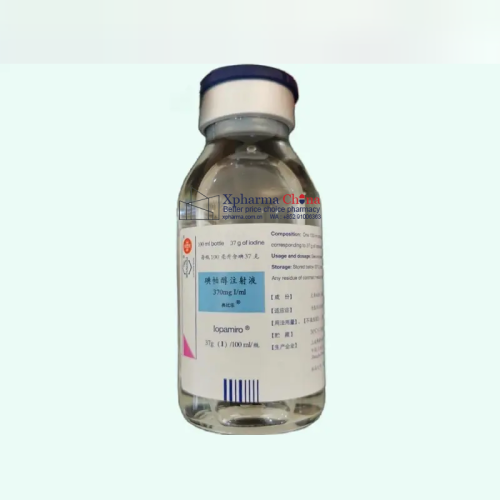
Iopamiro Iopamidol Injection
Brand Name: 典比乐®(Iopamiro®)
Generic Name: Iopamidol
Strength: 370 mg Iodine per mL, total 37 g iodine per 100 mL bottle, 1 bottle per pack
Manufacturer: Patheon Italia S.P.A.
Marketing Authorization Holder: Bracco Imaging Italia S.r.L.
Approval Date in China: 2014
Registration Number: 国药准字HJ20140890
Storage: Store below 30°C, protected from light; do not freeze, keep out of reach of children, follow full storage instructions in the package insert
Price&Cost:Contact Us now for the best price of Iopamidol(Iopamiro)
Only logged in customers who have purchased this product may leave a review.

Reviews
There are no reviews yet.