
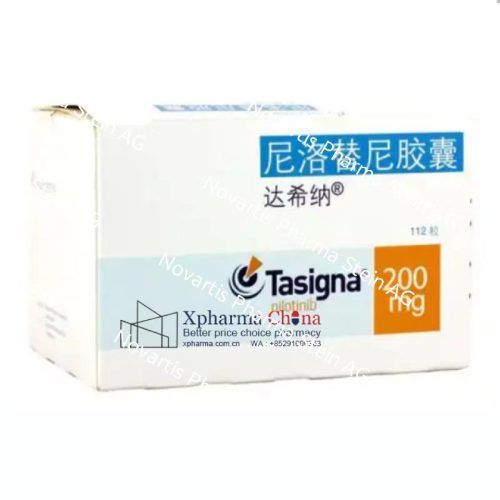
Tasigna®Nilotinib Capsules
Brand Name:达希纳® (Tasigna®)
Generic Name:Nilotinib
Strength:200 mg per capsule, 112 capsules per box
Manufacturer: Novartis Pharma Stein AG (Switzerland)
Marketing Authorization Holder:Novartis Pharma AG; Domestic marketing: Novartis Oncology (China) Co., Ltd.
Approval Date in China: November 2009 (original marketing approval; updated supplementary approval issued 2017)
Registration Number:国药准字HJ20171152
Storage:Sealed and protected from light, stored below 30°C, keep away from children
Price&Cost:Contact Us now for the best price of Nilotinib(Tasigna)
1. Indications and Usage
Chronic Myeloid Leukemia (CML): Treatment of adult patients with Philadelphia chromosome-positive chronic myeloid leukemia (Ph+ CML) .
Clinical Stages:
Newly diagnosed CML in chronic phase.
CML in chronic phase or accelerated phase in patients who are resistant or intolerant to prior therapy that included imatinib .
2. Dosage and Administration
Administration: Oral administration. Capsules must be swallowed whole with water.
Fasting Requirement: Must be taken on an empty stomach (no food for at least 2 hours before and at least 1 hour after dosing) to prevent erratic absorption and excessive drug exposure .
Standard Dose:
Resistant/Intolerant: 400 mg twice daily (approx. every 12 hours) .
Newly Diagnosed: 300 mg twice daily .
Dose Adjustment: Mandatory interruption and dose reduction if QTcF >480 ms or for severe hematologic toxicity (e.g., neutropenia, thrombocytopenia) .
3. Mechanism of Action
Nilotinib is a second-generation BCR-ABL tyrosine kinase inhibitor (TKI).
It binds to the BCR-ABL protein and stabilizes the non-active conformation of the ABL protein kinase site.
It is structurally optimized to have a much higher affinity for the ABL kinase domain than imatinib, allowing it to inhibit many imatinib-resistant BCR-ABL mutations (except T315I) .
4. Safety and Warnings
QTc Prolongation & Sudden Death: Nilotinib causes QT interval prolongation and has been associated with sudden death. ECG and electrolytes (potassium, magnesium) must be monitored before initiation, 7 days after starting, and periodically thereafter .
Hepatotoxicity: Severe liver damage may occur. Monitor bilirubin and liver transaminases monthly .
Pancreatitis: Serum lipase elevation is common; monitor monthly and evaluate for symptoms of pancreatitis .
Vascular Events: Cases of necrotizing vasculitis and peripheral arterial occlusive disease have been reported .
5. Adverse Reactions
Common adverse reactions (incidence ≥10%) include:
Rash, pruritus, and skin lesions.
Nausea, diarrhea, vomiting, and constipation.
Headache and fatigue.
Musculoskeletal pain and muscle spasms.
Hematologic abnormalities: Thrombocytopenia, neutropenia, anemia, hyperglycemia .
6. Drug Interactions
CYP3A4 Substrate:
Inhibitors: Strong CYP3A4 inhibitors (e.g., ketoconazole, ritonavir, clarithromycin) are contraindicated as they significantly increase Nilotinib exposure.
Inducers: Strong CYP3A4 inducers (e.g., rifampin, carbamazepine, St. John’s wort) are contraindicated as they reduce efficacy.
Drugs that Prolong QT: Concomitant use with other QT-prolonging drugs (e.g., amiodarone, sotalol, haloperidol) should be avoided.
7. Pharmaceutical Information
Chemical Name: 4-Methyl-N-
Only logged in customers who have purchased this product may leave a review.

Reviews
There are no reviews yet.