1. Indications and Usage
Treatment of Duodenal Ulcer: Indicated for the treatment of duodenal ulcer.
Treatment of Gastroesophageal Reflux Disease: Indicated for the treatment of adult patients with gastroesophageal reflux disease (GERD).
2. Dosage and Administration
Recommended Dose: The recommended dosage is 20 mg taken orally once daily.
Administration: The tablet should be swallowed whole 30-60 minutes before breakfast. It must not be chewed or crushed.
Treatment Duration: For duodenal ulcers, the standard course is 4 weeks. For GERD, the duration is determined by the physician based on symptom relief and mucosal healing.
3. Mechanism of Action
Proton Pump Inhibition: Anaprazole sodium is a proton pump inhibitor (PPI) that acts on the H+/K+-ATPase enzyme (proton pump) located on the secretory surface of gastric parietal cells.
Acid Suppression: In the acidic environment of the parietal cell canaliculus, it is converted into active sulfenic acid derivatives. These derivatives form covalent disulfide bonds with cysteine residues on the proton pump, irreversibly inhibiting its activity and suppressing both basal and stimulated gastric acid secretion.
4. Safety and Warnings
Malignancy Masking: Use of gastric acid inhibitors may mask symptoms of gastric malignancy; malignancy should be ruled out before initiating treatment.
Clopidogrel Interaction: Anaprazole sodium is primarily metabolized through non-CYP pathways and does not significantly interfere with the antiplatelet efficacy of clopidogrel.
Low Magnesium: Long-term use (especially for more than 3 months) may rarely cause hypomagnesemia.
Bone Fracture Risk: Long-term use may increase the risk of osteoporosis-related fractures (hip, wrist, or spine).
Liver Function: Transient elevation of liver enzymes has been reported. Patients with liver impairment should be monitored closely.
5. Adverse Reactions and Clinical Research
Adverse Reactions: Common adverse reactions include headache, abdominal pain, diarrhea, nausea, and elevated liver enzymes.
Clinical Research: Clinical trials have demonstrated that anaprazole sodium provides high rates of mucosal healing and symptom relief in patients with duodenal ulcers and GERD, with efficacy comparable to existing proton pump inhibitors.
6. Drug Interactions
Atazanavir: Concomitant use with atazanavir is not recommended as anaprazole sodium increases gastric pH, significantly reducing atazanavir bioavailability.
P-gp/BCRP Substrates: Drugs whose absorption depends on gastric pH (e.g., ketoconazole, iron salts) may have decreased absorption when taken with anaprazole sodium.
Clopidogrel: Unlike traditional PPIs, anaprazole sodium has no significant effect on the metabolic activation of clopidogrel.
7. Pharmaceutical Information
Composition: The active ingredient is anaprazole sodium.
Appearance: The tablets are film-coated and have an enteric coating to prevent degradation in the stomach.
Storage: Store at controlled room temperature and protect from moisture.
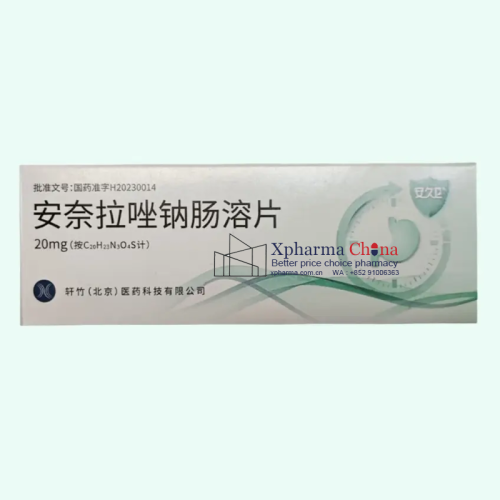
Anjiuwei Anaprazole Sodium Enteric-coated Tablets
Brand Name: 安久卫 ®(Anjiuwei®)
Generic Name: Anaprazole Sodium
Strength: Each tablet contains 20 mg Anaprazole Sodium (calculated as C₂₀H₂₃N₃O₄S)
Manufacturer: Beijing Jingfeng Pharmaceutical Group Co., Ltd.
Marketing Authorization Holder: Xuanzhu (Beijing) Pharmaceutical Technology Co., Ltd.
Approval Date in China: June 25, 2023
Registration Number: 国药准字H20230014
Storage: Store tightly sealed at temperature below 25°C, protected from light and moisture. Keep out of sight and reach of children. Refer to the full package insert for detailed storage specifications.
Price&Cost:Contact Us now for the best price of Anaprazole Sodium(Anjiuwei)
Only logged in customers who have purchased this product may leave a review.

Reviews
There are no reviews yet.