1. Indications and Usage
Acute Coronary Syndromes (ACS): Indicated for the prevention of thrombotic cardiovascular events in patients with ACS (unstable angina, non-ST-elevation myocardial infarction, or ST-elevation myocardial infarction), including those managed with medical therapy or percutaneous coronary intervention (PCI).
2. Dosage and Administration
Initial Dosing: The recommended starting dose is a 180 mg loading dose, followed by 90 mg orally twice daily.
Duration: Treatment is typically continued for up to 12 months. Premature discontinuation increases the risk of cardiovascular death or myocardial infarction.
Co-administration: Unless contraindicated, must be used with low-dose aspirin (maintenance dose 75–100 mg once daily).
Administration: Can be taken with or without food.
3. Mechanism of Action
Reversible P2Y12 Inhibitor: Ticagrelor is a direct-acting, reversible antagonist of the P2Y12 receptor on platelet surfaces.
Active Metabolite: It does not require metabolic activation to exert its effect and potently inhibits adenosine diphosphate (ADP)-mediated platelet aggregation.
4. Safety and Warnings
Bleeding Risk: Major risk includes spontaneous bleeding, major bleeding, and intracranial hemorrhage.
Bradyarrhythmias: May cause asymptomatic ventricular pauses and bradyarrhythmias; use with caution in patients at risk.
Dyspnea: Transient dyspnea has been reported; it is usually mild and does not require discontinuation.
Hyperuricemia: Can cause increased serum uric acid levels.
5. Adverse Reactions and Clinical Research
Common Adverse Reactions: Bleeding events (including intracranial and gastrointestinal), dyspnea, bradyarrhythmias, and hyperuricemia.
Clinical Research: The pivotal PLATO trial demonstrated that ticagrelor significantly reduced the composite endpoint of cardiovascular death, myocardial infarction, and stroke compared to clopidogrel in ACS patients.
6. Drug Interactions
CYP3A4 Inhibitors: Strong CYP3A4 inhibitors (e.g., ketoconazole, clarithromycin, ritonavir) significantly increase ticagrelor exposure and are contraindicated.
CYP3A4 Inducers: Strong CYP3A4 inducers (e.g., rifampin, phenytoin) decrease ticagrelor exposure and efficacy.
NSAIDs: Concomitant use increases the risk of gastrointestinal bleeding.
Warfarin: Monitoring of INR is required if used concomitantly.
7. Pharmaceutical Information
Active Ingredient: Ticagrelor.
Excipients: Hydrogenated vegetable oil, lactose monohydrate, microcrystalline cellulose, hydroxypropyl cellulose, magnesium stearate, and film-coating agents.
Appearance: Yellow film-coated tablets (white or off-white when bisectioned).
Storage: Store at or below 30°C.
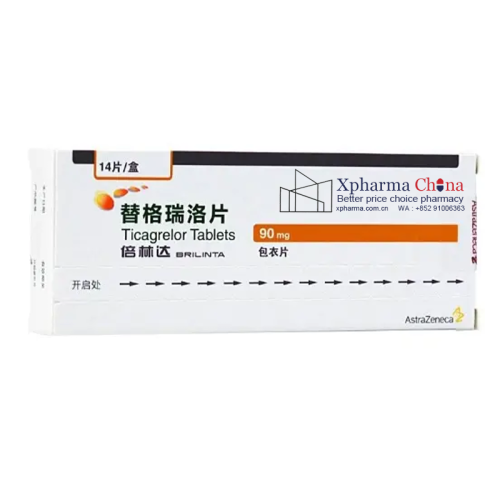
Brilinta Ticagrelor Tablets
Brand Name: 倍林达®(Brilinta®)
Generic Name: Ticagrelor
Strength: 90 mg per film‑coated tablet, 14 tablets per box
Manufacturer: AstraZeneca AB (Sweden); AstraZeneca Pharmaceutical Co., Ltd. (domestic secondary packaging enterprise in China)
Marketing Authorization Holder: AstraZeneca AB
Approval Date in China: March 2013
Registration Number: 国药准字J20130020
Storage: Seal tightly, store at room temperature below 30 ℃, avoid high humidity and direct sunlight; keep away from children, abide by detailed storage specifications written in the package insert.
Price&Cost:Contact Us now for the best price of Ticagrelor(Brilinta)
Only logged in customers who have purchased this product may leave a review.

Reviews
There are no reviews yet.