
1. Indications and Usage
Her2+ Metastatic/Recurrent BC: Indicated in combination with capecitabine for the treatment of locally recurrent or metastatic HER2-positive breast cancer in adult patients who have received prior chemotherapy (anthracycline or taxane), with or prior trastuzumab treatment.
2. Dosage and Administration
Recommended Dosage: 400 mg taken orally once daily within 30 minutes after a meal, at approximately the same time each day.
Treatment Cycle: Taken continuously every day for a cycle of 21 days.
Drug Combination: Must be administered in combination with capecitabine (1000 mg/m² twice daily for 14 days in a 21-day cycle).
Dose Modifications: For drug-induced adverse reactions, dosing may be interrupted, delayed, or reduced by decrements of 40 mg (down to a minimum of 240 mg).
3. Mechanism of Action
EGFR Inhibition: Pyrotinib is a potent, reversible, small-molecule inhibitor of epidermal growth factor receptor (EGFR, ErbB1) and human epidermal growth factor receptor 2 (HER2, ErbB2), both members of the ErbB family of receptor tyrosine kinases.
Cell Proliferation Blockade: By irreversibly binding to the ATP-binding domain of these receptors, pyrotinib inhibits downstream signaling pathways (such as PI3K/Akt and MAPK), thereby blocking tumor cell proliferation and inducing apoptosis.
4. Safety and Warnings
Hepatotoxicity: Can cause liver injury. Liver function tests should be monitored before initiation, during treatment, and as clinically indicated; discontinue for severe liver toxicity.
Severe Diarrhea: A very common adverse reaction that can be severe. Aggressive antidiarrheal management and dose adjustments are required.
Cardiac Toxicity: QTc interval prolongation can occur. Monitor electrolytes (potassium, magnesium) and cardiac parameters, especially in patients with cardiac history.
Embryo-Fetal Toxicity: Can cause fetal harm. Pregnant women should be advised of the potential risks.
5. Adverse Reactions and Clinical Research
Most Common Adverse Reactions: Diarrhea, vomiting, nausea, stomatitis (oral mucositis), rash, fatigue, and hand-foot syndrome.
Hematologic Disorders: Neutropenia, leukopenia, and anemia may occur.
Clinical Research: Clinical trials have demonstrated significant improvements in progression-free survival compared to control therapies in HER2-positive recurrent or metastatic breast cancer.
6. Drug Interactions
CYP3A4 Substrates: Pyrotinib is metabolized by CYP3A4. Co-administration with strong CYP3A4 inducers (e.g., rifampin, phenytoin) may reduce plasma concentrations and efficacy, while strong CYP3A4 inhibitors (e.g., ketoconazole, ritonavir) may increase concentrations and toxicity.
P-gp Substrates: Pyrotinib may inhibit P-glycoprotein (P-gp), potentially increasing the exposure of co-administered P-gp substrates.
CYP2C19: Pyrotinib has weak inhibitory effects on CYP2C19, which may increase the plasma concentrations of CYP2C19 substrates.
Capecitabine: Standard dosing of capecitabine should be managed with dose delays or reductions based on toxicity grade.
7. Pharmaceutical Information
Chemical Composition: Active ingredient: Pyrotinib Maleate.
Appearance: Film-coated tablets, yellow in color when the coating is removed.
Storage: Store at 25°C or below in a dry place. After opening, storage should not exceed one month.
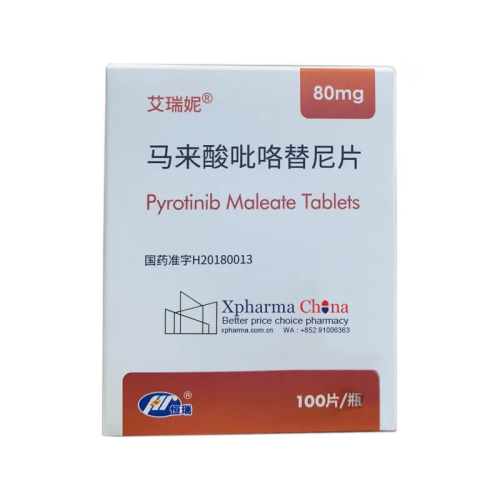
Erinui Pyrotinib Maleate Tablets
Brand Name: 艾瑞妮 ®(Erinui®)
Generic Name: Pyrotinib Maleate
Strength: 80 mg per tablet, 100 tablets per bottle, 1 bottle per box
Manufacturer: Jiangsu Hengrui Medicine Co., Ltd.
Marketing Authorization Holder: Jiangsu Hengrui Medicine Co., Ltd.
Approval Date in China: August 16, 2018
Registration Number: 国药准字H20180013
Storage: Store tightly sealed below 30°C, protected from light and moisture, keep the desiccant inside the bottle. Refer to the full package insert for detailed storage specifications.
Price&Cost:Contact Us now for the best price of Pyrotinib Maleate(Erinui)
Only logged in customers who have purchased this product may leave a review.




Reviews
There are no reviews yet.