
1. Indications and Usage
Rituximab is a CD20-directed cytolytic antibody indicated for the treatment of:
Non-Hodgkin’s Lymphoma (NHL):
Relapsed or refractory, low-grade or follicular, CD20-positive, B-cell NHL as a single agent.
Previously untreated follicular, CD20-positive, B-cell NHL in combination with first-line chemotherapy, and as single-agent maintenance therapy in patients achieving a complete or partial response.
Non-progressing, low-grade, CD20-positive, B-cell NHL as a single agent after first-line CVP chemotherapy.
Previously untreated diffuse large B-cell, CD20-positive NHL in combination with CHOP or other anthracycline-based chemotherapy regimens.
Chronic Lymphocytic Leukemia (CLL): Previously untreated and previously treated CD20-positive CLL in combination with fludarabine and cyclophosphamide.
Rheumatoid Arthritis (RA): Moderately to severely active RA in adult patients with inadequate response to one or more TNF antagonist therapies, in combination with methotrexate.
Granulomatosis with Polyangiitis (GPA) and Microscopic Polyangiitis (MPA): In adult and pediatric patients 2 years of age and older, in combination with glucocorticoids.
Pemphigus Vulgaris (PV): Moderate to severe PV in adult patients.
2. Dosage and Administration
Route: Administer only as an intravenous infusion. Do not administer as an intravenous push or bolus.
Premedication: Premedicate with acetaminophen and an antihistamine before each infusion. Consider additional premedication based on indication and prior infusion reactions.
NHL (single agent, relapsed/refractory follicular or low-grade): 375 mg/m² IV once weekly for 4 to 8 doses.
NHL (previously untreated follicular, with chemotherapy): 375 mg/m² IV on Day 1 of each chemotherapy cycle for up to 8 doses. Maintenance therapy: 375 mg/m² IV every 8 weeks for 12 doses.
DLBCL (with CHOP or anthracycline-based chemotherapy): 375 mg/m² IV on Day 1 of each chemotherapy cycle.
CLL (with FC): First cycle 375 mg/m² IV; subsequent cycles 500 mg/m² IV, administered per chemotherapy cycle.
RA: 1,000 mg IV given as two infusions separated by 2 weeks. Subsequent courses may be given based on clinical evaluation, but no sooner than 16 weeks after the previous infusion.
GPA/MPA: 375 mg/m² IV once weekly for 4 weeks.
PV: 1,000 mg IV given as two infusions separated by 2 weeks. A second course may be considered 24 weeks later or based on clinical evaluation, but no sooner than 16 weeks after the previous infusion.
Infusion Rate: First infusion typically starts at 50 mg/hr and may be increased in increments if tolerated; subsequent infusions may start at 100 mg/hr. Maximum rate is generally 400 mg/hr, unless a validated accelerated infusion protocol is used.
3. Mechanism of Action
Rituximab is a genetically engineered chimeric murine/human monoclonal IgG1 kappa antibody directed against the CD20 antigen. CD20 is expressed on pre-B and mature B lymphocytes but not on hematopoietic stem cells, pro-B cells, normal plasma cells, or other normal tissues.
Rituximab binds CD20 and mediates B-cell lysis through complement-dependent cytotoxicity (CDC) and antibody-dependent cell-mediated cytotoxicity (ADCC). CD20 is not shed or internalized after antibody binding, and it does not circulate as a free antigen.
4. Safety and Warnings
Boxed Warning:
Infusion-Related Reactions: Can be severe or fatal, most often occurring with the first infusion. Monitor closely and interrupt or discontinue infusion for severe reactions.
Severe Mucocutaneous Reactions: Some cases have been fatal.
Hepatitis B Virus Reactivation: Can cause fulminant hepatitis, hepatic failure, and death. Screen all patients for HBV before treatment and monitor during and after therapy.
Progressive Multifocal Leukoencephalopathy (PML): Can be fatal. Consider PML in any patient presenting with new neurologic symptoms.
Other Important Warnings:
Increased risk of bacterial, fungal, and viral infections.
Cardiovascular events, including arrhythmias, angina, and heart failure.
Renal toxicity, especially in patients at risk for tumor lysis syndrome.
Bowel obstruction and perforation.
Vaccination status should be reviewed; live vaccines are not recommended during and following B-cell depletion.
Embryo-fetal toxicity: May cause fetal harm. Effective contraception is recommended during treatment and for at least 12 months after the last dose.
5. Adverse Reactions and Clinical Research
Common Adverse Reactions: Infusion-related reactions (fever, chills, rigors, nausea, pruritus, angioedema, hypotension, bronchospasm), fatigue, cytopenias, infections, cough, rash, and headache.
Serious Adverse Reactions: Severe infusion reactions, HBV reactivation, PML, severe infections, tumor lysis syndrome, cardiac events, severe mucocutaneous reactions, and gastrointestinal perforation.
Clinical Research: Rituximab was initially approved in 1997 for relapsed or refractory low-grade or follicular B-cell NHL and has since been studied across multiple B-cell malignancies and autoimmune diseases. Clinical trials have supported its use in combination with chemotherapy for follicular lymphoma and DLBCL, with FC for CLL, with methotrexate for RA, with glucocorticoids for GPA/MPA, and in adults with moderate to severe PV.
6. Drug Interactions
Live Vaccines: Avoid live viral vaccines during treatment and until B-cell recovery.
Antihypertensive Agents: Consider withholding antihypertensive medications 12 hours before and during infusion due to the risk of hypotension.
Chemotherapy and Immunosuppressants: Concomitant use may increase the risk of infection and cytopenias.
Other Biologics/DMARDs: Concomitant use with other biologic agents or DMARDs other than methotrexate in RA has not been fully established and should be carefully considered.
7. Pharmaceutical Information
Active Ingredient: Rituximab.
Drug Class: CD20-directed cytolytic monoclonal antibody.
Dosage Form: Injection, solution for intravenous infusion.
Strengths: 100 mg/10 mL (10 mg/mL) and 500 mg/50 mL (10 mg/mL) single-dose vials.
Excipients: Sodium chloride, polysorbate 80, sodium citrate, and water for injection.
Storage: Store refrigerated at 2°C to 8°C, protected from light. Do not freeze. Diluted solutions are typically stable for limited periods at room temperature or under refrigeration; refer to the full prescribing information for preparation instructions.
Manufacturer (Reference Product): Genentech, Inc. (RITUXAN).
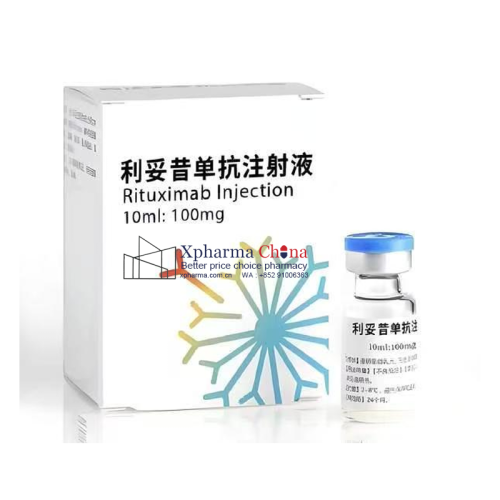
Hanlikang Rituximab injection
Brand Name: 汉利康 ®(Hanlikang®)
Generic Name: Rituximab
Strength: 100mg/10mL (10mg/mL)
Manufacturer: Shanghai Henlius Biopharmaceutical Co., Ltd.
Marketing Authorization Holder: Shanghai Henlius Biotech, Inc.
Approval Date in China: 2019-02-22
Registration Number: S20190021
Storage: Store at 2°C to 8°C, protect from light. Do not freeze.
Price&Cost:Contact Us now for the best price of Rituximab(Hanlikang)
Only logged in customers who have purchased this product may leave a review.

Reviews
There are no reviews yet.