
1. Indications and Usage
Respiratory Tract Infections: Treatment of acute bacterial sinusitis, community-acquired pneumonia, chronic bronchitis exacerbations, and tonsillitis/pharyngitis caused by susceptible bacteria.
Urinary and Prostatic Infections: Treatment of uncomplicated and complicated urinary tract infections, pyelonephritis, and acute bacterial prostatitis.
Skin and Soft Tissue Infections: Treatment of uncomplicated and complicated skin and skin structure infections.
Other Infections: Treatment of bacterial gastroenteritis, gonococcal infections, and septicemia.
2. Dosage and Administration
Adults: The usual dosage is 250 mg to 750 mg administered once daily.
Renal Impairment: Dosage must be adjusted based on creatinine clearance.
Administration: Oral administration should be done with plenty of water. Antacids containing magnesium or aluminum, sucralfate, metal cations (e.g., iron, zinc), or multivitamins should be administered at least 2 hours before or after this drug.
3. Mechanism of Action
DNA Gyrase Inhibition: Levofloxacin is a synthetic broad-spectrum antibacterial agent. It inhibits bacterial DNA gyrase and topoisomerase IV, thereby inhibiting bacterial DNA replication, transcription, repair, and recombination.
Spectrum: It demonstrates activity against many aerobic Gram-positive and Gram-negative bacteria.
4. Safety and Warnings
Tendon Disorders: Fluoroquinolones increase the risk of tendinitis and tendon rupture in all age groups, which may be bilateral. The risk is further increased in elderly patients, those taking corticosteroids, and organ transplant recipients.
CNS Effects: May cause CNS stimulation, including tremors, anxiety, and hallucinations. Seizures have been reported, especially in patients with a history of seizures or CNS disorders.
QT Prolongation: May prolong the QT interval; caution is advised in patients with cardiovascular risk factors.
Peripheral Neuropathy: Peripheral neuropathy has been reported; patients should be advised to stop taking the drug if they experience symptoms of pain, burning, tingling, numbness, or weakness.
5. Adverse Reactions and Clinical Research
Common: Gastrointestinal symptoms such as nausea, diarrhea, dyspepsia, and abdominal pain.
Serious: Tendon rupture, seizures, peripheral neuropathy, and severe photosensitivity reactions.
Clinical Research: Clinical trials have demonstrated high efficacy and safety in treating various community-acquired and nosocomial infections.
6. Drug Interactions
Antacids/Multivitamins: May significantly reduce the absorption of levofloxacin.
Non-Steroidal Anti-Inflammatory Drugs (NSAIDs): May increase the risk of CNS stimulation and seizures.
Warfarin: May enhance the anticoagulant effect; prothrombin time should be monitored.
Theophylline: May increase serum theophylline concentrations.
7. Pharmaceutical Information
Active Ingredient: Levofloxacin Hydrochloride.
Appearance: Film-coated tablets.
Storage: Store in a well-closed container, protected from light and moisture.
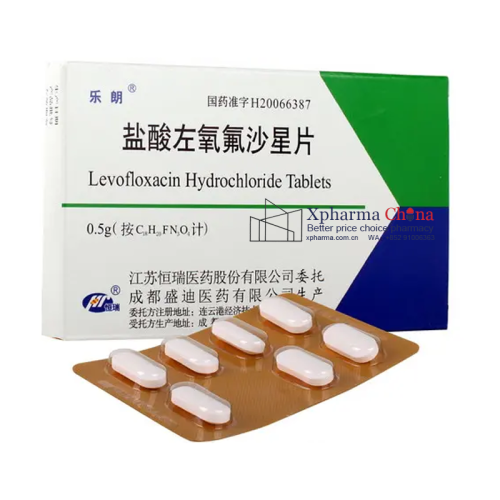
Lelang Levofloxacin Hydrochloride Tablets
Brand Name: 乐朗®(Lelang®)
Generic Name: Levofloxacin Hydrochloride
Strength: 0.5 g per tablet (calculated as C₁₈H₂₀FN₃O₄), 6 tablets per box
Manufacturer: Chengdu Shengdi Pharmaceutical Co., Ltd.
Marketing Authorization Holder: Jiangsu Hengrui Medicine Co., Ltd.
Approval Date in China: 2006
Registration Number: 国药准字H20066387
Storage: Keep tightly sealed, store in a cool, dry place protected from light; avoid direct sunlight, keep out of reach of children, follow the storage instructions in the package insert
Price&Cost:Contact Us now for the best price of Levofloxacin Hydrochloride(Lelang)
Only logged in customers who have purchased this product may leave a review.

Reviews
There are no reviews yet.