1. Indications and Usage
Selenium Deficiency: Indicated for the prevention and treatment of diseases caused by selenium deficiency, such as Keshan disease and Big Bone Joint Disease.
Supportive Care: Used in patients receiving long-term total parenteral nutrition (TPN) who are at risk of selenium depletion.
2. Dosage and Administration
Standard Dose: Administered orally once daily. The typical dosage for children aged 11 and above is 2 mg (or 2 tablets of 1 mg strength) per dose.
Pediatric Dosing: For children aged 5–10 years, the dose is typically 1 mg per dose; for those aged 2–4 years, it is 0.5 mg per dose. (Dosing may vary based on specific product strength, typically 0.1 mg, 0.2 mg, or 1 mg per tablet).
Administration: Take with or after meals. Do not exceed the prescribed dose.
3. Mechanism of Action
Antioxidant Defense: Selenium is an essential component of selenoproteins, such as glutathione peroxidase. This enzyme catalyzes the decomposition of hydrogen peroxide and lipid peroxides, protecting cell membranes from oxidative damage.
Synergy with Vitamin E: Selenium and Vitamin E work synergistically to protect cellular integrity and prevent lipid peroxidation.
Cellular Proliferation: It promotes DNA proliferation and may help delay cellular aging.
4. Safety and Warnings
Selenium Toxicity (Selenosis): Excessive intake can cause toxicity. The maximum daily safe intake for general supplementation is 400 mcg (0.4 mg), unless specifically prescribed for conditions like cancer or cardiovascular disease.
Therapeutic Window: Selenium has a narrow therapeutic index; the difference between a therapeutic dose and a toxic dose is small.
Contraindications: Do not use in patients with known hypersensitivity to sodium selenite or any excipients.
5. Adverse Reactions and Clinical Research
Common Adverse Reactions: At recommended doses, adverse reactions are rare. Overdose may cause gastrointestinal distress (nausea, vomiting, diarrhea).
Toxicity Symptoms: Chronic overdose can lead to garlic breath odor, hair loss, nail brittleness, fatigue, irritability, and neurological abnormalities.
Clinical Findings: Clinical use has demonstrated efficacy in reducing the incidence of Keshan disease in endemic areas.
6. Drug Interactions
Antacids: Aluminum- or magnesium-containing antacids may decrease the absorption of selenium.
Chemotherapeutic Agents: Selenium may interfere with the efficacy or increase the toxicity of certain chemotherapy drugs (e.g., cisplatin).
Vitamin E: When used together, they exhibit a synergistic protective effect, but dosage adjustments should be monitored.
7. Pharmaceutical Information
Active Ingredient: Sodium Selenite (Na₂SeO₃).
Strengths: Typically available as 0.1 mg, 0.2 mg, or 1 mg tablets.
Appearance: White or off-white tablets (some may be sugar-coated).
Storage: Store in a tightly closed container, protected from light and moisture. Keep out of reach of children.
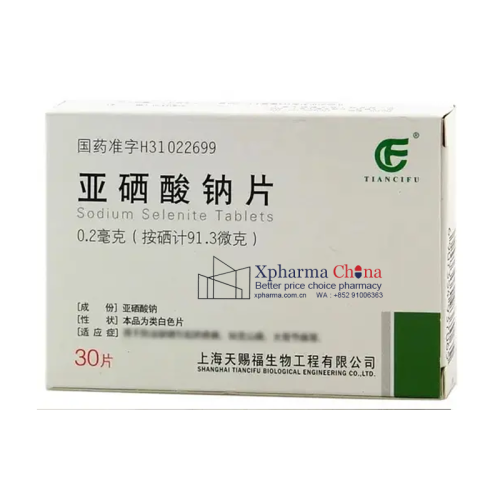
Tiancifu Sodium Selenite Tablets
Brand Name: 天赐福®(Tiancifu®)
Generic Name: Sodium Selenite
Strength: 0.2 mg (equivalent to 91.3 μg selenium) per tablet, 30 tablets per box
Manufacturer: Shanghai Tiancifu Biological Engineering Co., Ltd.
Marketing Authorization Holder: Shanghai Tiancifu Biological Engineering Co., Ltd.
Approval Date in China: 2002‑07‑10
Registration Number: 国药准字 H31022699
Storage: Store in a sealed, dry place, protected from light.
Price&Cost:Contact Us now for the best price of Sodium Selenite(Tiancifu)
Only logged in customers who have purchased this product may leave a review.

Reviews
There are no reviews yet.