1. Indications and Usage
The combination is indicated as an adjunct to diet and exercise to improve glycemic control in adults with type 2 diabetes mellitus. It is specifically intended for patients who are currently being treated with both dapagliflozin and metformin separately and would benefit from the convenience of a single tablet.
2. Dosage and Administration
Recommended Dosage: The recommended dosage is one tablet taken orally once daily with the evening meal. The tablet must be swallowed whole and not crushed, chewed, or split.
Dosage Modification: If hypoglycemia occurs, the dosage of insulin or sulfonylurea may need to be reduced.
Renal Monitoring: Renal function should be assessed prior to initiation and periodically thereafter. Dapagliflozin’s glycemic efficacy decreases as renal function declines, while metformin is contraindicated if eGFR is below 45 mL/min/1.73 m².
3. Mechanism of Action
Dapagliflozin: Inhibits sodium-glucose cotransporter 2 (SGLT2) in the kidneys, preventing glucose reabsorption and increasing urinary glucose excretion.
Metformin: Decreases hepatic glucose production, decreases intestinal absorption of glucose, and improves insulin sensitivity by increasing peripheral glucose uptake and utilization.
4. Safety and Warnings
Lactic Acidosis: A rare but serious metabolic complication associated with metformin. Risk is increased in conditions associated with tissue hypoxia, such as renal impairment, sepsis, or acute heart failure.
Diabetic Ketoacidosis (DKA): SGLT2 inhibitors can cause euglycemic DKA. The drug should be temporarily discontinued during acute illness, surgery, or restricted caloric intake.
Hypotension and Volume Depletion: Caution is required in patients taking diuretics or those with renal impairment.
Vitamin B12 Deficiency: Long-term metformin use may decrease vitamin B12 absorption.
5. Adverse Reactions and Clinical Research
Common Adverse Reactions: The most frequent adverse reactions include genital mycotic infections, urinary tract infections, nasopharyngitis, diarrhea, nausea, vomiting, and abdominal pain.
Clinical Research: Clinical trials have demonstrated that the combination of dapagliflozin and metformin provides superior glycemic control compared to either monotherapy alone.
6. Drug Interactions
Alcohol: Acute alcohol intake increases the risk of metformin-associated lactic acidosis and hypoglycemia.
Iodinated Contrast Agents: Intra-arterial administration of iodinated contrast materials may cause acute renal failure. Metformin should be discontinued at the time of or prior to the procedure and restarted 48 hours after.
Cationic Drugs: Drugs such as amiloride, digoxin, and morphine may interfere with renal tubular secretion of metformin, increasing its exposure.
7. Pharmaceutical Information
Composition: The active ingredients are dapagliflozin and metformin hydrochloride.
Appearance: The tablets are usually yellow, oval-shaped, and film-coated.
Storage: Store at 20°C to 25°C (68°F to 77°F). Keep the container tightly closed to protect from moisture.
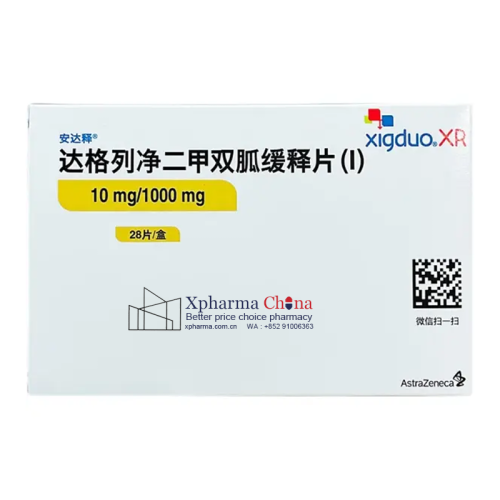
Xigduo XR Dapagliflozin and Metformin Hydrochloride Extended-release Tablets (Ⅰ)
Brand Name: 安达释 ®(Xigduo XR®)
Generic Name: Dapagliflozin and Metformin Hydrochloride
Strength: Each tablet contains 10 mg dapagliflozin and 1000 mg metformin hydrochloride, 28 tablets per box
Manufacturer: AstraZeneca Pharmaceuticals LP
Marketing Authorization Holder: AstraZeneca AB
Approval Date in China: August 10, 2023
Registration Number: 国药准字HJ20230080
Storage: Store tightly sealed at temperature not exceeding 25°C, protect from moisture and direct sunlight. Keep out of reach of children. Refer to the full package insert for detailed storage specifications.
Price&Cost:Contact Us now for the best price of Dapagliflozin and Metformin Hydrochloride(Xigduo XR)
Only logged in customers who have purchased this product may leave a review.


Reviews
There are no reviews yet.