
1. Indications and Usage
Allergic & Autoimmune: Management of severe allergic reactions, acute exacerbations of multiple sclerosis, and flare-ups of rheumatoid arthritis.
Organ Transplantation: Prevention and treatment of organ transplant rejection.
Endocrine Disorders: Treatment of primary or secondary adrenal insufficiency and acute adrenal crisis.
Neurological: Treatment of acute traumatic spinal cord injury (requires high-dose regimen within specified time windows).
Oncology: Palliative care of patients with neoplasms and chemotherapy-induced nausea and vomiting.
2. Dosage and Administration
Adults (General): Initial doses typically range from 10 mg to 500 mg. Doses ≤250 mg should be administered IV over at least 5 minutes; doses >250 mg require at least 30 minutes to minimize cardiac risk.
Spinal Cord Injury: For injury within 8 hours, initial dose is 30 mg/kg IV over 15 minutes, followed by a 45-hour infusion at 5.4 mg/kg/hour.
Life-Threatening Conditions: 30 mg/kg IV over at least 30 minutes.
Administration: Reconstitute with sterile water. Must be administered intravenously.
3. Mechanism of Action
Glucocorticoid Receptor Binding: Binds to cytosolic glucocorticoid receptors, forming a complex that translocates to the nucleus.
Gene Modulation: Modulates gene expression to inhibit phospholipase A2, thereby reducing the synthesis of prostaglandins and leukotrienes.
Immunosuppression: Inhibits macrophage and lymphocyte proliferation, reducing the immune response.
4. Safety and Warnings
Cardiac Arrest: Rapid IV administration of high doses (>500 mg in <10 minutes) may cause arrhythmias, circulatory collapse, and cardiac arrest.
Infection: Increases susceptibility to infections and may reactivate latent tuberculosis or herpes zoster.
Gastrointestinal: May exacerbate peptic ulcer disease or cause GI bleeding.
Contraindications: Systemic fungal infections, known hypersensitivity, and intrathecal or epidural administration.
5. Adverse Reactions and Clinical Research
Common: Mood changes, insomnia, fluid retention, and hyperglycemia.
Long-term: Osteoporosis, cataracts, glaucoma, and muscle wasting.
Severe: Aseptic necrosis of bone, pancreatitis, and anaphylactoid reactions.
Clinical Research: High-dose regimens have demonstrated efficacy in improving motor function in acute spinal cord injury and controlling acute autoimmune flare-ups.
6. Drug Interactions
CYP3A4 Inhibitors: Drugs like ketoconazole or ritonavir increase methylprednisolone plasma levels, increasing toxicity.
CYP3A4 Inducers: Drugs like rifampin decrease plasma levels, reducing efficacy.
NSAIDs: Concomitant use significantly increases the risk of GI ulceration and bleeding.
Live Vaccines: May cause severe infections in immunosuppressed patients.
7. Pharmaceutical Information
Active Ingredient: Methylprednisolone Sodium Succinate.
Excipients: Sodium acetate and mannitol.
Appearance: Sterile white to off-white lyophilized powder.
Storage: Store at controlled room temperature; use reconstituted solution immediately or within 24 hours under refrigeration.
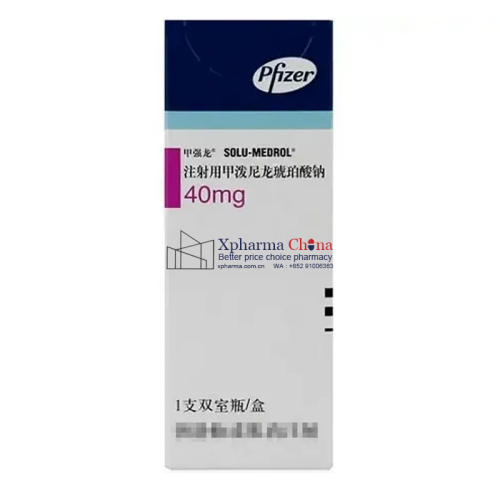
Solu‑Medrol Methylprednisolone Sodium Succinate for Injection
Brand Name: 甲强龙®(Solu‑Medrol®)
Generic Name: Methylprednisolone Sodium Succinate
Strength: 40 mg (calculated by methylprednisolone) per dual‑chamber vial, 1 vial per box
Manufacturer: Pfizer Manufacturing Belgium NV
Marketing Authorization Holder: Pfizer Manufacturing Belgium NV
Approval Date in China: 2017 (latest registration renewal approval)
Registration Number: 国药准字HJ20170197
Storage: Seal tightly, store at 2–25 ℃, avoid freezing and intense light exposure; keep out of children’s reach, reconstitute the powder right before administration, follow detailed storage specifications in the package insert
Price&Cost:Contact Us now for the best price of Methylprednisolone Sodium Succinate(Solu‑Medrol)
Only logged in customers who have purchased this product may leave a review.

Reviews
There are no reviews yet.