
1. Indications and Usage
Epilepsy: Adjunctive therapy for partial onset seizures, primary generalized tonic-clonic seizures, and seizures associated with Lennox-Gastaut syndrome.
Bipolar Disorder: Used for the maintenance treatment of bipolar I disorder to delay the time to occurrence of mood episodes (depression or mania).
2. Dosage and Administration
Titration: The medication requires a slow dose titration over several weeks to minimize the risk of severe skin reactions.
Adjunctive Therapy for Seizures:
Starting Dose: 25 mg every other day for the first 2 weeks, then 25 mg once daily for the next 2 weeks.
Target Dose: The dose is gradually increased by 25-50 mg every 1-2 weeks. The usual effective dose is 100-200 mg daily, given in two divided doses.
Bipolar Maintenance:
Starting Dose: 25 mg once daily for 2 weeks, then 50 mg once daily for 1 week.
Target Dose: The dose is increased to 100 mg daily in week 4, 200 mg daily in week 5, and the goal is 300 mg/day (given in two divided doses) by week 6.
Administration: May be taken without regard to meals. The tablets should be swallowed whole.
3. Mechanism of Action
Voltage-Gated Sodium Channel Blockade: The drug stabilizes neuronal membranes by inhibiting the high-frequency repetitive firing of action potentials.
Glutamate Modulation: It may inhibit the release of the excitatory neurotransmitter glutamate, thereby reducing neuronal excitability.
4. Safety and Warnings
Boxed Warnings:
Severe Skin Rashes: Life-threatening rashes, including Stevens-Johnson Syndrome (SJS) and toxic epidermal necrolysis (TEN), have been reported. The risk is dose-dependent and highest during the first 2-8 weeks of therapy.
Suicidal Behavior and Ideation: Antiepileptic drugs may increase the risk of suicidal thinking or behavior in a small proportion of patients.
Hypersensitivity: A multi-organ hypersensitivity reaction (fever, rash, lymphadenopathy, and abnormal liver function) may occur.
Neurological Effects: Dizziness, ataxia, diplopia, and headache are common.
5. Adverse Reactions and Clinical Research
Very Common (≥1/10): Headache, dizziness, nausea, vomiting, diarrhea, insomnia, and rash.
Common (≥1/100 to <1/10): Ataxia, diplopia, somnolence, fatigue, and anxiety.
Serious Risks: SJS/TEN, DRESS syndrome, and blood dyscrasias (e.g., leukopenia, thrombocytopenia).
6. Drug Interactions
Strong Inducers (e.g., Carbamazepine, Phenytoin, Rifampin): These drugs significantly increase the clearance of lamotrigine, requiring higher maintenance doses.
Valproate (Valproic Acid): Valproate inhibits the glucuronidation of lamotrigine, doubling its half-life. When used together, the starting dose of lamotrigine must be halved, and titration must be slower.
Hormonal Contraceptives: Oral contraceptives containing ethinylestradiol can decrease lamotrigine concentrations, and the onset/cessation of the contraceptive can cause significant fluctuations in lamotrigine levels.
7. Pharmaceutical Information
Active Ingredient: Lamotrigine.
Strengths: Available in 25 mg, 50 mg, 100 mg, 150 mg, and 200 mg tablets/capsules.
Appearance: White to off-white tablets or capsules.
Storage: Store at 25°C (77°F), excursions permitted to 15-30°C (59-86°F). Keep in a tight, light-resistant container.
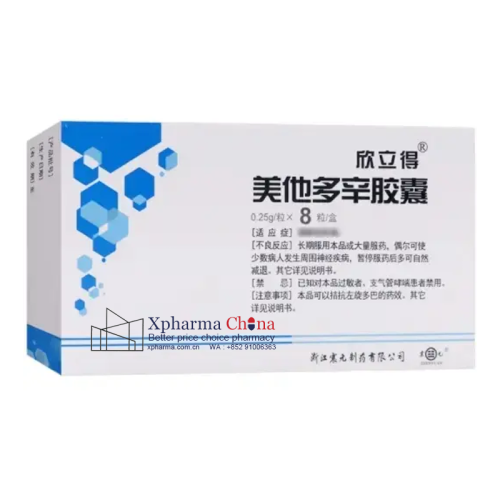
Xinlide Metadoxine Capsules
Brand Name:欣立得®( Xinlide®)
Generic Name: Metadoxine
Strength: 0.25 g per capsule
Manufacturer: ZHEJIANG SAIJIU PHARMACEUTICAL CO., LTD.
Marketing Authorization Holder: ZHEJIANG SAIJIU PHARMACEUTICAL CO., LTD.
Approval Date in China: 2003‑08‑26
Registration Number: National Drug Approval No. H20030809
Storage: Store in sealed, dry place and protect from light
Price&Cost:Contact Us now for the best price of Metadoxine(Xinlide)
Only logged in customers who have purchased this product may leave a review.

Reviews
There are no reviews yet.