
1. Indications and Usage
Community-Acquired Pneumonia: Treatment of moderate to severe community-acquired pneumonia caused by susceptible pathogens, including Chlamydophila pneumoniae, Haemophilus influenzae, Legionella pneumophila, Mycoplasma pneumoniae, Staphylococcus aureus, or Streptococcus pneumoniae.
Pelvic Inflammatory Disease: Treatment of mild to moderate pelvic inflammatory disease caused by Chlamydia trachomatis, Neisseria gonorrhoeae, or Mycoplasma hominis.
Skin and Skin Structure Infections: Treatment of uncomplicated skin and skin structure infections caused by susceptible strains of Streptococcus pyogenes, Staphylococcus aureus, or Streptococcus agalactiae.
2. Dosage and Administration
Adults: The usual dosage is 500 mg administered once every 24 hours by intravenous infusion. Treatment duration is typically 2 to 5 days.
Route of Administration: Intravenous infusion is administered over 1 hour (at a concentration of 2.0 mg/mL) or over 3 hours (at a concentration of 1.0 mg/mL).
Switch to Oral: Patients may be switched to oral azithromycin when clinically appropriate, to complete a 7 to 10-day total course of therapy.
Pediatrics: Dosage is usually 10 mg/kg administered once every 24 hours for 5 days.
3. Mechanism of Action
Protein Synthesis Inhibition: Azithromycin binds reversibly to the 50S ribosomal subunit of susceptible microorganisms, blocking translocation and inhibiting protein synthesis.
Spectrum: It demonstrates activity against many Gram-positive and Gram-negative bacteria, atypical pathogens, and certain anaerobes.
4. Safety and Warnings
QT Prolongation: Azithromycin may prolong the QT interval and has been associated with an increased risk of torsades de pointes, particularly in patients with cardiovascular risk factors.
Hepatotoxicity: Severe hepatic dysfunction, including cholestatic jaundice and hepatic necrosis, has been reported.
Hypersensitivity: Serious allergic reactions, including angioedema and Stevens-Johnson syndrome, have been reported.
Clostridioides Difficile: Antibacterial agents may alter the normal colonic flora and cause overgrowth of C. difficile.
5. Adverse Reactions and Clinical Research
Common: Gastrointestinal symptoms such as nausea, vomiting, diarrhea, and abdominal pain.
Serious: QT prolongation, severe hepatic reactions, and anaphylaxis.
Clinical Research: Clinical trials have demonstrated high efficacy and a favorable safety profile in the treatment of respiratory and gynecological infections.
6. Drug Interactions
Warfarin: Concomitant use may potentiate the effects of warfarin; prothrombin time should be monitored closely.
Digoxin: Azithromycin may increase digoxin levels in patients with renal impairment.
Nelfinavir: Concomitant use may increase azithromycin levels and associated side effects.
Theophylline: Co-administration may increase serum theophylline concentrations.
7. Pharmaceutical Information
Active Ingredient: Azithromycin.
Excipients: Citric acid.
Appearance: White to yellowish-white lyophilized powder or crystals.
Storage: Store in a well-closed container, protected from light and moisture.
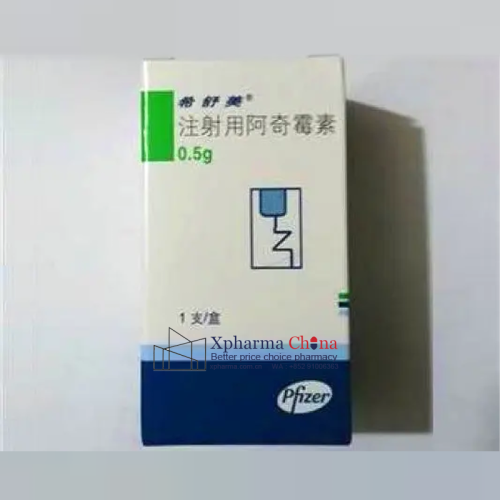
Zithromaxc Azithromycin for Injection
Brand Name: 希舒美®(Zithromax®)
Generic Name: Azithromycin
Strength: 0.5 g per vial, 1 vial per box
Manufacturer: Pfizer Ireland Pharmaceuticals
Marketing Authorization Holder: Pfizer Inc.
Approval Date in China: 2009
Registration Number: 国药准字H20090770
Storage: Store at or below 30°C, protect from light, tightly sealed; keep out of reach of children, follow the storage requirements specified in the package insert
Price&Cost:Contact Us now for the best price of Azithromycin(Zithromax)
Only logged in customers who have purchased this product may leave a review.
Reviews
There are no reviews yet.