
1. Indications and Usage
Asthma: Relief of airflow obstruction symptoms in bronchial asthma.
Chronic Bronchitis: Management of wheezing associated with chronic bronchitis.
COPD: Alleviation of airflow obstruction in chronic obstructive pulmonary disease.
2. Dosage and Administration
Route of Administration: Oral inhalation ONLY.
Recommended Dosage:
Adults: Typically 20 µg (2 inhalations) per time.
Pediatric Patients: Typically 10 µg (1 inhalation) per time.
Frequency: Generally administered 1 to 2 times daily, depending on symptom severity.
Critical Administration Instructions:
Device Handling: Do not shake the inhaler. Open the cap fully before use.
Administration: Exhale fully, place the mouthpiece between lips, inhale deeply and rapidly, then hold breath for 5-10 seconds.
Cleaning: Clean the inhaler device with a dry cloth at least once a week; do not wash with water.
3. Mechanism of Action
β2-Receptor Agonism: Procaterol is a selective agonist for β2-adrenergic receptors in the bronchial smooth muscle.
Bronchodilation: Binding activates adenylate cyclase, increasing intracellular cyclic AMP (cAMP), which relaxes bronchial smooth muscle and rapidly reverses airway obstruction.
Additional Effects: It possesses anti-allergic properties, inhibiting both early- and late-phase airway resistance increases, and promotes ciliary movement to aid mucus clearance.
4. Safety and Warnings
Paradoxical Bronchospasm: If breathing worsens immediately after administration, discontinue use immediately and seek medical attention.
Cardiovascular Effects: May cause tachycardia, palpitations, or arrhythmias. Use with extreme caution in patients with heart disease or hypertension.
Hypokalemia: Can cause transient serum potassium reduction. The risk is significantly increased when combined with xanthines, corticosteroids, or diuretics.
Overuse Risk: Excessive or continuous overuse can lead to severe arrhythmias and cardiac arrest. This medication is for symptomatic relief and does not replace long-term anti-inflammatory therapy.
5. Adverse Reactions and Clinical Research
Most Common Adverse Reactions: Tremor (muscle twitching), tachycardia/palpitations, headache, dizziness, dry mouth, and transient hypokalemia.
Rare but Serious Adverse Reactions: Anaphylactoid reactions, arrhythmias, and significant hypotension.
6. Drug Interactions
β-Blockers: Non-selective β-blockers (e.g., propranolol) may partially or completely antagonize the bronchodilatory effects of procaterol.
Xanthine Derivatives: Concomitant use with theophylline may enhance bronchodilation but significantly increases the risk of tachycardia and arrhythmias.
Corticosteroids and Diuretics: Concomitant use enhances the hypokalemic effect of procaterol.
Monoamine Oxidase Inhibitors (MAOIs): May potentiate the cardiovascular side effects of procaterol.
7. Pharmaceutical Information
Chemical Composition: Active Ingredient: Procaterol Hydrochloride.
Appearance: White or off-white powder contained within a plastic inhaler device.
Packaging: Typically supplied as a single-unit plastic inhaler device (e.g., 10 µg/inhalation, 200 inhalations per device).
Storage: Store at or below 25°C in a well-closed container; protect from light and moisture. Do not remove the desiccant.
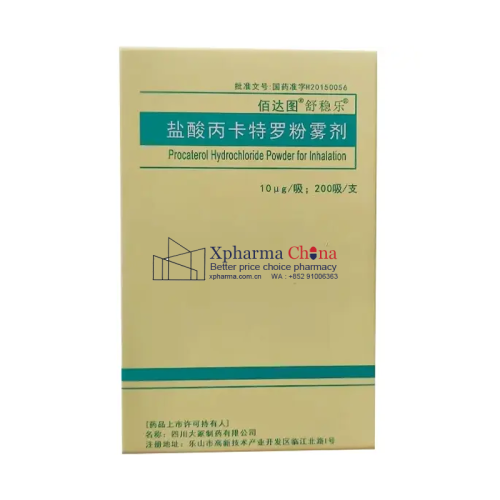
Baidata Shuwule Procaterol Hydrochloride Powder for Inhalation
Brand Name:佰达图 ® 舒稳乐 ®(Baidata® Shuwule®)
Generic Name: Procaterol Hydrochloride
Strength: 10 μg per inhalation, 200 inhalations per inhaler
Manufacturer: Sichuan Dajia Pharmaceutical Co., Ltd.
Marketing Authorization Holder: Sichuan Dajia Pharmaceutical Co., Ltd.
Approval Date in China: May 26, 2015
Registration Number: 国药准字H20150056
Storage: Store tightly sealed at room temperature, protected from light and moisture. Refer to the full package insert for detailed storage specifications.
Price&Cost:Contact Us now for the best price of Procaterol Hydrochloride(Baidata Shuwule)
Only logged in customers who have purchased this product may leave a review.
Reviews
There are no reviews yet.