1. Indications and Usage
Hypertension and Angina: Indicated for the treatment of hypertension and angina pectoris.
Myocardial Infarction: Used to reduce mortality and prevent recurrent infarction.
Arrhythmia: Indicated for the control of chronic persistent atrial fibrillation, atrial flutter, and supraventricular tachycardia.
Hyperthyroidism: Used as an adjunct in the management of hyperthyroidism and for the control of symptoms.
2. Dosage and Administration
Standard Dose: Dosage must be individualized. For hypertension and angina, the usual starting dose is 50 mg twice daily, which may be increased over several days to a maximum typically not exceeding 400 mg/day.
Administration: Tablets should be taken orally with water. Food increases the bioavailability of the drug by approximately 40%, so consistent administration with or without meals is recommended.
Discontinuation: Therapy should not be discontinued abruptly; the dosage should be gradually reduced over 1-2 weeks to prevent rebound hypertension or angina exacerbation.
3. Mechanism of Action
Beta-1 Blockade: Metoprolol is a selective beta-1 adrenergic receptor blocker. It possesses no significant intrinsic sympathomimetic activity but has weak membrane-stabilizing activity at high doses.
Cardiovascular Effects: By blocking cardiac beta-1 receptors, it decreases heart rate, myocardial contractility, and cardiac output, thereby reducing myocardial oxygen demand and blood pressure.
4. Safety and Warnings
Contraindications: Contraindicated in patients with severe bradycardia (heart rate <45 bpm), cardiogenic shock, decompensated heart failure, second- or third-degree AV block, sick sinus syndrome, and severe peripheral arterial disease.
Respiratory and Metabolic: While selective, high doses may cause bronchoconstriction. It may also mask the tachycardia and tremor associated with hypoglycemia in diabetic patients.
Anesthesia: In patients undergoing surgery, the anesthesiologist should be informed of beta-blocker use, as it may increase the risk of hypotension and bradycardia during anesthesia.
5. Adverse Reactions and Clinical Research
Cardiovascular: Bradycardia, hypotension, heart failure exacerbation, and cold extremities due to peripheral vasoconstriction.
Central Nervous System: Fatigue, dizziness, depression, and sleep disturbances (e.g., insomnia, vivid dreams).
Gastrointestinal: Nausea, vomiting, and constipation are generally mild.
Clinical Research: Clinical trials have demonstrated significant reduction in blood pressure and mortality in post-myocardial infarction patients.
6. Drug Interactions
CYP2D6 Inhibitors: Drugs like quinidine and cimetidine can inhibit the metabolism of metoprolol, leading to increased plasma concentrations.
Calcium Channel Blockers: Concomitant use with verapamil or diltiazem may cause severe bradycardia, AV block, or heart failure.
Insulin and Oral Hypoglycemics: May alter glycemic control and mask hypoglycemic symptoms.
Antiarrhythmics (Class I): Additive effects on cardiac conduction and contractility may occur.
7. Pharmaceutical Information
Active Ingredient: Metoprolol Tartrate.
Chemical Name: (±)-1-(isopropylamino)-3-[(1-methylethyl)oxy]-2-propanol L-(+)-tartrate (1:2).
Molecular Formula: C15H25NO3 · 2(C4H6O6).
Molecular Weight: 526.6 g/mol.
Strengths: Commonly available as 25 mg, 50 mg, and 100 mg tablets.
Storage: Store at 25°C (77°F); protect from light and moisture.
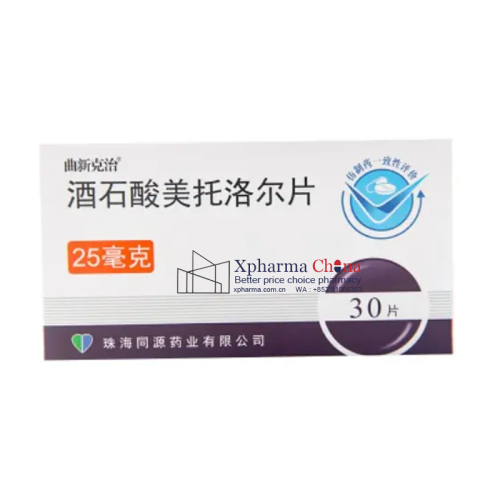
Quxinkezhi Metoprolol Tartrate Tablets
Brand Name: 曲新克治®(Quxinkezhi®)
Generic Name: Metoprolol Tartrate
Strength: 25 mg per tablet
Manufacturer: Zhuhai Tongyuan Pharmaceutical Co., Ltd.
Marketing Authorization Holder: Zhuhai Tongyuan Pharmaceutical Co., Ltd.
Approval Date in China: 2020‑04‑03
Registration Number: H20203131
Storage: Store in a sealed place, protected from light.
Price&Cost:Contact Us now for the best price of Metoprolol Tartrate(Quxinkezhi)
Only logged in customers who have purchased this product may leave a review.

Reviews
There are no reviews yet.