
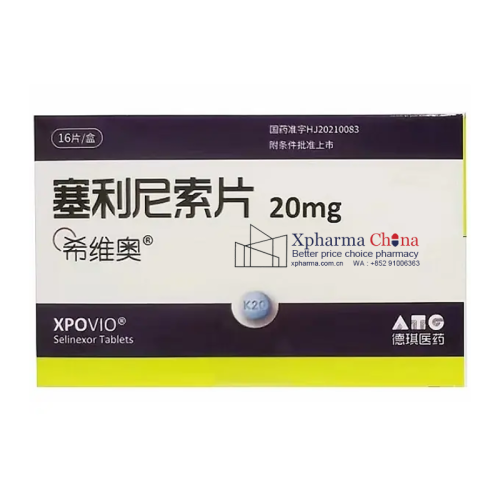
1. Description
Xpovio (selinexor) is an oral, first-in-class selective inhibitor of nuclear export (SINE) compound. Chemically, it is (2Z)-3-(3-(3,5-bis(trifluoromethyl)phenyl)-1H-1,2,4-triazol-1-yl)-2-propen-2-yl]dimethylamine. It is supplied as 20mg film-coated tablets, with excipients including microcrystalline cellulose, croscarmellose sodium, colloidal silicon dioxide, magnesium stearate, polyvinyl alcohol, polyethylene glycol and talc.
2. Indications
Multiple Myeloma (MM): In combination with dexamethasone, for the treatment of adult patients with relapsed or refractory multiple myeloma who have received at least 4 prior therapies and whose disease is refractory to multiple class agents including a proteasome inhibitor, an immunomodulatory agent, and an anti-CD38 monoclonal antibody.
Diffuse Large B-Cell Lymphoma (DLBCL): As monotherapy, for the treatment of adult patients with relapsed or refractory diffuse large B-cell lymphoma after at least 2 lines of systemic therapy, including patients whose disease transformed from follicular lymphoma.
3. Dosage and Administration
3.1 Administration
Xpovio is for oral use only. The tablets must be swallowed whole with water, and must not be chewed, crushed or broken. Administer the drug on specified days of each 7-day treatment cycle, at approximately the same time of day. Anti-emetic prophylaxis with 5-HT3 antagonists and other antiemetics is strongly recommended before the first dose to prevent severe nausea and vomiting.
3.2 Dosage
Multiple Myeloma (Combination with Dexamethasone): The recommended dose is 80mg selinexor (four 20mg tablets) taken orally on Days 1 and 3 of each week, in combination with 20mg dexamethasone taken on Days 1, 2, 3 and 4 of each week, repeated every 7 days continuously.
Diffuse Large B-Cell Lymphoma (Monotherapy): The recommended dose is 60mg selinexor (three 20mg tablets) taken orally on Days 1 and 3 of each week, until disease progression or unacceptable toxicity occurs.
Dose Adjustment for Adverse Reactions: For persistent grade 2 or any grade 3 non-hematological adverse events, or grade 4 hematological events, interrupt treatment first. After recovery to grade 1 or baseline, resume treatment with a 20mg dose reduction. The minimum allowed maintenance dose is 20mg twice weekly.
Renal Impairment: No initial dose adjustment is required for mild to moderate renal impairment. Use with caution in severe renal impairment (eGFR <30mL/min/1.73m²), as clinical data are limited.
Hepatic Impairment: No initial dose adjustment for mild hepatic impairment. Reduce the starting dose by 50% for moderate to severe hepatic impairment, due to increased drug exposure.
4. Warnings and Precautions
Thrombocytopenia: Severe thrombocytopenia (platelet count <25×10⁹/L) is the most common hematological adverse reaction. Monitor complete blood counts with platelet counts at baseline, on Days 1 and 3 of each week during the first 2 months of treatment, then weekly thereafter. Manage with dose interruption, reduction or platelet transfusion as clinically indicated.
Neutropenia: Grade 3-4 neutropenia occurs in approximately 25% of patients. Monitor absolute neutrophil counts regularly, and use granulocyte colony-stimulating factors if clinically needed.
Gastrointestinal Toxicity: Severe nausea, vomiting, diarrhea and weight loss are very common. Prophylactic antiemetics are mandatory. Initiate loperamide promptly for new-onset diarrhea, and provide supportive nutritional support.
Hyponatremia: Serum sodium <130mmol/L is reported in more than 30% of patients. Monitor serum sodium levels weekly for the first 2 months, and correct electrolyte abnormalities with oral or intravenous sodium supplementation.
Neurotoxicity: Confusion, dizziness and mental status changes have been observed. Advise patients to avoid driving or operating machinery until the neurological effects of the drug are fully clarified.
Embryo-Fetal Toxicity: Selinexor can cause fetal harm. Advise patients to use effective contraception during treatment and for 1 week after the last dose.
5. Contraindications
Confirmed severe hypersensitivity to selinexor or any excipients in the Xpovio formulation.
Patients with baseline severe uncorrected hyponatremia (<125mmol/L) or severe persistent gastrointestinal obstruction that prevents oral drug absorption.
6. Adverse Reactions
Very Common (≥ 10% incidence): Thrombocytopenia, nausea, fatigue, anemia, decreased appetite, diarrhea, hyponatremia, leukopenia, neutropenia.
Common (1-10% incidence): Vomiting, weight loss, constipation, dyspnea, upper respiratory tract infection, dizziness.
Serious Adverse Reactions: Severe gastrointestinal hemorrhage secondary to thrombocytopenia, life-threatening hyponatremic encephalopathy, and fatal cases of sepsis related to prolonged severe neutropenia.
7. Drug Interactions
CYP3A4 Substrates with Narrow Therapeutic Window: Selinexor is a weak CYP3A4 inhibitor. Co-administration with midazolam, cyclosporine or other narrow therapeutic window CYP3A4 substrates may increase their plasma concentrations. Monitor the therapeutic effect and toxicity of these drugs closely.
Strong CYP3A4 Inducers: Rifampicin, carbamazepine and other strong CYP3A4 inducers may reduce selinexor plasma exposure. Avoid long-term combined use unless the clinical benefit clearly outweighs the risk.
Anti-Platelet / Anticoagulant Agents: Concomitant use with aspirin, warfarin or other anticoagulants will significantly increase the bleeding risk in patients with treatment-related thrombocytopenia. Monitor coagulation function and platelet counts very closely.
8. Use in Specific Populations
Pregnancy: Xpovio is contraindicated in pregnancy. Confirm negative pregnancy test before treatment initiation, as the drug will cause severe fetal developmental toxicity.
Lactation: Breastfeeding is strictly prohibited during treatment and for 1 week after the last dose, to avoid potential severe hematological and gastrointestinal adverse effects in nursing infants.
Pediatric Use: Safety and effectiveness in pediatric patients under 18 years of age have not been established. The drug is not approved for use in children and adolescents.
Geriatric Use: Elderly patients (≥65 years) have higher incidence of severe adverse reactions including hyponatremia and neurotoxicity. Close clinical monitoring and more frequent laboratory testing are required during treatment.
Renal/Hepatic Impairment: No initial dose adjustment for mild renal impairment. Reduce starting dose by 50% for moderate to severe hepatic impairment, and use with extreme caution in severe renal impairment.




Reviews
There are no reviews yet.