1. Indications and Usage
Polyethylene Glycol Loxenatide is indicated as an adjunct to diet and exercise to improve glycemic control in adults with type 2 diabetes mellitus. It can be used as monotherapy or in combination with metformin.
2. Dosage and Administration
Standard Dosage: The recommended starting dose is 0.1 mg administered subcutaneously once weekly.
Increased Dosage: If glycemic control is not satisfactory with the 0.1 mg dose, it may be increased to 0.2 mg once weekly.
Administration: It should be administered subcutaneously into the abdomen or the upper arm. It must not be administered intravenously or intramuscularly.
Timing: It can be administered at any time of day, with or without meals. The same day of the week should be chosen for administration.
3. Mechanism of Action
Polyethylene Glycol Loxenatide is a GLP-1 receptor agonist. It binds to and activates GLP-1 receptors, leading to a glucose-dependent stimulation of insulin secretion, suppression of glucagon secretion, and slowing of gastric emptying.
4. Safety and Warnings
Thyroid C-Cell Tumors: GLP-1 receptor agonists cause thyroid C-cell tumors in rodent studies. It is not known if Polyethylene Glycol Loxenatide causes such tumors in humans. It is contraindicated in patients with a personal or family history of medullary thyroid carcinoma (MTC) or patients with Multiple Endocrine Neoplasia syndrome type 2 (MEN 2).
Pancreatitis: Acute pancreatitis has been reported. The drug should be discontinued if pancreatitis is suspected.
Hypersensitivity and GI Disorders: Serious hypersensitivity reactions are contraindications. It is not recommended for patients with severe gastrointestinal disorders due to common GI adverse reactions.
5. Adverse Reactions and Clinical Research
Adverse Reactions: The most common adverse reactions are gastrointestinal, including nausea, vomiting, and diarrhea, which are usually mild to moderate and transient.
Clinical Research: In pivotal Phase III clinical trials, Polyethylene Glycol Loxenatide demonstrated significant efficacy in reducing HbA1c and body weight compared to placebo.
6. Drug Interactions
Oral Hypoglycemic Agents: Concomitant use with sulfonylureas or insulin may increase the risk of hypoglycemia; dose reduction of the sulfonylurea or insulin may be necessary.
Drugs with Narrow Therapeutic Index: Due to the slowing of gastric emptying, the absorption of concomitantly administered oral drugs may be affected.
7. Pharmaceutical Information
Composition: Active ingredient is Polyethylene Glycol Loxenatide. Excipients include sodium acetate, acetic acid, mannitol, and water for injection.
Appearance: It is a colorless to almost colorless clear liquid.
Storage: Store in a refrigerator at 2°C to 8°C (36°F to 46°F). Do not freeze or shake.
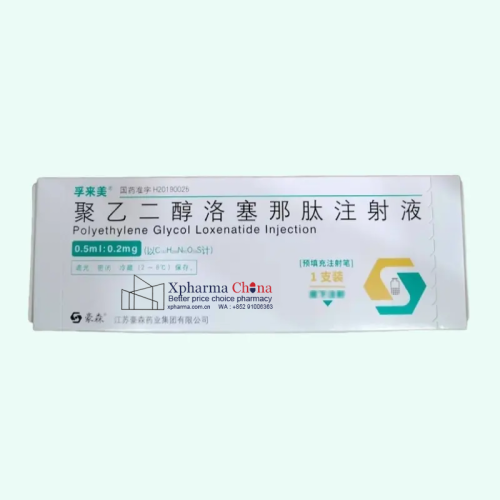
Fulaimi Polyethylene Glycol Loxenatide Injection
Brand Name: 孚来美 ®(Fulaimi®)
Generic Name: Polyethylene Glycol Loxenatide
Strength: 0.2mg / 0.5mL per pre-filled pen, 1 pen per box
Manufacturer: Jiangsu Hansoh Pharmaceutical Group Co., Ltd.
Marketing Authorization Holder: Jiangsu Hansoh Pharmaceutical Group Co., Ltd.
Approval Date in China: August 26, 2019
Registration Number: 国药准字H20180026
Storage: Store sealed in original packaging under refrigeration at 2°C–8°C, protected from light; do not freeze. Refer to the full package insert for detailed storage specifications.
Price&Cost:Contact Us now for the best price of Polyethylene Glycol Loxenatide(Fulaimi)
Only logged in customers who have purchased this product may leave a review.
Reviews
There are no reviews yet.