- Indications and Usage Insulin glargine and lixisenatide injection (I) is indicated as an adjunct to diet and exercise to improve glycemic control in adults with type 2 diabetes mellitus.
- Dosage and Administration Recommended Dosage: The recommended starting dosage is 50 units of insulin glargine and 50 mcg of lixisenatide (corresponding to 10 units on the device scale) administered subcutaneously once daily. Administration: The injection should be administered within 1 hour before a meal, preferably at the same time each day. It should not be administered intravenously or intramuscularly. Dose Titration: Dosage should be titrated based on individual patient response and glycemic targets. The maximum daily dosage is 60 units of insulin glargine and 60 mcg of lixisenatide (corresponding to 12 units on the device scale). Missed Dose: If a dose is missed, it should be administered within 1 hour before the next meal.
- Mechanism of Action Insulin Glargine: A long-acting insulin analog that provides a steady basal level of insulin to regulate glucose metabolism. Lixisenatide: A glucagon-like peptide-1 (GLP-1) receptor agonist that enhances glucose-dependent insulin secretion, suppresses inappropriate glucagon secretion, and slows gastric emptying.
- Safety and Warnings Hypoglycemia: A common risk, particularly when used with other antidiabetic agents. Gastrointestinal Reactions: Nausea, vomiting, and diarrhea are common adverse reactions. Pancreatitis: Acute pancreatitis has been reported with GLP-1 receptor agonists. Renal Impairment: Acute renal failure has been reported, often associated with severe gastrointestinal reactions leading to dehydration. Thyroid C-Cell Tumors: Rodent studies have shown an increased incidence of thyroid C-cell tumors; the relevance to humans is unknown.
- Adverse Reactions and Clinical Research Common Adverse Reactions: The most common adverse reactions include hypoglycemia, nausea, vomiting, and diarrhea. Clinical Research: Efficacy and safety were established in pivotal Phase 3 clinical trials (e.g., CARROSSIER trial), which demonstrated significant improvements in hemoglobin A1c compared to insulin glargine alone.
- Drug Interactions Oral Medications: The rate and extent of absorption of orally administered medications may be affected due to the delayed gastric emptying caused by lixisenatide. Other Antidiabetics: Increased risk of hypoglycemia when used in combination with sulfonylureas or insulin. Digoxin: Absorption may be reduced due to slowed gastrointestinal transit.
- Pharmaceutical Information Composition: The active ingredients are insulin glargine and lixisenatide. Appearance: A clear, colorless solution for subcutaneous use. Storage: Store in a refrigerator at 2°C to 8°C. Do not freeze. Once in use, it may be kept at room temperature (below 25°C) for up to 28 days.
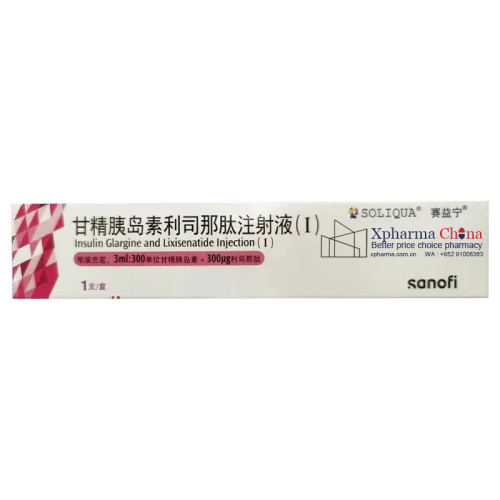
Soliqua Insulin Glargine and Lixisenatide Injection (I)
Brand Name: 赛益宁 ®(Soliqua®)
Generic Name: Insulin Glargine and Lixisenatide
Strength: Pre-filled pen, 3 mL per pen: containing 300 units Insulin Glargine and 300 μg Lixisenatide; 1 pen per box
Manufacturer: Sanofi-Aventis Deutschland GmbH
Marketing Authorization Holder: Sanofi-Aventis Groupe
Approval Date in China: August 19, 2019
Registration Number: 国药准字HJ20190026
Storage: Unopened pre-filled pens: store refrigerated at 2°C–8°C, protect from light, do not freeze. After first use: store below 25°C and complete use within 28 days, do not re-refrigerate. Keep out of reach of children. Refer to the full package insert for detailed storage specifications.
Price&Cost:Contact Us now for the best price of Insulin Glargine and Lixisenatide(Soliqua)
Only logged in customers who have purchased this product may leave a review.
Reviews
There are no reviews yet.