1. Indications and Usage
Deferasirox tablets are indicated for chronic iron overload due to blood transfusions in patients 2 years and older with transfusion-dependent anemias, and for chronic iron overload in patients 10 years and older with non-transfusion-dependent thalassemia syndromes.
2. Dosage and Administration
Transfusion-Dependent Anemias: The recommended starting dose is 20 mg/kg of body weight once daily. For patients requiring dose reduction, the dose can be decreased in 5 mg/kg increments.
Non-Transfusion-Dependent Thalassemia: The recommended starting dose is 10 mg/kg of body weight once daily.
Administration: Tablets must not be swallowed whole. They should be dispersed in a small amount of water, apple juice, or orange juice (100-200 mL) and taken at least 30 minutes before food. It should be taken once daily at approximately the same time.
3. Mechanism of Action
Deferasirox is a high-affinity trivalent iron chelator. It binds to free iron in the body to form a stable, water-soluble complex that is subsequently excreted primarily in the feces and to a lesser extent in the urine, thereby reducing total body iron stores.
4. Safety and Warnings
Renal and Hepatic Toxicity: Deferasirox can cause renal, hepatic, and bone marrow toxicity. Renal function must be monitored monthly, and liver function tests should be monitored regularly, especially during the first year of treatment.
Gastrointestinal Hemorrhage: There is an increased risk of gastrointestinal hemorrhage, particularly in patients with mucosal lesions or coagulopathy.
Death and Serious Adverse Events: Serious adverse events, including death, have been reported, most commonly in patients with Myelodysplastic Syndromes (MDS) or high-risk MDS.
5. Adverse Reactions and Clinical Research
Common Adverse Reactions: The most frequently reported adverse reactions include diarrhea, nausea, vomiting, abdominal pain, skin rash, and elevated serum creatinine.
Clinical Research: Clinical trials have demonstrated that deferasirox effectively reduces iron overload, as evidenced by decreased serum ferritin levels and liver iron concentration.
6. Drug Interactions
Antacids: Concomitant use with aluminum-containing antacids is not recommended due to potential interactions.
CYP2C8 Inhibitors: Drugs that inhibit CYP2C8 may increase the exposure to deferasirox.
UGT Inducers: Concomitant use with UDP-glucuronosyltransferase (UGT) inducers (e.g., rifampin) may decrease deferasirox exposure.
7. Pharmaceutical Information
Composition: The active ingredient is deferasirox. Common tablet strengths include 125 mg and 500 mg.
Appearance: The tablets are typically yellow to pale yellow film-coated tablets.
Storage: Store at controlled room temperature, protecting from moisture.
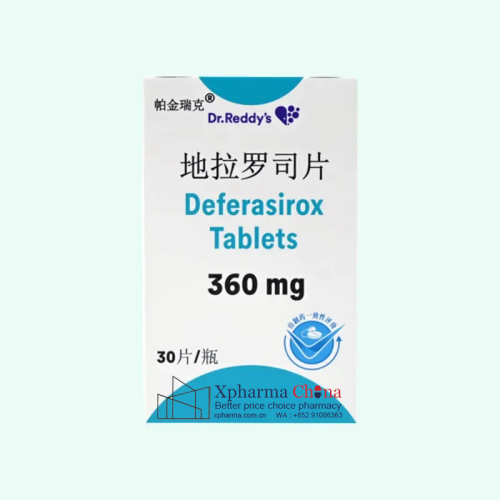
Paijinruike Deferasirox Tablets
Brand Name: 帕金瑞克 ®(Paijinruike®)
Generic Name: Deferasirox
Strength: 360 mg per tablet, 30 tablets per bottle
Manufacturer: MSN Laboratories Private Limited
Marketing Authorization Holder: Dr. Reddy’s Laboratories Limited
Approval Date in China: January 27, 2024
Registration Number: 国药准字HJ20240001
Storage: Seal tightly, store at room temperature, protect from light and moisture. Keep out of reach of children. Refer to the full package insert for detailed storage specifications.
Price&Cost:Contact Us now for the best price of Deferasirox(Paijinruike)
Only logged in customers who have purchased this product may leave a review.

Reviews
There are no reviews yet.