
1. Indications and Usage
Chronic Hepatitis B: Indicated for the treatment of adult patients with chronic hepatitis B virus (HBV) infection.
2. Dosage and Administration
Recommended Dose: The recommended dose is 25 mg taken orally once daily.
Administration: The tablets must be taken with food to optimize drug absorption.
Renal Impairment: No dose adjustment is required for patients with an estimated creatinine clearance ≥50 mL/min. Safety and efficacy are not established for patients with a creatinine clearance <50 mL/min.
Hepatic Impairment: No dose adjustment is required for patients with mild to moderate hepatic impairment. Safety and efficacy are not established for patients with severe hepatic impairment.
3. Mechanism of Action
NTTRI Activity: Tenofovir amibufenamide is a prodrug of tenofovir.
Intracellular Conversion: Upon entering hepatocytes, it is converted intracellularly to tenofovir, which is subsequently phosphorylated to tenofovir diphosphate.
Viral DNA Chain Termination: Tenofovir diphosphate competitively inhibits the HBV reverse transcriptase and prevents HBV DNA chain elongation.
4. Safety and Warnings
Hepatotoxicity: Severe acute exacerbations of hepatitis have been reported following discontinuation of tenofovir amibufenamide.
Renal Impairment: Although the risk is lower than that of tenofovir disoproxil fumarate (TDF), monitoring of renal function and serum phosphorus is recommended during long-term therapy.
Lipid Metabolism: Increases in triglycerides and low-density lipoprotein (LDL) cholesterol may occur.
Bone Mineral Density: Long-term monitoring of bone mineral density is recommended as tenofovir may cause decreases in bone density.
5. Adverse Reactions and Clinical Research
Adverse Reactions: Common adverse reactions include headache, abdominal pain, fatigue, nausea, back pain, and diarrhea.
Clinical Research: Clinical trials have demonstrated that tenofovir amibufenamide effectively suppresses HBV DNA levels and improves liver histology with a favorable renal and bone safety profile compared to TDF.
6. Drug Interactions
Nephrotoxic Agents: Concomitant use with nephrotoxic drugs (e.g., high-dose NSAIDs, aminoglycosides, amphotericin B) may increase the risk of renal toxicity.
Renal Excretion Competition: Drugs that compete for active tubular secretion in the kidney may increase serum tenofovir concentrations.
7. Pharmaceutical Information
Composition: The active ingredient is tenofovir amibufenamide fumarate.
Appearance: Available as white film-coated tablets.
Storage: Store in a tightly sealed container, protected from light and moisture.
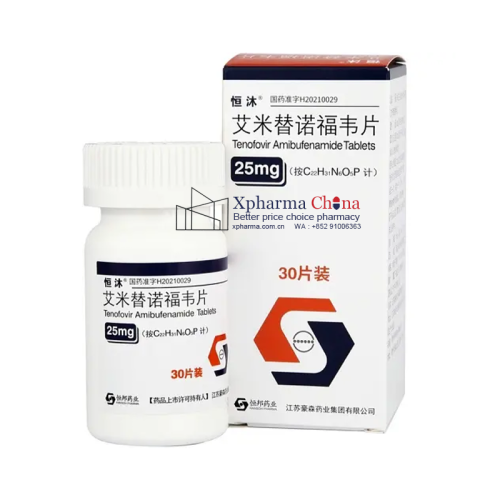
Hengmu Tenofovir Amibufenamide Tablets
Brand Name: 恒沐 ®(Hengmu®)
Generic Name: Tenofovir Amibufenamide
Strength: Each tablet contains 25 mg tenofovir amibufenamide (calculated as C₂₂H₃₁N₆O₅P), 30 tablets per bottle
Manufacturer: Changzhou Hengbang Pharmaceutical Co., Ltd.
Marketing Authorization Holder: Jiangsu Hansoh Pharmaceutical Group Co., Ltd.
Approval Date in China: June 23, 2021
Registration Number:国药准字 H20210029
Storage: Store tightly sealed in original container below 30°C, protected from light and moisture. Keep out of sight and reach of children. Refer to the full package insert for detailed storage specifications.
Price&Cost:Contact Us now for the best price of Tenofovir Amibufenamide(Hengmu)
Only logged in customers who have purchased this product may leave a review.



Reviews
There are no reviews yet.