1. Indications and Usage
Hypertension and Angina: Indicated for the management of hypertension and chronic stable angina (angina pectoris).
2. Dosage and Administration
Dosage: The usual recommended dose is 30 mg once daily or 60 mg once daily. The initial dose is typically 30 mg once daily.
Administration: The tablets must be swallowed whole with a small amount of liquid at the same time each day. They must NOT be chewed, crushed, or broken, as this would disrupt the controlled-release mechanism and lead to a rapid release of the drug.
3. Mechanism of Action
Calcium Channel Blockade: Nifedipine is a dihydropyridine calcium channel blocker. It inhibits the influx of calcium ions into vascular smooth muscle and cardiac muscle.
Cardiovascular Effects: By blocking calcium channels, it causes vasodilation, reduces peripheral vascular resistance, lowers blood pressure, and relieves myocardial ischemia.
4. Safety and Warnings
Hypotension and Reflex Tachycardia: Severe hypotension and reflex tachycardia may occur, especially during the initial titration or dose increase.
Myocardial Ischemia: Rarely, patients with severe aortic stenosis or unstable angina may develop more frequent, longer-lasting, or more severe angina at the start of therapy.
Gastrointestinal Obstruction: Since the tablet contains an insoluble shell, patients with severe gastrointestinal narrowing may be at risk of obstruction symptoms.
5. Adverse Reactions and Clinical Research
Common Adverse Reactions: The most common adverse reactions include peripheral edema, dizziness, headache, nausea, fatigue, and facial flushing.
Clinical Research: Pivotal clinical trials have demonstrated that nifedipine controlled-release tablets effectively lower blood pressure and reduce angina frequency with a favorable long-term safety profile.
6. Drug Interactions
CYP3A4 Inhibitors: Strong or moderate inhibitors of CYP3A4 (e.g., ketoconazole, ritonavir, erythromycin, cimetidine) increase plasma concentrations, raising the risk of hypotension and tachycardia.
Grapefruit Juice: Should be avoided as it inhibits CYP3A4 metabolism.
Beta-Blockers: Concomitant use may enhance hypotensive effects but can also exacerbate heart failure or angina in some patients.
Digoxin: Nifedipine may increase digoxin blood concentrations.
7. Pharmaceutical Information
Active Ingredient: Nifedipine.
Excipients: Microcrystalline cellulose, lactose monohydrate, povidone, methacrylic acid copolymer, triethyl citrate, and iron oxides.
Appearance: Pink film-coated tablets.
Storage: Store in tight containers, protected from light and moisture.
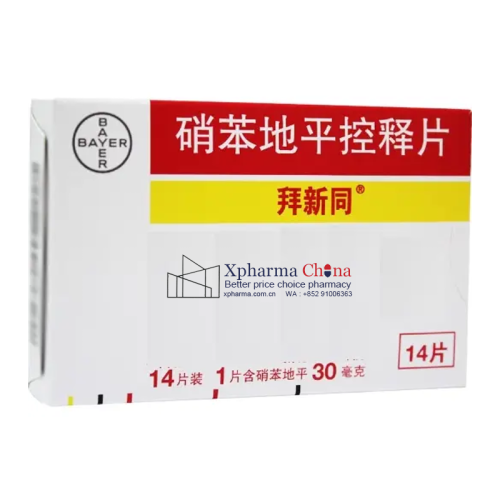
Adalat Nifedipine Controlled-release Tablets
Brand Name: 拜新同®(Adalat®)
Generic Name: Nifedipine
Strength: 30 mg per tablet, 14 tablets per box
Manufacturer: Bayer AG (Germany)
Marketing Authorization Holder: Bayer AG
Approval Date in China: November 23, 2006 (initial approval; latest registration renewal finished in 2017)
Registration Number: 国药准字HJ20171342
Storage: Seal packaging tightly, store below 30℃ with light shielding and moistureproof treatment; keep out of children’s reach, take the tablet right after removing from aluminum foil packaging, follow the full storage guidance in package insert
Price&Cost:Contact Us now for the best price of Nifedipine(Adalat)
Only logged in customers who have purchased this product may leave a review.
Reviews
There are no reviews yet.