
1. Indications and Usage
Complicated Intra-abdominal Infections: Treatment of complicated intra-abdominal infections (cIAI) caused by susceptible strains of specific bacteria.
Complicated Skin and Skin Structure Infections: Treatment of complicated skin and skin structure infections (cSSSI) caused by susceptible strains.
2. Dosage and Administration
Adults: The recommended dosage is an initial dose of 100 mg, followed by 50 mg administered every 12 hours.
Administration: Intravenous infusion only. The infusion time for each dose should be approximately 30 to 60 minutes.
Renal Impairment: No dosage adjustment is necessary for patients with renal impairment or those on hemodialysis.
Hepatic Impairment: For patients with severe hepatic impairment (Child-Pugh Class C), the dosage should be adjusted to an initial dose of 100 mg, followed by 25 mg every 12 hours.
3. Mechanism of Action
Protein Synthesis Inhibition: Tigecycline binds reversibly to the 30S ribosomal subunit of bacteria.
Resistance Overcoming: It inhibits bacterial protein synthesis by preventing the attachment of aminoacyl-tRNA to the ribosomal acceptor site.
Broad Spectrum: It is effective against organisms resistant to other tetracyclines because it is not affected by common tetracycline resistance mechanisms (ribosomal protection and efflux pumps).
4. Safety and Warnings
Mortality Risk: An increased risk of death was observed in patients treated with tigecycline compared to control groups in clinical trials.
Pregnancy: Use during the second and third trimesters may cause permanent discoloration of teeth and reversible inhibition of bone growth in the fetus.
Pediatric Use: Not recommended for patients under 18 years of age due to the mortality risk.
Superinfection: Prolonged use may result in the overgrowth of non-susceptible organisms, including fungi.
5. Adverse Reactions and Clinical Research
Common: Nausea and vomiting are the most frequently reported adverse reactions, typically occurring on the first or second day of treatment.
Clinical Research: Pivotal clinical trials have demonstrated non-inferiority compared to standard therapies (e.g., imipenem/cilastatin or vancomycin/aztreonam) in treating cIAI and cSSSI.
6. Drug Interactions
Warfarin: Tigecycline may increase the anticoagulant effect of warfarin; prothrombin time or INR should be monitored closely.
Oral Contraceptives: Concomitant use may lead to decreased efficacy of oral contraceptives.
Cyclosporine or Tacrolimus: Concomitant use may increase serum concentrations of these calcineurin inhibitors.
Digoxin: Tigecycline may slightly decrease digoxin peak concentration but does not significantly affect overall exposure or pharmacodynamics.
7. Pharmaceutical Information
Active Ingredient: Tigecycline (as free base).
Excipients: Glycine and hydrochloric acid.
Appearance: Orange lyophilized cake or powder.
Storage: Store at controlled room temperature and protect from light. Reconstituted and diluted solutions should be used promptly or stored under refrigeration as per stability guidelines.
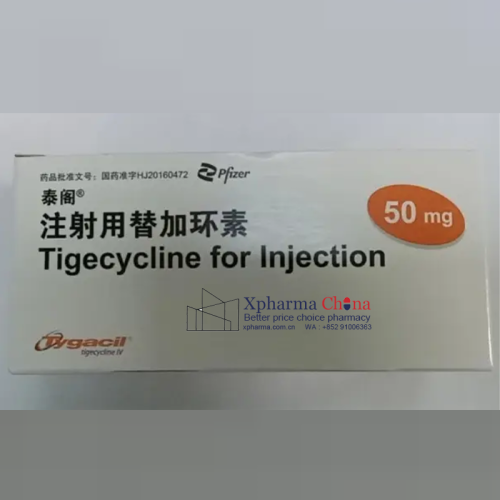
Tygacil Tigecycline for Injection
Brand Name: 泰阁®(Tygacil®)
Generic Name: Tigecycline
Strength: 50 mg per vial (lyophilized powder), packaged as 10 vials per box matching approval number HJ20160472
Manufacturer: Wyeth Lederle S.r.l. (Pfizer subsidiary located in Italy)
Marketing Authorization Holder: Pfizer Europe MA EEIG
Approval Date in China: 2016 (import registration upgrade approval for the HJ serial approval number)
Registration Number: 国药准字HJ20160472
Storage: Store at 20–25 ℃, allow the temperature fluctuation range of 15–30 ℃, keep away from strong light and moisture; avoid repeated freeze-thaw cycles, reconstitute the lyophilized powder right before intravenous infusion, keep the product out of children’s reach, abide by detailed storage rules written in the package insert
Price&Cost:Contact Us now for the best price of Tigecycline(Tygacil)
Only logged in customers who have purchased this product may leave a review.
Reviews
There are no reviews yet.