
1. Indications and Usage
Surgical Anesthesia: Epidural anesthesia (including cesarean section), spinal anesthesia, and regional blocks.
Acute Pain Control: Continuous epidural infusion or intermittent single-dose use (e.g., postoperative or labor analgesia), and regional blocks.
2. Dosage and Administration
Adult Dosing: Dosage varies by technique and concentration. For epidural anesthesia in surgery, 7.5 mg/mL is commonly used. For acute pain control, lower concentrations (e.g., 2.0 mg/mL) are used for continuous infusion.
Administration: The maximum recommended total dose for adults is 375 mg per 24 hours. Always use the minimum effective dose.
Precautions: A test dose should be administered before the total dose to rule out intravascular or intrathecal injection. Aspiration should be performed before and during injection.
3. Mechanism of Action
Sodium Channel Blockade: Ropivacaine works by blocking the influx of sodium ions through nerve cell membranes.
Nerve Impulse Inhibition: This inhibition prevents the generation and conduction of nerve impulses, thereby producing local anesthesia and analgesia.
4. Safety and Warnings
Systemic Toxicity: Accidental intravascular injection or overdose may cause CNS toxicity (e.g., seizures, dizziness) and cardiovascular toxicity (e.g., bradycardia, hypotension, arrhythmias).
Neurotoxicity: Rare neurological complications (e.g., cauda equina syndrome) may occur with spinal or epidural anesthesia.
Allergic Rection: True allergy to amide-type local anesthetics is rare, but hypersensitivity must be monitored.
5. Adverse Reactions and Clinical Research
Common Adverse Reactions: Hypotension, nausea, vomiting, bradycardia, headache, and paresthesia.
Clinical Research: Clinical trials have demonstrated that ropivacaine provides effective analgesia with less motor blockade and potentially lower cardiotoxicity compared to bupivacaine.
6. Drug Interactions
Other Local Anesthetics: Concurrent use with other amide-type local anesthetics may have additive toxic effects.
Class I Antiarrhythmics: Use with caution.
CYP1A2 Inhibitors: Strong inhibitors like fluvoxamine can significantly reduce the clearance of ropivacaine, increasing the risk of toxicity.
7. Pharmaceutical Information
Active Ingredient: Ropivacaine Hydrochloride.
Appearance: Colorless, clear liquid.
Storage: Store at controlled room temperature. It is a single-use preservative-free solution.
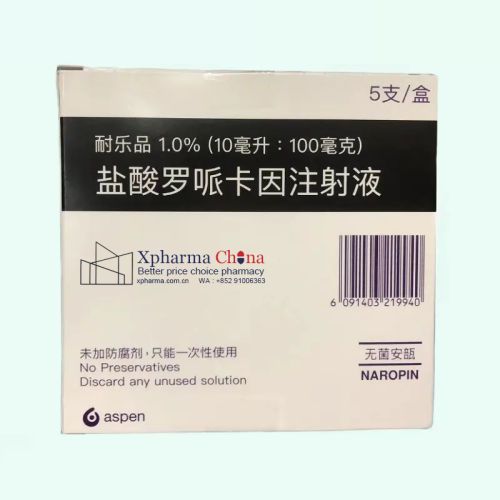
Naropin Ropivacaine Hydrochloride Injection
Brand Name: 耐乐品®(Naropin®)
Generic Name: Ropivacaine Hydrochloride
Strength: 100 mg per ampoule (10 mL, 1% concentration), 5 ampoules per box
Manufacturer: Aspen Notre Dame de Bondeville (France) / AstraZeneca AB
Marketing Authorization Holder: Aspen Pharmacare Australia Pty Ltd
Approval Date in China: 2014
Registration Number: 国药准字HJ20140764
Storage: Store at room temperature, protect from light; single use only after opening, discard unused liquid; keep out of reach of children, follow full storage requirements in package insert
Price&Cost:Contact Us now for the best price of Ropivacaine Hydrochloride(Naropin)
Only logged in customers who have purchased this product may leave a review.

Reviews
There are no reviews yet.