1. Indications and Usage
Prevention of CINV: Used in combination with other antiemetic agents for the prevention of acute and delayed nausea and vomiting caused by initial and repeat courses of moderately emetogenic chemotherapy.
Highly Emetogenic Chemotherapy: Indicated for the prevention of acute and delayed nausea and vomiting following highly emetogenic chemotherapy.
2. Dosage and Administration
Adults (Moderately Emetogenic Chemotherapy):
Day 1: 125 mg orally, taken at least 1 hour before the chemotherapy.
Days 2 and 3: 80 mg orally, taken at least 1 hour before chemotherapy.
Adults (Highly Emetogenic Chemotherapy):
Day 1: 125 mg orally.
Days 2 and 3: 80 mg orally.
Administration: Capsules should be swallowed whole with water. Do not open, chew, or crush the capsules.
3. Mechanism of Action
Neurokinin-1 (NK1) Receptor Antagonism: Aprepitant is a selective antagonist for the neurokinin-1 receptor, which is the human receptor for substance P.
Emetic Pathway: Substance P and substance P binding to the NK1 receptor in the brainstem play a crucial role in the emetic reflex, particularly in the delayed phase of chemotherapy-induced nausea and vomiting.
Central Action: By blocking this receptor, aprepitant inhibits the signaling pathway that triggers nausea and vomiting at the central level.
4. Safety and Warnings
Contraindications: Contraindicated in patients with a known hypersensitivity to aprepitant or any component of the formulation.
Cardiac Monitoring: ECG monitoring is recommended in patients with a history of prolonged QT interval or who are taking other drugs known to prolong the QT interval.
Hepatic Impairment: Dosage adjustment is required for patients with severe hepatic impairment (Child-Pugh C).
Fetal Risk: Can cause fetal harm if administered during pregnancy.
5. Adverse Reactions and Clinical Research
Common Adverse Reactions: Fatigue, dizziness, headache, diarrhea, dyspepsia, and application site reactions.
Serious Risks: Hypersensitivity reactions, including anaphylaxis, angioedema, and rash, have been reported.
Management: If a severe rash or hypersensitivity reaction occurs, the drug should be discontinued immediately.
6. Drug Interactions
CYP3A4 Interactions: Aprepitant is both a substrate and an inhibitor of CYP3A4. Concomitant use with drugs metabolized by CYP3A4 may increase their plasma concentrations.
Strong CYP3A4 Inhibitors: Concomitant use with strong CYP3A4 inhibitors (e.g., ketoconazole) is not recommended.
Sedatives: Aprepitant may increase the exposure of midazolam or triazolam, requiring dose adjustment or avoidance.
7. Pharmaceutical Information
Active Ingredient: Aprepitant.
Strength: Capsules typically contain 125 mg or 80 mg of aprepitant.
Appearance: Hard gelatin capsules, usually white or off-white.
Storage: Store below 30°C (86°F) in a tight container.
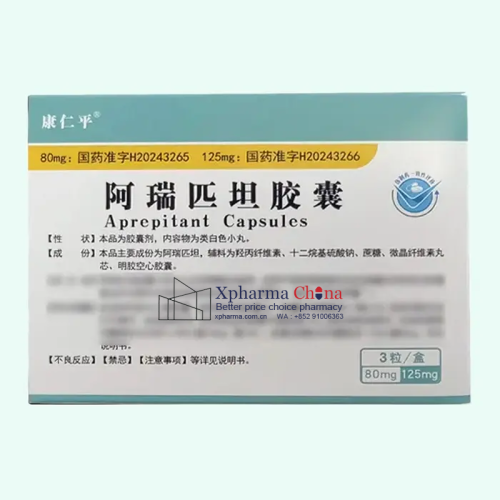
Kangrenping Aprepitant Capsules
Brand Name: 康仁平®(Kangrenping®)
Generic Name: Aprepitant
Strength: 80mg and 125mg per capsule
Manufacturer:Beijing Sihuan Pharmaceutical Co., Ltd.
Marketing Authorization Holder:Beijing Sihuan Pharmaceutical Co., Ltd.
Approval Date in China: 2024‑08‑21
Registration Number: National Medicine Approval No. H20243265 (80mg), H20243266 (125mg)
Storage: Store in tightly‑closed container, keep at room temperature, protect from moisture
Price&Cost:Contact Us now for the best price of Aprepitant(Kangrenping)
Only logged in customers who have purchased this product may leave a review.
Reviews
There are no reviews yet.