
1. Indications and Usage
Irritable Bowel Syndrome: Used to relieve constipation symptoms in patients with constipation-predominant irritable bowel syndrome (IBS-C).
General Constipation: Suitable for patients who should not take sodium-containing medications, such as those with hypertension, heart failure, or edema, due to its sodium-free composition.
Diarrhea Management: Due to its strong water-absorbing properties, it can also be used to manage watery diarrhea.
2. Dosage and Administration
Adults: The usual dosage is 1.0 g (2 tablets) taken 3 times daily.
Administration: Must be swallowed with a sufficient amount of water (approximately 250 mL) after meals to prevent esophageal or throat obstruction.
Duration: The general course of treatment should not exceed 2 weeks. If symptoms do not improve, the medication should be discontinued.
3. Mechanism of Action
Water Absorption: In the acidic environment of the stomach, polycarbophil calcium loses calcium and forms polycarbophil. In the neutral environment of the small or large intestine, it exhibits high water absorption, expanding into a gel.
Regulation: By maintaining moisture within the digestive tract, it regulates the transportation of gastrointestinal contents, thereby alleviating constipation or solidifying loose stools in diarrhea.
4. Safety and Warnings
Contraindications: Contraindicated in patients with acute abdominal diseases (e.g., appendicitis, intestinal hemorrhage, ulcerative colitis), those at risk of intestinal obstruction post-surgery, patients with hypercalcemia, kidney stones, or severe renal failure.
Precautions: Use with caution in patients taking active Vitamin D, cardiac glycosides, or those prone to hypercalcemia. Elderly patients with reduced renal function should use it with care to avoid calcium accumulation.
Administration Warning: The medication must be taken with ample water; otherwise, there is a risk of it swelling and blocking the throat or esophagus.
5. Adverse Reactions and Clinical Research
Common Adverse Reactions: Gastrointestinal symptoms such as bloating, abdominal pain, diarrhea, constipation, nausea, vomiting, and flatulence may occur.
Other Reactions: Hypersensitivity reactions (e.g., rash, pruritus), thirst, edema, headache, and abnormalities in liver or kidney function tests (e.g., elevated ALT/AST, proteinuria) have been reported.
6. Drug Interactions
Antibiotics: May form chelates with tetracycline or quinolone antibiotics, reducing their absorption and efficacy.
Acid-Reducing Agents: Proton pump inhibitors, H2 blockers, or antacids can increase gastric pH, inhibiting de-calcification and reducing the drug’s efficacy.
Cardiac Glycosides: May enhance the effects of cardiac glycosides (e.g., digoxin), potentially causing arrhythmias.
7. Pharmaceutical Information
Active Ingredient: Calcium Polycarbophil.
Chemical Name: Calcium salt of cross-linked polyacrylic acid.
Strength: Typically 0.5 g per tablet.
Appearance: White or off-white tablets, often film-coated.
Storage: Store in a tightly closed container in a dry place.
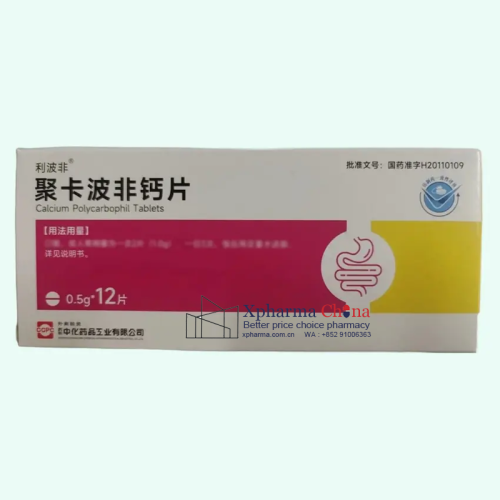
Libofei Calcium Polycarbophil Tablets
Brand Name: 利波非®(Libofei®)
Generic Name: Calcium Polycarbophil
Strength: 0.5 g per tablet
Manufacturer: Sinochem Pharmaceutical Industries Co., Ltd.
Marketing Authorization Holder: Sinochem Pharmaceutical Industries Co., Ltd.
Approval Date in China: 2011‑04‑15
Registration Number: National Drug Approval No. H20110109
Storage: Store in sealed and dry place, protected from light
Price&Cost:Contact Us now for the best price of Calcium Polycarbophil(Libofei)
Only logged in customers who have purchased this product may leave a review.
Reviews
There are no reviews yet.