
1. Indications and Usage
Orthostatic Hypotension: Indicated for the treatment of symptomatic orthostatic hypotension, to be used only in patients whose daily activities are seriously compromised by the condition.
Stress Urinary Incontinence: Used as an adjunctive treatment for female stress urinary incontinence.
2. Dosage and Administration
Standard Dose: The starting dose for adults is 2.5 mg, taken 2–3 times daily. The dose can be titrated up to 10 mg, taken 3 times daily based on patient tolerance.
Administration: Must be taken during the day when upright and active. The last dose should be taken at least 4 hours before bedtime to avoid supine hypertension.
Dosing Interval: Doses should be spaced at least 4 hours apart.
3. Mechanism of Action
Alpha-Adrenergic Agonism: Midodrine is a prodrug metabolized to its active form, desglymidodrine, which selectively stimulates peripheral alpha-adrenergic receptors.
Vasoconstriction: This action causes constriction of arterioles and veins, increasing peripheral vascular resistance and venous return, thereby elevating blood pressure.
Sphincter Contraction: In urinary incontinence, it increases the urethral sphincter tone to reduce leakage.
4. Safety and Warnings
Black Box Warning: Contraindicated in patients with supine hypertension. Because the drug raises blood pressure, patients must avoid lying completely flat; sleeping with the head of the bed elevated is recommended.
Cardiovascular Risks: Can cause reflex bradycardia. Use with caution in patients with coronary artery disease, severe hypertension, or urinary retention.
5. Adverse Reactions and Clinical Research
Common Adverse Reactions: Piloerection (gooseflesh), urinary retention or hesitation, paresthesia, headache, and nausea.
Serious Adverse Reactions: Severe supine hypertension is the most dangerous adverse effect, potentially leading to cardiovascular complications.
6. Drug Interactions
Beta-Blockers: May potentiate reflex bradycardia caused by midodrine.
Other Sympathomimetics: Concomitant use with other sympathomimetics (e.g., pseudoephedrine) can lead to excessive hypertension.
Tricyclic Antidepressants: May enhance the pressor effects of midodrine.
7. Pharmaceutical Information
Active Ingredient: Midodrine Hydrochloride.
Strengths: Typically available as 2.5 mg, 5 mg, and 10 mg tablets.
Appearance: White or off-white tablets.
Storage: Store at room temperature (25°C). Keep in a tight, light-resistant container.
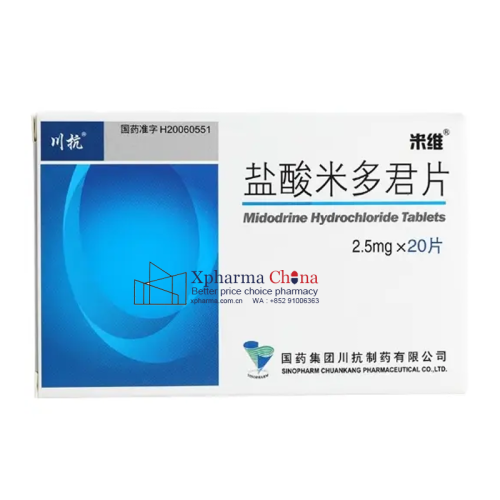
Miwei Midodrine Hydrochloride Tablets
Brand Name: 米维®(Miwei®)
Generic Name: Midodrine Hydrochloride
Strength: 2.5mg per tablet, 20 tablets per box
Manufacturer: Sinopharm Chuankang Pharmaceutical Co., Ltd.
Marketing Authorization Holder: Sinopharm Chuankang Pharmaceutical Co., Ltd.
Approval Date in China: 2006‑05‑26
Registration Number: 国药准字 H20060551
Storage: Store in a sealed, dry place, protected from light.
Price&Cost:Contact Us now for the best price of Midodrine Hydrochloride(Miwei)
Only logged in customers who have purchased this product may leave a review.

Reviews
There are no reviews yet.