1. Indications and Usage
Anfulikitamab injection (subcutaneous) is indicated for the treatment of acute gouty arthritis attacks in adult patients who have contraindications to, intolerance of, or inadequate response to nonsteroidal anti-inflammatory drugs and/or colchicine, and who are not suitable for repeated use of corticosteroids.
It is intended for acute inflammatory control and does not replace urate-lowering therapy.
2. Dosage and Administration
Route: Subcutaneous injection, administered by a healthcare professional.
Recommended Dose: 200 mg as a single subcutaneous injection.
Administration: The prefilled syringe should be allowed to reach room temperature for at least 10 minutes before injection. Do not shake vigorously. Inject subcutaneously as directed by the approved label and treating physician.
Retreatment: Repeat dosing should be determined by clinical need and the approved Chinese label.
3. Mechanism of Action
Anfulikitamab is a humanized monoclonal antibody targeting interleukin-1 beta (IL-1β).
In gouty arthritis, monosodium urate crystals activate the inflammasome, leading to excessive release of IL-1β, a key driver of acute joint inflammation. Anfulikitamab binds and neutralizes free IL-1β, thereby blocking downstream inflammatory signaling and reducing acute pain, swelling, and recurrence risk.
4. Safety and Warnings
Infection Risk: IL-1β inhibition may increase susceptibility to infections. Patients with active infection, active tuberculosis, or a history of recurrent infections should be carefully evaluated before use.
Concomitant Biologics: Concomitant use with other IL-1 inhibitors or TNF inhibitors is not recommended.
Not a Urate-Lowering Agent: Anfulikitamab does not lower serum uric acid and should not replace long-term urate-lowering therapy.
Hypersensitivity: Monitor for injection site reactions and systemic hypersensitivity reactions.
Pregnancy and Lactation: Safety has not been fully established; use only after risk-benefit assessment.
5. Adverse Reactions and Clinical Research
Common Adverse Reactions: In the Phase III study, commonly reported adverse reactions included hyperlipidemia (5.5%), injection site reactions (3.5%), and elevated aspartate aminotransferase (3.2%), most of which were mild.
Clinical Research: In a Phase III study of 505 Chinese patients with acute gouty arthritis, a single 200 mg subcutaneous dose began relieving pain within 6 hours, achieved analgesic efficacy at 72 hours comparable to compound betamethasone, and reduced the relative risk of acute recurrence within 12 weeks by 77%. The immunogenicity rate was low at 2.9%.
6. Drug Interactions
Formal English drug interaction data have not been published. Concomitant use with other IL-1 inhibitors, TNF inhibitors, or immunosuppressive agents should be avoided or carefully managed. No clinically significant pharmacokinetic interactions with small-molecule drugs have been publicly reported.
7. Pharmaceutical Information
International Nonproprietary Name: Anfulikitamab.
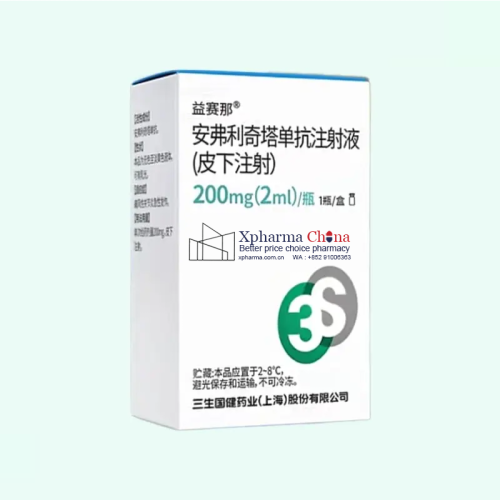
Chinese Name: 安弗利奇塔单抗注射液(皮下注射).
Brand Name: 益赛那.
Drug Class: Humanized anti-IL-1β monoclonal antibody.
Dosage Form: Subcutaneous injection.
Strength: 200 mg per dose (specific presentation should be confirmed from the approved Chinese label).
Approval: Approved by China NMPA in August 2026 for acute gouty arthritis in adults.
Storage: Store at 2°C to 8°C, protected from light. Do not freeze. Do not shake vigorously.
Yisaina Anfulikitamab Injection (Subcutaneous Injection)
Brand Name:益赛那®(Yisaina®)
Generic Name: Anfulikitamab
Strength: 200mg (2mL) per vial
Manufacturer: 3SBio Genomics (Shanghai) Co., Ltd.
Marketing Authorization Holder: 3SBio Genomics (Shanghai) Co., Ltd.
Approval Date in China: 2026‑08‑18
Registration Number: S20260064
Storage: Store at 2–8℃, protected from light. Do not freeze.
Price&Cost:Contact Us now for the best price of Anfulikitamab(Yisaina)
Only logged in customers who have purchased this product may leave a review.
Reviews
There are no reviews yet.