1. Indications and Usage
Hypertension: Treatment of hypertension.
Angina Pectoris: Treatment of chronic stable angina pectoris.
Chronic Heart Failure: Treatment of stable chronic heart failure with reduced left ventricular ejection fraction in patients with mild to severe symptoms (NYHA class II to IV).
2. Dosage and Administration
Hypertension and Angina: The usual dosage is 47.5-95 mg once daily.
Chronic Heart Failure: Initiation should be at 23.75 mg once daily (or 11.875 mg for NYHA class III-IV), with dose doubling every two weeks to a target maximum of 190 mg once daily.
Administration: Oral administration, typically once daily in the morning. Tablets can be broken into equal halves but must not be chewed or crushed.
3. Mechanism of Action
Beta-1 Selective Blockade: Metoprolol succinate is a selective beta-1 adrenergic receptor blocker.
Cardiovascular Effects: It reduces heart rate, myocardial contractility, and cardiac output. By blocking sympathetic stimulation, it lowers blood pressure, reduces myocardial oxygen demand, and provides long-term cardioprotection in heart failure.
4. Safety and Warnings
Cardiovascular Contraindications: Contraindicated in cases of severe bradycardia (heart rate <45/min), cardiogenic shock, acute or decompensated heart failure, second- or third-degree AV block, and symptomatic hypotension.
Abrupt Withdrawal: Sudden discontinuation in patients with ischemic heart disease can exacerbate angina or lead to myocardial infarction. The drug must be tapered gradually over 1-2 weeks.
Respiratory and Peripheral Circulation: Use with caution in patients with bronchospastic diseases or severe peripheral vascular disease, as it may exacerbate symptoms.
5. Adverse Reactions and Clinical Research
Cardiovascular System: Bradycardia, conduction blocks, hypotension, and exacerbation of heart failure.
Central Nervous System: Due to its lipophilic nature, it may cause fatigue, dizziness, depression, headache, and insomnia.
Digestive System: Nausea, abdominal pain, diarrhea, and constipation.
Respiratory System: Shortness of breath and potential bronchospasm in susceptible individuals.
6. Drug Interactions
CYP2D6 Inhibitors: Quinidine, terbinfine, paroxetine, and fluoxetine can inhibit metabolism and increase metoprolol blood concentration, raising toxicity risk.
Calcium Channel Blockers: Concomitant use with verapamil or non-dihydropyridine calcium channel blockers may increase the risk of severe bradycardia and AV block.
Antihypertensives: May potentiate the hypotensive effects of other antihypertensive agents.
7. Pharmaceutical Information
Active Ingredient: Metoprolol Succinate.
Appearance: White or off-white film-coated tablets.
Storage: Store in tight, light-resistant containers at controlled room temperature.
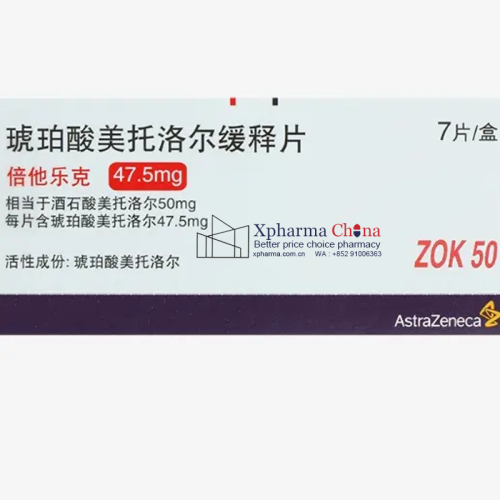
Betaloc Metoprolol Succinate Sustained-release Tablets
Brand Name: 倍他乐克®(Betaloc®)
Generic Name: Metoprolol Succinate
Strength: 47.5 mg per sustained-release tablet (equivalent to 50 mg metoprolol tartrate), 7 tablets per box
Manufacturer: AstraZeneca Pharmaceutical Co., Ltd.
Marketing Authorization Holder: AstraZeneca AB
Approval Date in China: 2015
Registration Number: 国药准字J20150044
Storage: Keep tightly sealed, store at room temperature away from direct sunlight and humid surroundings; keep out of children’s reach, follow detailed storage requirements on the package insert
Price&Cost:Contact Us now for the best price of Metoprolol Succinate(Betaloc)
Only logged in customers who have purchased this product may leave a review.

Reviews
There are no reviews yet.