
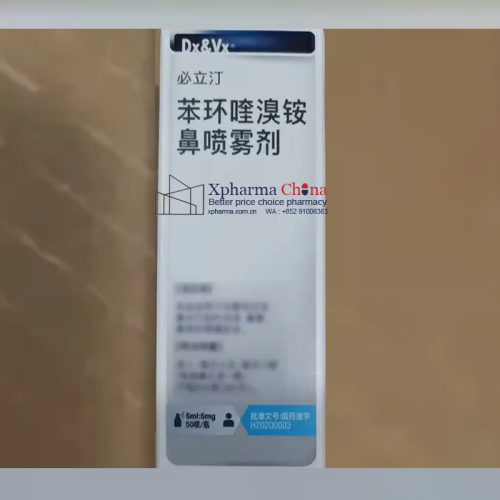
1. Indications and Usage
Phenylquinbromide nasal spray is suitable for improving symptoms such as runny nose, nasal congestion, nasal itching and sneezing caused by allergic rhinitis.
2. Dosage and Administration
Recommended Dosage: The recommended dose for adults is 4 times daily, with 2 sprays per administration (one spray in each nostril). The treatment course is 4 weeks (28 days).
Administration: Clean the nasal cavity first. For initial use or after a pause of one day or more, press rapidly against the air until a fine, even mist sprays out. Insert the nozzle about 0.2-0.5 cm into one nostril, pointing straight back. Lean slightly forward, hold your breath, close the other nostril, and press down quickly.
Post-Administration: Avoid blowing your nose for 15 minutes after use. Once opened, the spray should be used within four weeks.
3. Mechanism of Action
M3 Receptor Antagonism: Bencycloquidium bromide selectively and competitively blocks muscarinic M3 receptors on parasympathetic nerve endings in the nasal mucosa.
Symptom Relief: This blockade inhibits acetylcholine-mediated effects, reducing nasal glandular secretion and mucus production, thereby alleviating rhinorrhea, nasal congestion, itching, and sneezing.
4. Safety and Warnings
Ocular Effects: Ensure the drug does not contact the eyes. Entry into the eye may cause or worsen narrow-angle glaucoma, eye pain, blurred vision, or halos around lights.
Anticholinergic Precautions: Use with caution in patients with narrow-angle glaucoma, prostatic hyperplasia, or bladder neck obstruction.
Nasal Conditions: Use with caution in patients with a history of nasal bleeding, nasal trauma, nasal surgery, or other nasal diseases (e.g., chronic sinusitis, nasal polyps).
Cardiovascular Disease: Experience is limited in patients with severe cardiovascular diseases (e.g., acute myocardial infarction, unstable angina, chronic heart failure).
5. Adverse Reactions and Clinical Research
Adverse Reactions: Most adverse reactions are related to its anticholinergic properties. The most common reactions include nasal dryness and epistaxis. Other reported reactions include nasal pain, dizziness, somnolence, dysgeusia, dry mouth, and increased intraocular pressure.
Clinical Research: Clinical trials have demonstrated that bencycloquidium bromide effectively improves nasal symptoms of allergic rhinitis compared to placebo, with a generally favorable safety profile.
6. Drug Interactions
CYP2D6 Inhibitors: Co-administration with strong CYP2D6 inhibitors (e.g., paroxetine) has not shown clinically significant metabolic interactions.
Anticholinergic Agents: Concomitant use with other anticholinergic drugs may increase the risk of adverse effects, such as dry mouth, constipation, and urinary retention.
7. Pharmaceutical Information
Composition: The active ingredient is bencycloquidium bromide. Excipients include sodium chloride, benzalkonium chloride, hydrochloric acid, and water for injections.
Appearance: It is a clear, colorless liquid contained in a pressurized spray bottle.
Storage: Store at controlled room temperature, protecting from freezing and direct sunlight.



Reviews
There are no reviews yet.