
1. Indications and Usage
Peripheral T-Cell Lymphoma (PTCL): Treatment of patients with relapsed or refractory PTCL who have received at least one prior systemic chemotherapy.
Breast Cancer: In combination with an aromatase inhibitor for postmenopausal women with hormone receptor-positive, HER2-negative, locally advanced or metastatic breast cancer who have recurrent or progressed on prior endocrine therapy.
Diffuse Large B-Cell Lymphoma (DLBCL): In combination with R-CHOP for patients with previously untreated MYC- and BCL2-expressing DLBCL.
2. Dosage and Administration
Route of Administration: Oral administration ONLY.
PTCL Dosage: 30 mg (6 tablets) twice weekly (with at least 3 days between doses, e.g., Monday and Thursday), 30 minutes after breakfast.
DLBCL Dosage: 20 mg (4 tablets) on days 1, 4, 8, and 11 of each cycle (21 days per cycle), 30 minutes after meals.
Dose Adjustments: According to the Clinical Application Guidelines for New Antineoplastic Drugs (2024 edition), for Grade 3 or 4 neutropenia, thrombocytopenia, or anemia, chemotherapy should be suspended。 Upon recovery, the dose may be resumed at the original dose (if Grade 3) or reduced to 20 mg (if Grade 4).
3. Mechanism of Action
HDAC Inhibition: Chidamide selectively inhibits class I HDACs (specifically HDAC1, 2, 3, and 8).
Gene Expression Regulation: This inhibition leads to hyperacetylation of histones and non-histone proteins, altering gene expression to induce cell cycle arrest and apoptosis in tumor cells.
4. Safety and Warnings
Hematologic Toxicity: Common adverse reactions include thrombocytopenia, leukopenia/neutropenia, and anemia.
QTc Prolongation: Rare cases of QTc interval prolongation have been reported; cardiac safety monitoring is advised.
Serious Infections: Monitor for signs of infection due to immunosuppressive effects of neutropenia.
Contraindications: Contraindicated in pregnant women and patients with severe heart failure (NYHA class IV).
5. Adverse Reactions and Clinical Research
Most Common Adverse Reactions: Hematologic toxicity (thrombocytopenia, neutropenia, anemia), fatigue, fever, gastrointestinal reactions (diarrhea, nausea, vomiting), and appetite loss.
Other Adverse Reactions: Electrolyte disturbances (hypokalemia, hypocalcemia), dizziness, and skin rash.
Clinical Research Highlights: Phase II and Phase III trials have demonstrated significant objective response rates in PTCL and efficacy in combination regimens for DLBCL and breast cancer.
6. Drug Interactions
CYP450 Enzymes: In vitro studies show chidamide has no significant direct inhibitory effect on major human liver microsomal CYP450 isoenzymes (CYP1A2, 2B6, 2C9, 2C19, 2E1).
QT-Prolonging Drugs: Concomitant use with drugs known to prolong the QTc interval should be approached with caution.
Other Antineoplastics: When used in combination regimens (e.g., with R-CHOP or aromatase inhibitors), monitor for overlapping toxicities.
7. Pharmaceutical Information
Chemical Composition: Active Ingredient: Chidamide.
Appearance: Off-white tablets.
Packaging: Available in 5 mg strength blister packs.
Storage: Store in a well-closed container at controlled room temperature, protected from moisture and light.
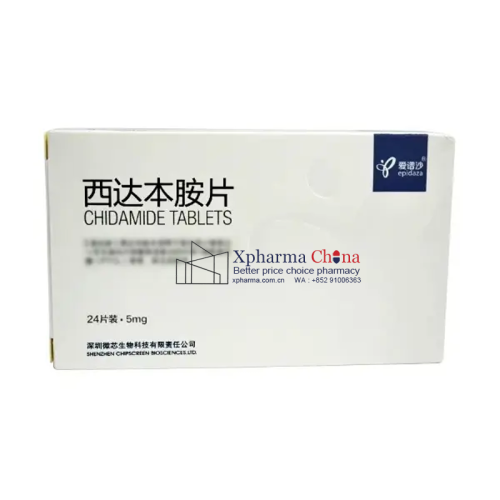
Epidaza Chidamide Tablets
Brand Name:爱谱沙 ®(Epidaza®)
Generic Name: Chidamide
Strength: 5 mg per tablet, 24 tablets per box
Manufacturer: Shenzhen Chipscreen Biosciences Co., Ltd.
Marketing Authorization Holder: Shenzhen Chipscreen Biosciences Co., Ltd.
Approval Date in China: December 23, 2014
Registration Number: 国药准字H20140129
Storage: Seal tightly, protect from light, store below 25°C. Refer to the full package insert for detailed storage specifications.
Price&Cost:Contact Us now for the best price of Chidamide(Epidaza)
Only logged in customers who have purchased this product may leave a review.


Reviews
There are no reviews yet.