1. Indications and Usage
Glycemic Control: Indicated as an adjunct to diet and exercise to improve glycemic control in adults with type 2 diabetes mellitus.
Target Population: Appropriate for patients who are already treated with a combination of repaglinide and metformin, or for patients whose diabetes is inadequately controlled on repaglinide alone or metformin alone.
Limitations of Use: This medication is not for the treatment of type 1 diabetes mellitus or diabetic ketoacidosis.
2. Dosage and Administration
Starting Dose: For patients inadequately controlled on metformin monotherapy, the recommended starting dose is 1 mg repaglinide/500 mg metformin twice daily. For patients inadequately controlled on repaglinide monotherapy, the starting dose of metformin should be 500 mg twice daily.
Administration: Tablets should be taken within 30 minutes before meals (usually 15 minutes prior). Patients who skip a meal must skip the scheduled dose for that meal.
Titration: Dosage should be individualized based on glycemic response and tolerability. Dose adjustments should be made gradually.
Maximum Dose: The maximum recommended daily dose is 10 mg repaglinide/2500 mg metformin, with no more than 4 mg repaglinide/1000 mg metformin taken per meal.
3. Mechanism of Action
Repaglinide: A meglitinide analog that stimulates insulin release from functioning pancreatic beta cells by closing ATP-dependent potassium channels, leading to cell depolarization and calcium influx. It acts rapidly to lower postprandial blood glucose.
Metformin Hydrochloride: A biguanide that decreases hepatic glucose production (gluconeogenesis), decreases intestinal absorption of glucose, and improves insulin sensitivity by increasing peripheral glucose uptake and utilization.
4. Safety and Warnings
Lactic Acidosis: A rare but serious and potentially fatal complication associated with metformin accumulation. Risk factors include renal impairment, sepsis, dehydration, excessive alcohol intake, and hepatic impairment. If suspected, the drug must be discontinued immediately.
Hypoglycemia: Repaglinide can cause hypoglycemia, which may be severe. The risk is increased in elderly, malnourished, or debilitated patients, and when combined with other glucose-lowering agents.
Renal Impairment: Renal function must be assessed prior to initiation and periodically thereafter. The drug is contraindicated in patients with an eGFR below 30 mL/min/1.73 m².
Iodinated Contrast Imaging: The drug should be temporarily discontinued at the time of or prior to imaging procedures involving iodinated contrast in patients with reduced renal function or other risk factors.
5. Adverse Reactions and Clinical Research
Common Adverse Reactions: Hypoglycemia is the most common adverse reaction associated with repaglinide. Gastrointestinal symptoms (such as diarrhea, nausea, and vomiting) are the most common adverse reactions associated with metformin.
Other Adverse Effects: Headache, upper respiratory tract infections, and back pain have been reported.
Clinical Findings: Clinical trials have demonstrated that the combination therapy provides superior glycemic control compared to monotherapy, with an adverse event profile consistent with the individual components.
6. Drug Interactions
Gemfibrozil: Concomitant use is strictly contraindicated as it significantly increases repaglinide plasma concentrations, leading to severe hypoglycemia.
Alcohol: Intake should be limited or avoided due to the increased risk of lactic acidosis and altered glycemic control.
Insulin and Sulfonylureas: Concurrent use may significantly increase the risk of hypoglycemia.
CYP2C8 and CYP3A4 Modulators: Drugs that inhibit (e.g., clarithromycin, ketoconazole) or induce (e.g., rifampin, carbamazepine) these enzymes can alter repaglinide exposure, requiring careful monitoring and dose adjustments.
Cationic Drugs: Drugs eliminated by renal tubular secretion (e.g., cimetidine, dolutegravir) may compete with metformin, potentially increasing metformin plasma levels.
7. Pharmaceutical Information
Active Ingredients: Repaglinide and Metformin Hydrochloride.
Strengths: Commonly available as Type Ⅰ (e.g., 1 mg repaglinide/500 mg metformin or 2 mg repaglinide/500 mg metformin per tablet).
Appearance: Film-coated tablets, typically white or off-white.
Storage: Store at controlled room temperature (20°C to 25°C) in a dry place, protected from light and moisture.
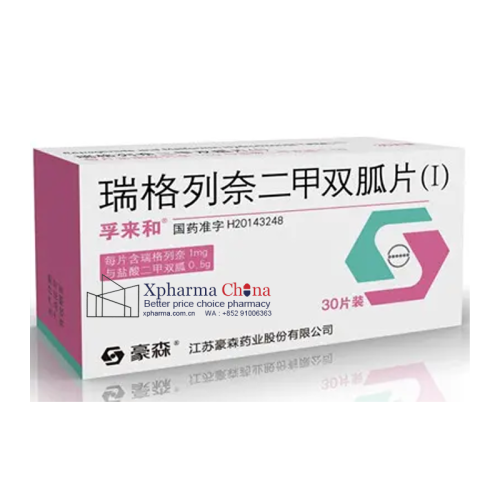
Fulaihe Repaglinide and Metformin Hydrochloride Tablets (Ⅰ)
Brand Name: 孚来和®(Fulaihe®)
Generic Name: Repaglinide and Metformin Hydrochloride
Strength: 1 mg Repaglinide and 0.5 g Metformin Hydrochloride per tablet, 30 tablets per box
Manufacturer: Jiangsu Hansoh Pharmaceutical Co., Ltd.
Marketing Authorization Holder: Jiangsu Hansoh Pharmaceutical Co., Ltd.
Approval Date in China: 2014‑05‑04
Registration Number: 国药准字H20143248
Storage: Store in a sealed, dry place.
Price&Cost:Contact Us now for the best price of Repaglinide and Metformin Hydrochloride(Fulaihe)
Only logged in customers who have purchased this product may leave a review.




Reviews
There are no reviews yet.