1. Indications and Usage
Narcolepsy: Treatment of adult patients with narcolepsy with or without cataplexy.
2. Dosage and Administration
Route of Administration: Oral administration ONLY.
Recommended Dosage: Starting dose is 8.9 mg once daily. The dose may be increased to 17.8 mg once daily depending on individual response. The maximum recommended daily dose is 17.8 mg.
Special Populations: For patients with moderate hepatic impairment (Child-Pugh B) or moderate-to-severe renal impairment, the maximum dose should not exceed 8.9 mg once daily.
Critical Administration Instructions:
Timing: Take at least one hour before or two hours after a meal.
Food Interaction: High-fat meals significantly increase drug exposure; strict adherence to fasting conditions is required.
Administration: Swallow tablets whole with water.
3. Mechanism of Action
H3 Receptor Antagonism: Pitolisant acts as an antagonist and inverse agonist at histamine H3 receptors.
Neurotransmission Modulation: By blocking H3 receptors, it enhances the release of histamine and other neurotransmitters (such as norepinephrine and serotonin) in the central nervous system.
Wakefulness Promotion: The increased histaminergic tone promotes wakefulness and reduces excessive daytime sleepiness associated with narcolepsy.
4. Safety and Warnings
Hepatotoxicity: Can cause liver injury. Liver function tests (LFTs) must be performed at baseline and monitored regularly during treatment.
Psychiatric Disorders: May worsen pre-existing psychiatric conditions (e.g., depression, anxiety).
Cardiovascular Effects: May cause moderate QTc prolongation. Avoid use in patients with known QTc prolongation or those taking other QTc-prolonging drugs.
Epilepsy: Use with caution in patients with a history of epilepsy, as it may increase the risk of seizures.
Contraceptive Efficacy: May reduce the effectiveness of hormonal contraceptives; alternative non-hormonal contraception is required.
5. Adverse Reactions and Clinical Research
Most Common Adverse Reactions: Insomnia, nausea, headache, and dizziness.
Laboratory Abnormalities: Elevations in alanine aminotransferase (ALT), aspartate aminotransferase (AST), and gamma-glutamyltransferase (gamma-GT) have been reported.
Clinical Research Highlights: Clinical trials demonstrated significant improvement in excessive daytime sleepiness (EDS) and cataplexy frequency compared to placebo.
6. Drug Interactions
CYP2D6 Inhibitors: Strong CYP2D6 inhibitors (e.g., paroxetine, fluoxetine) may increase pitolisant exposure; dose reduction of pitolisant may be necessary.
CYP2D6 Substrates: Narrow therapeutic index CYP2D6 substrates (e.g., flecainide, propafenone) should be used with caution.
CYP3A4 Modulators: Strong CYP3A4 inducers (e.g., rifampicin) may decrease efficacy.
QTc-Prolonging Drugs: Concomitant use with known QTc-prolonging drugs is contraindicated.
7. Pharmaceutical Information
Chemical Composition: Active Ingredient: Pitolisant Hydrochloride.
Appearance: White to off-white tablets.
Packaging: Blister packaging.
Storage: Store at room temperature; protect from moisture.
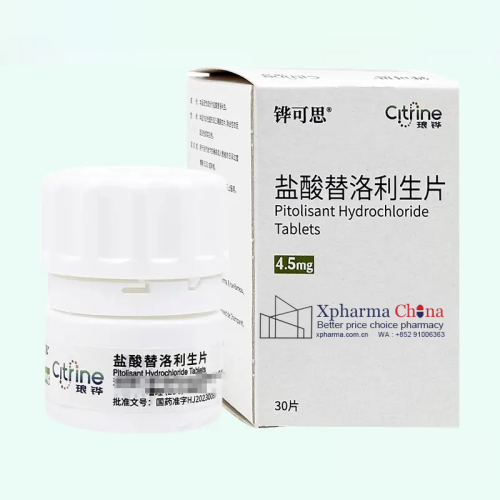
Huakesi Pitolisant Hydrochloride Tablets
Brand Name:铧可思 ®(Huakesi®)
Generic Name: Pitolisant Hydrochloride
Strength: 4.5 mg per tablet, 30 tablets per box
Manufacturer: Bioprojet Pharma
Marketing Authorization Holder: Citrine Therapeutics
Approval Date in China: June 30, 2023
Registration Number: 国药准字HJ20230087
Storage: Store at 20°C–25°C, with excursions permitted between 15°C and 30°C; keep tightly closed and protected from light and moisture. Refer to the full package insert for detailed storage specifications.
Price&Cost:Contact Us now for the best price of Pitolisant Hydrochloride(Huakesi)
Only logged in customers who have purchased this product may leave a review.
Reviews
There are no reviews yet.