
- Indications and Usage EGFR+ NSCLC: Indicated for the treatment of patients with locally advanced or metastatic non-small cell lung cancer (NSCLC) with epidermal growth factor receptor (EGFR) exon 19 deletion or exon 21 L858R substitution mutations, as determined by an approved test. Squamous NSCLC: Indicated for the treatment of patients with locally advanced or metastatic squamous non-small cell lung cancer (NSCLC) who have progressed on or following platinum-based chemotherapy.
- Dosage and Administration Recommended Dosage: 40 mg taken orally once daily. Administration: The tablets should be swallowed whole with water. Afatinib should not be taken with food; take at least 1 hour before or 3 hours after a meal. Dose Modifications: For adverse reactions, dosing may be interrupted, delayed, or reduced based on toxicity grade, with decrements of 10 mg (down to a minimum of 20 mg). If intolerable at 20 mg, permanently discontinue. Missed Dose: If a dose is missed, take as soon as possible on the same day. Do not take if it is within 8 hours of the next scheduled dose.
- Mechanism of Action Binding Nature: Afatinib is an irreversible inhibitor of ErbB family receptor tyrosine kinases, including EGFR (ErbB1), HER2 (ErbB2), and HER4 (ErbB3). Signaling Blockade: By forming a covalent bond with a cysteine residue in the ATP-binding pocket of these kinases, it blocks downstream signaling pathways (such as MAPK and PI3K), thereby inhibiting tumor cell proliferation and inducing apoptosis.
- Safety and Warnings Pulmonary Toxicity: Interstitial lung disease (ILD) and pulmonary fibrosis have been reported. If ILD is suspected, interrupt treatment immediately. If confirmed, permanently discontinue afatinib. Hepatotoxicity: Monitor liver function tests (ALT, AST, bilirubin) before initiation and periodically during therapy. Severe Diarrhea: Dehydration can occur. Aggressive management with antidiarrheals (e.g., loperamide) and fluid/electrolyte replacement is often necessary. Fetal Toxicity: Afatinib can cause fetal harm. Pregnant women should be advised of the potential risks.
- Adverse Reactions and Clinical Research Most Common Adverse Reactions: Diarrhea (including severe cases), rash and acne, stomatitis, paronychia, nausea, vomiting, and decreased appetite. Clinical Research: Pivotal clinical trials and real-world data have demonstrated significant improvements in progression-free survival compared to chemotherapy controls across the aforementioned patient populations.
- Drug Interactions P-gp Inhibitors/Inducers: Strong P-gp inhibitors (e.g., ketoconazole, verapamil) may increase afatinib exposure, while P-gp inducers may decrease exposure. Antacids: Simultaneous administration of antacids containing magnesium and aluminum may decrease the absorption of afatinib. Administration should be staggered; take afatinib at least 2 hours before or after antacids. CYP Enzymes: Afatinib is not metabolized by CYP enzymes; therefore, significant interactions via this pathway are unlikely.
- Pharmaceutical Information Chemical Composition: Active ingredient: Afatinib Dimaleate. Appearance: Round, film-coated tablets (colors vary by strength; e.g., light blue for 20 mg and 40 mg, dark blue for 30 mg). Storage: Store at 25°C (77°F); excursions permitted to 15–30°C (59–86°F). Keep in the original container to protect from moisture and light.
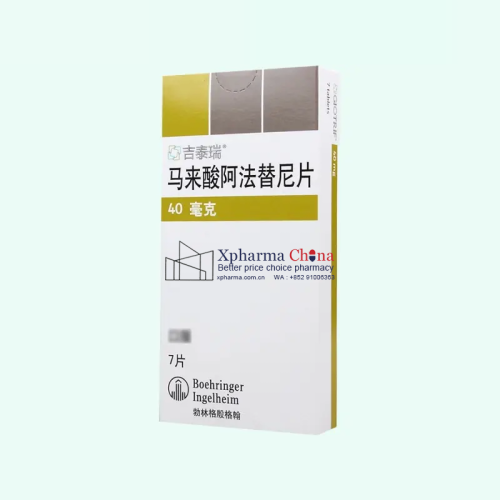
Jitairui Afatinib Dimaleate Tablets
Brand Name: 吉泰瑞 ®(Jitairui®)
Generic Name: Afatinib Dimaleate
Strength: 40 mg per tablet, 7 tablets per box
Manufacturer: Boehringer Ingelheim Pharma GmbH & Co. KG
Marketing Authorization Holder: Boehringer Ingelheim International GmbH
Approval Date in China: February 21, 2017
Registration Number: 国药准字HJ20170193
Storage: Store tightly sealed at temperature below 25°C, protect from light and moisture. Refer to the full package insert for detailed storage specifications.
Price&Cost:Contact Us now for the best price of Afatinib Dimaleate(Jitairui)
Only logged in customers who have purchased this product may leave a review.
Reviews
There are no reviews yet.