
1. Description
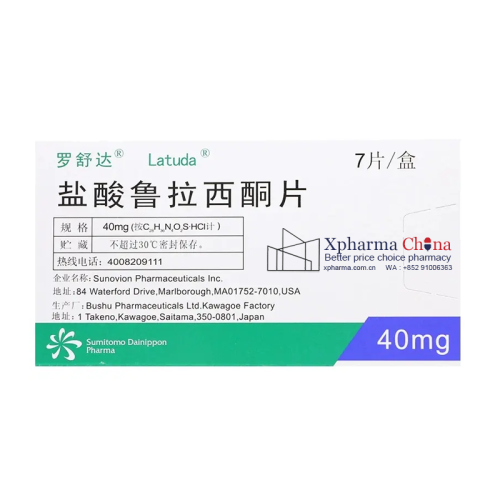
Latuda (lurasidone hydrochloride) is an atypical antipsychotic agent. The chemical name is (3aR,4S,7R,7aS)-2-[(1R,2R)-2-[4-(1,2-benzisothiazol-3-yl)piperazin-1-ylmethyl]cyclohexylmethyl]hexahydro-4,7-methano-2H-isoindole-1,3-dione hydrochloride. It is a white to off-white crystalline powder, freely soluble in water. Each tablet contains lurasidone hydrochloride equivalent to 20mg, 40mg, 60mg, 80mg or 120mg of lurasidone, with inactive ingredients including mannitol, pregelatinized starch, magnesium stearate, hypromellose, polyethylene glycol and titanium dioxide.
2. Indications
Schizophrenia: For the treatment of schizophrenia in adults and pediatric patients aged 13 years and older.
Major Depressive Disorder (MDD): As monotherapy for the treatment of major depressive episodes associated with bipolar I disorder (bipolar depression) in adults and pediatric patients aged 10 years and older.
Adjunctive use with lithium or valproate for the treatment of major depressive episodes associated with bipolar I disorder in adults.
3. Dosage and Administration
3.1 General Administration Instructions
Latuda is orally administered, and must be taken with food containing at least 350 calories to ensure adequate absorption, as food significantly increases its bioavailability. It should be swallowed whole with water, not chewed, crushed or split.
3.2 Dosage
Adults with Schizophrenia: The recommended starting dose is 40mg once daily. The maximum recommended dose is 160mg once daily. No initial dose titration is required.
Pediatric Patients (13-17 years) with Schizophrenia: The recommended starting dose is 20mg once daily. The maximum recommended dose is 80mg once daily.
Adults with Bipolar Depression (Monotherapy): The recommended starting dose is 20mg once daily. The therapeutic dose range is 20-120mg once daily, and the maximum recommended dose is 120mg once daily.
Adults with Bipolar Depression (Adjunctive Therapy with Lithium/Valproate): The recommended starting dose is 20mg once daily, which can be increased to a maximum of 120mg once daily.
Pediatric Patients (10-17 years) with Bipolar Depression: The recommended starting dose is 20mg once daily, with a maximum dose of 80mg once daily.
Renal Impairment: For patients with creatinine clearance <50 mL/min, the maximum recommended dose is 80mg once daily.
Hepatic Impairment: For patients with moderate to severe hepatic impairment (Child-Pugh Class B and C), the maximum recommended dose is 80mg once daily.
CYP3A4 Inhibitors: When co-administered with moderate CYP3A4 inhibitors (e.g. diltiazem), the dose of Latuda should be reduced to half of the original dose. Concomitant use with strong CYP3A4 inhibitors (e.g. ketoconazole, clarithromycin) is contraindicated.
CYP3A4 Inducers: Concomitant use with strong CYP3A4 inducers (e.g. rifampin, phenytoin) is not recommended, as it may significantly reduce the plasma concentration of lurasidone.
4. Warnings and Precautions
Increased Mortality in Elderly Patients with Dementia-Related Psychosis: Elderly patients with dementia-related psychosis treated with antipsychotic drugs have an increased risk of death. Latuda is not approved for the treatment of dementia-related psychosis.
Suicidal Thoughts and Behaviors: Antidepressant drugs increase the risk of suicidal thoughts and behaviors in children, adolescents, and young adults (aged 18-24 years) with major depressive disorder and other psychiatric disorders. All patients receiving Latuda should be closely monitored for clinical worsening, suicidality, and unusual changes in behavior, especially during the initial few months of treatment or at the time of dose adjustment.
Neuroleptic Malignant Syndrome (NMS): A potentially fatal symptom complex characterized by hyperpyrexia, muscle rigidity, altered mental status, and evidence of autonomic instability (irregular pulse or blood pressure, tachycardia, diaphoresis, cardiac arrhythmia). If this occurs, immediately discontinue Latuda and provide intensive symptomatic treatment and medical monitoring.
Tardive Dyskinesia (TD): A syndrome consisting of involuntary, dyskinetic movements that may be irreversible. The risk of developing TD increases with the duration of treatment and the total cumulative dose of antipsychotic drugs. If signs and symptoms of TD appear, consider discontinuing treatment.
Metabolic Changes: Atypical antipsychotic drugs have been associated with metabolic changes including hyperglycemia, diabetes mellitus, dyslipidemia, and weight gain. Patients should undergo regular monitoring of fasting blood glucose, lipid profiles, and body weight during treatment.
Leukopenia, Neutropenia, and Agranulocytosis: Cases of leukopenia, neutropenia, and agranulocytosis have been reported with antipsychotic agents. Patients with a pre-existing low white blood cell count (WBC) or a history of drug-induced leukopenia/neutropenia should have their complete blood count (CBC) monitored frequently during the first few months of treatment.
Orthostatic Hypotension: Latuda may induce orthostatic hypotension associated with dizziness, tachycardia, and syncope, especially during the initial dose-titration period. Patients with known cardiovascular disease, cerebrovascular disease, or conditions that predispose them to hypotension should be monitored carefully.
Seizures: Latuda should be used with caution in patients with a history of seizures or conditions that potentially lower the seizure threshold.
5. Contraindications
Hypersensitivity to lurasidone or any of the excipients in the formulation. Reactions such as anaphylaxis, angioedema, urticaria, and pruritus have been reported.
Concomitant administration with strong CYP3A4 inhibitors (e.g. ketoconazole, itraconazole, clarithromycin, ritonavir, nelfinavir).
Concomitant administration with strong CYP3A4 inducers (e.g. rifampin, carbamazepine, phenobarbital, St. John's Wort).
6. Adverse Reactions
The most commonly reported adverse reactions (incidence ≥5% and at least twice the rate of placebo) across clinical trials are:
Nervous System: Somnolence, akathisia, extrapyramidal symptoms (tremor, dystonia, parkinsonism), restlessness, dizziness.
Gastrointestinal System: Nausea, vomiting, dyspepsia, diarrhea.
Musculoskeletal and Connective Tissue: Back pain, pain in extremity.
Metabolism and Nutrition: Decreased appetite.
Psychiatric Disorders: Insomnia, anxiety.
Less common but serious adverse reactions include cerebrovascular adverse events (stroke, transient ischemic attack) in elderly dementia patients, QT prolongation, and priapism.
7. Drug Interactions
CYP3A4 Inhibitors: Strong CYP3A4 inhibitors significantly increase lurasidone plasma levels, leading to increased risk of adverse reactions, so co-administration is contraindicated. Moderate CYP3A4 inhibitors (e.g. diltiazem, fluconazole) increase lurasidone exposure by approximately 2-fold, requiring a 50% dose reduction of Latuda.
CYP3A4 Inducers: Strong CYP3A4 inducers can markedly reduce lurasidone plasma concentration, potentially leading to loss of therapeutic efficacy, so concomitant use is not recommended.
Centrally Acting Drugs: Due to its primary central nervous system effects, Latuda should be used with caution in combination with other centrally acting drugs and alcohol. It may enhance the effects of certain antihypertensive agents due to its alpha-adrenergic blocking properties.
Dopamine Agonists: Latuda may antagonize the effects of dopamine agonists such as levodopa and pramipexole, leading to reduced therapeutic efficacy of these agents.
8. Use in Specific Populations
Pregnancy: There are no adequate and well-controlled studies in pregnant women. Latuda should be used during pregnancy only if the potential benefit justifies the potential risk to the fetus. Neonates exposed to antipsychotic drugs during the third trimester of pregnancy are at risk for extrapyramidal and/or withdrawal symptoms.
Lactation: Lurasidone is excreted in human milk. A decision should be made whether to discontinue nursing or discontinue the drug, taking into account the importance of the drug to the mother.
Pediatric Use: Safety and effectiveness have been established for schizophrenia in patients aged 13 years and older, and for bipolar depression in patients aged 10 years and older. Safety and effectiveness in pediatric patients below these age groups have not been established.
Geriatric Use: Clinical studies of Latuda did not include sufficient numbers of subjects aged 65 and over to determine whether they respond differently from younger subjects. Elderly patients should be dosed cautiously, considering the higher frequency of decreased hepatic, renal, or cardiac function, and of concomitant disease or other drug therapy. Latuda is not approved for the treatment of dementia-related psychosis.
Patients with Renal Impairment: Dose adjustment is required for patients with creatinine clearance <50 mL/min, as renal excretion is a minor elimination pathway, but exposure to lurasidone is increased in renally impaired patients.



Reviews
There are no reviews yet.