
1. Indications and Usage
Hypokalemia: Treatment of potassium deficiency and prevention of its occurrence (e.g., in patients on thiazide diuretics).
Cardiac Arrhythmias: Adjunctive therapy in patients with cardiac arrhythmias known to be caused by hypokalemia (e.g., digitalis-induced arrhythmias).
2. Dosage and Administration
Administration: Swallow sustained-release tablets whole; do not crush, chew, or divide them as this causes rapid release and increases the risk of GI ulceration. Usually taken after meals with a full glass of water.
Maintenance Dosage: The usual dosage for adults is one tablet (typically 600 mg) once or twice daily, though dosage must be individualized.
Severe Deficiency: In cases of severe hypokalemia, oral supplementation may be combined with intravenous potassium administration under close monitoring.
3. Mechanism of Action
Potassium Supplementation: Provides potassium ions essential for intracellular enzymatic processes, nerve impulse conduction, muscle contraction, and maintenance of cellular osmotic pressure.
4. Safety and Warnings
Hyperkalemia: The most serious risk. Patients with renal impairment, heart failure, or those taking ACE inhibitors, ARBs, or potassium-sparing diuretics are at high risk.
Gastrointestinal Lesions: Sustained-release formulations can cause small bowel ulceration, obstruction, or bleeding.
Contraindications: Contraindicated in patients with hyperkalemia, severe renal impairment (anuria), untreated Addison’s disease, or acute dehydration.
5. Adverse Reactions and Clinical Research
Common Adverse Reactions: Nausea, vomiting, abdominal pain, diarrhea, and flatulence.
Hyperkalemia Symptoms: Muscle weakness, paresthesia, and cardiac arrhythmias (e.g., bradycardia, heart block).
Other Effects: Thirst, dry mouth, and skin rash.
Clinical Findings: Clinical studies demonstrate efficacy in correcting serum potassium levels and preventing arrhythmias, but with a noted risk of GI intolerance.
6. Drug Interactions
ACE Inhibitors / ARBs / K+-Sparing Diuretics: Increased risk of hyperkalemia (e.g., lisinopril, losartan, spironolactone).
NSAIDs: May decrease renal function and increase hyperkalemia risk.
Digoxin: Hypokalemia increases digoxin toxicity; correcting potassium may reduce this risk, but hyperkalemia may also potentiate toxicity.
Succinylcholine: Hyperkalemia may increase the risk of arrhythmias associated with succinylcholine anesthesia.
7. Pharmaceutical Information
Active Ingredient: Potassium Chloride.
Strengths: Typically available as 595 mg, 600 mg, or 750 mg sustained-release tablets.
Appearance: White or off-white tablets, sometimes entered with a colored coating or marking.
Storage: Store at controlled room temperature (20°C–25°C) in a tight, light-resistant container.
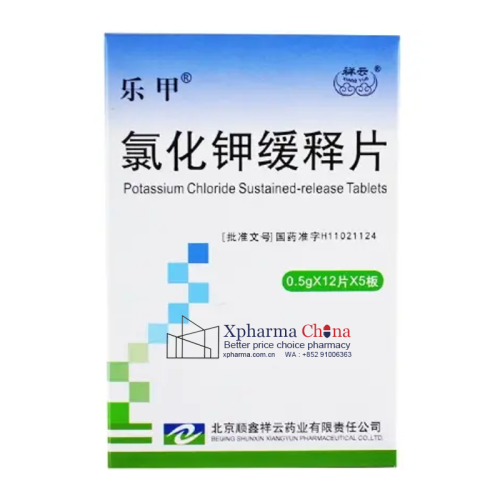
Lejia Potassium Chloride Sustained‑release Tablets
Brand Name: 乐甲®(Lejia®)
Generic Name: Potassium Chloride
Strength: 0.5 g per tablet, 60 tablets per box
Manufacturer: Beijing Shunxin Xiangyun Pharmaceutical Co., Ltd.
Marketing Authorization Holder: Beijing Shunxin Xiangyun Pharmaceutical Co., Ltd.
Approval Date in China: 2002‑05‑24
Registration Number: 国药准字 H11021124
Storage: Store in a sealed, dry place, protected from light.
Price&Cost:Contact Us now for the best price of Potassium Chloride(Lejia)
Only logged in customers who have purchased this product may leave a review.

Reviews
There are no reviews yet.