1. Indications and Usage
Respiratory Tract Infections: Treatment of otitis media, pharyngitis, tonsillitis, bronchitis, and pneumonia caused by susceptible bacteria.
Urinary Tract Infections: Treatment of uncomplicated cystitis and pyelonephritis.
Skin and Soft Tissue Infections: Treatment of infections of the skin and soft tissue.
2. Dosage and Administration
Adults: The usual dosage is 250 mg every 8 hours. For severe infections, 500 mg every 12 hours may be used.
Pediatrics: The usual dosage is 20 mg/kg/day divided into three equal doses. For severe infections, the dosage may be increased to 40 mg/kg/day.
Renal Impairment: Dosage and frequency should be adjusted based on creatinine clearance.
Administration: The capsules should be taken on an empty stomach as food can delay absorption, although milk does not affect absorption.
3. Mechanism of Action
Cell Wall Inhibition: Cefaclor is a bactericidal agent that inhibits bacterial cell wall synthesis by binding to penicillin-binding proteins (PBPs).
Spectrum: It demonstrates activity against many gram-positive and gram-negative bacteria and is stable against many beta-lactamases.
4. Safety and Warnings
Hypersensitivity: Use with caution in patients with a history of penicillin allergy due to potential cross-reactivity.
Serum Sickness-like Reaction: This reaction, characterized by rash, fever, and joint pain, is more common in children.
Pseudomembranous Colitis: Broad-spectrum antibiotics may cause pseudomembranous colitis; use with caution in patients with a history of gastrointestinal disease.
Renal and Hepatic Function: Use with caution in patients with severe renal impairment or liver damage.
5. Adverse Reactions and Clinical Research
Common: Gastrointestinal symptoms such as diarrhea, nausea, vomiting, and stomach discomfort are the most frequently reported.
Serious: Hypersensitivity reactions (including serum sickness-like reactions in children), transient elevation of liver enzymes, and eosinophilia.
Clinical Research: Clinical trials have demonstrated the efficacy and safety of cefaclor in treating common community-acquired infections.
6. Drug Interactions
Probenecid: Can delay the renal excretion of cefaclor, increasing blood concentrations and half-life.
Aminoglycosides and Loop Diuretics: Concomitant use may enhance the risk of nephrotoxicity.
Warfarin: May enhance the anticoagulant effect; prothrombin time should be monitored.
7. Pharmaceutical Information
Active Ingredient: Cefaclor (as monohydrate).
Excipients: The capsule contains standard excipients such as magnesium stearate and talc.
Appearance: Hard gelatin capsules containing white or off-white powder or granules.
Storage: Store in a well-closed container, protected from light and moisture.
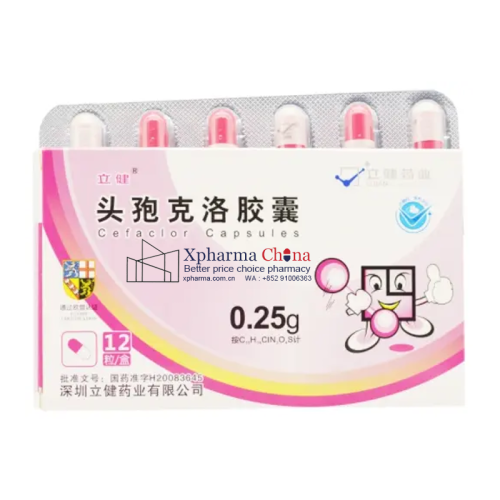
Lijian Cefaclor Capsules
Brand Name: 立健®(Lijian®)
Generic Name: Cefaclor
Strength: 0.25 g per capsule, 12 capsules per box
Manufacturer: Shenzhen Lijian Pharmaceutical Co., Ltd.
Marketing Authorization Holder: Shenzhen Lijian Pharmaceutical Co., Ltd.
Approval Date in China: 2008
Registration Number: 国药准字H20083645
Storage: Keep tightly sealed, store in a cool, dry place away from light and moisture; keep out of reach of children, follow storage instructions in the package insert
Price&Cost:Contact Us now for the best price of Cefaclor(Lijian)
Only logged in customers who have purchased this product may leave a review.

Reviews
There are no reviews yet.