
1. Indications and Usage
Therapeutic Use: Treatment of moderate to severe infections caused by susceptible bacteria, including respiratory tract, ear, nose, and throat infections; urinary tract infections; skin and soft tissue infections; bone and joint infections; gynecological infections; gonorrhea; and sepsis or meningitis.
Prophylactic Use: Prophylaxis for infections in abdominal, pelvic, orthopedic, cardiac, pulmonary, esophageal, and total joint replacement surgeries.
2. Dosage and Administration
Adults: For general or moderate infections, 0.75 g every 8 hours. For severe infections, 1.5 g every 8 hours. For bacterial meningitis, 1.5 g every 6 hours.
Pediatrics: 30–100 mg/kg/day divided into 3–4 doses.
Renal Impairment: Dosage must be adjusted based on creatinine clearance (e.g., if Clcr is 10–20 mL/min, dose 0.75 g every 12 hours).
Administration: Administered via intramuscular injection, intravenous injection, or intravenous infusion.
3. Mechanism of Action
Cell Wall Inhibition: Cefuroxime is a bactericidal agent that inhibits bacterial cell wall synthesis by binding to penicillin-binding proteins (PBPs).
Spectrum: It demonstrates enhanced activity against gram-positive bacteria and broader activity against gram-negative bacteria compared to first-generation cephalosporins.
4. Safety and Warnings
Hypersensitivity: Severe hypersensitivity reactions have been reported. Use with caution in patients with a history of penicillin allergy.
Renal Toxicity: Concomitant use with loop diuretics or aminoglycosides may increase the risk of nephrotoxicity.
CNS Effects: In patients with renal failure, high doses may lead to central nervous system toxicity.
Pregnancy: Use during pregnancy only if clearly necessary.
5. Adverse Reactions and Clinical Research
Common: Pain at the injection site, transient elevation of liver enzymes, and mild gastrointestinal distress.
Serious: Severe hypersensitivity reactions (including anaphylaxis), pseudomembranous colitis, and acute renal failure.
Clinical Research: Pivotal clinical trials have demonstrated high efficacy and safety in treating community-acquired surgical and medical infections.
6. Drug Interactions
Probenecid: Can delay the renal excretion of cefuroxime, increasing blood concentrations and half-life.
Aminoglycosides: Concomitant use may enhance the risk of nephrotoxicity.
Loop Diuretics: May increase the potential for kidney damage when used with cefuroxime.
7. Pharmaceutical Information
Active Ingredient: Cefuroxime Sodium.
Excipients: Sodium acetate and/or acetic acid.
Appearance: White to slightly yellow powder or crystalline powder.
Storage: Store in a well-closed container, protected from light and moisture.
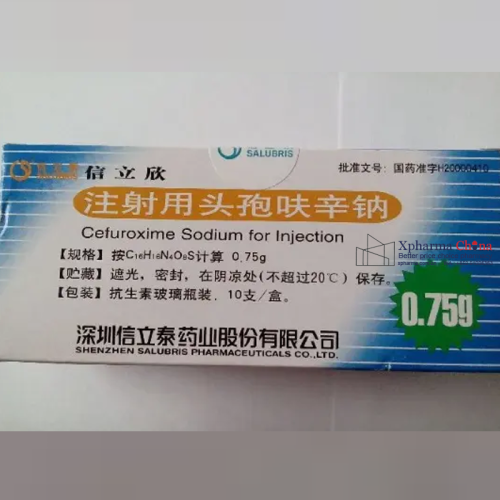
Xinlixin Cefuroxime Sodium for Injection
Brand Name: 信立欣 ®(Xinlixin®)
Generic Name: Cefuroxime Sodium
Strength: 0.75 g per vial (calculated as C₁₆H₁₆N₄O₈S), 10 vials per box
Manufacturer: Shenzhen Salubris Pharmaceuticals Co., Ltd.
Marketing Authorization Holder: Shenzhen Salubris Pharmaceuticals Co., Ltd.
Approval Date in China: 2000
Registration Number: 国药准字H20000410
Storage: Seal tightly, store in a cool place below 20 ℃ and protected from light; keep out of reach of children, follow full storage specifications in the package insert
Price&Cost:Contact Us now for the best price of Cefuroxime Sodium(Xinlixin)
Only logged in customers who have purchased this product may leave a review.

Reviews
There are no reviews yet.