1. Indications and Usage
Indicated for the treatment of schizophrenia.
2. Dosage and Administration
Initial Dosage: Generally, adults are started on 4 mg twice daily after meals.
Maintenance Dosage: The dose can be titrated based on age and symptoms to a maintenance level of 8 to 16 mg per day. The daily dose should not exceed 24 mg.
Administration: Absorption is significantly affected by food. To ensure efficacy and safety, the tablets should be administered after meals. The dosage should be adjusted while monitoring the patient’s response, keeping the minimum effective dose in mind.
3. Mechanism of Action
Blonanserin acts primarily as a potent antagonist at dopamine D2 and D3 receptors in the brain. Unlike some other antipsychotics, it demonstrates very weak affinity for muscarinic cholinergic and histamine H1 receptors, which helps minimize certain anticholinergic and sedative side effects. It also exhibits moderate antagonistic activity at 5-HT2A receptors, contributing to its efficacy in treating both positive and negative symptoms of schizophrenia.
4. Safety and Warnings
Neuroleptic Malignant Syndrome (NMS): A potentially fatal condition characterized by fever, severe muscle rigidity, altered mental status, and autonomic instability. Immediate discontinuation and supportive care are required if NMS occurs.
Tardive Dyskinesia: Long-term use may cause involuntary movements, particularly of the face and mouth. If these occur, dose reduction or discontinuation should be considered.
Extrapyramidal Symptoms: Commonly includes parkinsonism (tremor, bradykinesia, sialorrhea) and akathisia.
Hyperprolactinemia: Can cause elevated prolactin levels due to D2 receptor blockade in the pituitary gland.
Metabolic and Cardiovascular: Monitor for hyperglycemia, diabetes, orthostatic hypotension, and potential thromboembolic events.
Pseudo-paralytic Ileus: May cause severe constipation or intestinal paralysis.
5. Adverse Reactions and Clinical Research
Adverse Reactions: The most frequent adverse reactions include extrapyramidal symptoms (e.g., tremor, bradykinesia, sialorrhea), akathisia, insomnia, and elevated prolactin levels. Other reported reactions include somnolence, anxiety, and elevated liver enzymes.
Clinical Research: Clinical trials have demonstrated that blonanserin is effective in improving both positive symptoms (hallucinations, delusions) and negative symptoms (social withdrawal, affective flattening) of schizophrenia.
6. Drug Interactions
CYP2D6 Inhibitors: Drugs like fluoxetine or paroxetine may increase blonanserin plasma levels, potentially increasing the risk of adverse effects.
CYP3A4 Inhibitors: Drugs like ketoconazole may also increase blonanserin exposure.
Antihypertensives: Concurrent use may enhance the hypotensive effect, increasing the risk of orthostatic hypotension.
Anticholinergics: May exacerbate constipation and the risk of pseudo-paralytic ileus.
7. Pharmaceutical Information
Composition: The active ingredient is blonanserin. Excipients include lactose, microcrystalline cellulose, and magnesium stearate.
Appearance: White tablets, available in 2 mg, 4 mg, and 8 mg strengths.
Storage: Store at controlled room temperature, protected from light and moisture.
Lonasen Blonanserin Tablets
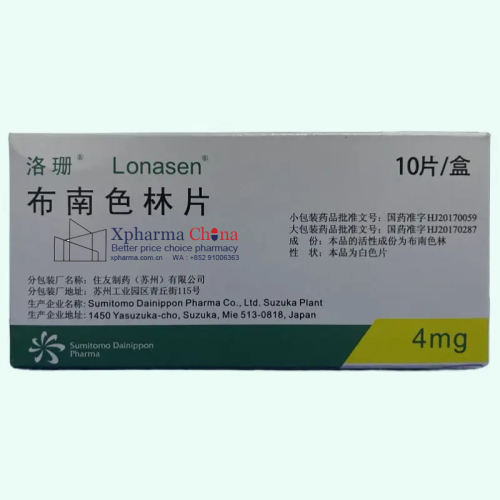
Brand Name: 洛珊 ®(Lonasen®)
Generic Name: Blonanserin
Strength: 4 mg per tablet, 10 tablets per box
Manufacturer: Sumitomo Dainippon Pharma Co., Ltd. Suzuka Plant
Marketing Authorization Holder: Sumitomo Pharma (Suzhou) Co., Ltd.
Approval Date in China: February 20, 2017
Registration Number: 国药准字HJ20170059
Storage: Store tightly sealed at a temperature not exceeding 25°C, protect from moisture and direct sunlight. Keep out of reach of children. Refer to the full package insert for detailed storage specifications.
Price&Cost:Contact Us now for the best price of Blonanserin(Lonasen)
Only logged in customers who have purchased this product may leave a review.

Reviews
There are no reviews yet.