
1. Indications and Usage
Ovarian Cancer: Indicated for adult patients with deleterious or suspected deleterious BRCA-mutated advanced ovarian cancer who have been treated with three or more lines of chemotherapy.
Breast Cancer: Indicated for adult patients with deleterious or suspected deleterious germline BRCA-mutated, HER2-negative advanced breast cancer who have received prior chemotherapy.
Prostate Cancer: Indicated for adult patients with deleterious or suspected deleterious BRCA-mutated metastatic castration-resistant prostate cancer previously treated with androgen receptor pathway inhibition.
Pancreatic Cancer: Indicated for adult patients with deleterious or suspected deleterious BRCA-mutated metastatic pancreatic adenocarcinoma previously treated with a platinum-based regimen.
2. Dosage and Administration
Recommended Dose: The recommended oral dosage is 400 mg (two 200 mg tablets) taken twice daily.
Administration: Tablets must be swallowed whole and cannot be chewed, crushed, or dissolved. They can be taken with or without food.
Dose Modifications: For adverse reactions, the dose may be interrupted or reduced to 300 mg twice daily, and further to 200 mg twice daily.
Missed Dose: If a dose is missed, it should not be replaced. The patient should resume the normal dosing schedule at the next scheduled time.
3. Mechanism of Action
PARP Inhibition: Olaparib selectively inhibits poly (ADP-ribose) polymerase (PARP) enzymes (PARP-1 and PARP-2).
Synthetic Lethality: In cells with defective homologous recombination repair (such as those with BRCA mutations), PARP inhibition prevents the repair of single-strand DNA breaks, leading to double-strand breaks and ultimately cell death.
4. Safety and Warnings
Myelodysplastic Syndrome/Acute Myeloid Leukemia: MDS and AML have been reported in patients treated with PARP inhibitors.
Pulmonary Interstitial Disease: Pneumonitis, including fatal cases, has been reported and requires prompt evaluation if respiratory symptoms occur.
Embryo-Fetal Toxicity: Based on animal studies, the drug can cause fetal harm.
5. Adverse Reactions and Clinical Research
Adverse Reactions: Common adverse reactions include nausea, fatigue, anemia, vomiting, abdominal pain, diarrhea, headache, and peripheral edema.
Clinical Research: Clinical trials have demonstrated that olaparib significantly improves progression-free survival across multiple tumor types harboring BRCA mutations.
6. Drug Interactions
CYP3A Inhibitors: Strong or moderate CYP3A inhibitors may increase olaparib plasma concentrations; dose reduction or avoidance is recommended.
CYP3A Inducers: Strong or moderate CYP3A inducers may decrease olaparib efficacy and should be avoided.
P-gp Inhibitors: Concomitant use with P-gp inhibitors may increase exposure to olaparib.
7. Pharmaceutical Information
Composition: The active ingredient is olaparib.
Appearance: Available as film-coated tablets.
Storage: Store at controlled room temperature and protect from moisture.
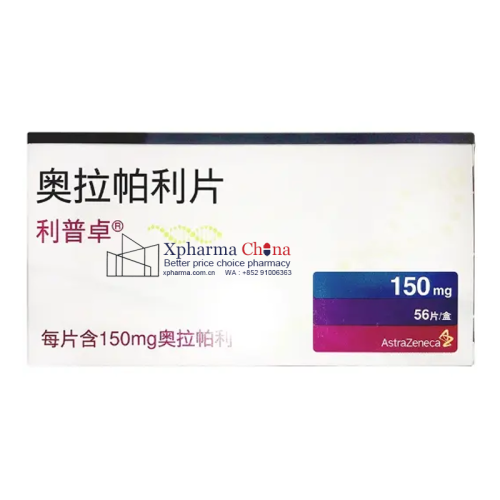
Lynparza Olaparib Tablets
Brand Name: 利普卓 ®(Lynparza®)
Generic Name: Olaparib
Strength: 150 mg per tablet, 56 tablets per box
Manufacturer: AstraZeneca AB
Marketing Authorization Holder: AstraZeneca Pharmaceutical (Qingdao) Co., Ltd.
Approval Date in China: August 23, 2018
Registration Number: 国药准字HJ20180049
Storage: Store below 30°C, keep dry and away from direct light. Keep out of sight and reach of children. Refer to the full package insert for detailed storage specifications.
Price&Cost:Contact Us now for the best price of Olaparib(Lynparza)
Only logged in customers who have purchased this product may leave a review.



Reviews
There are no reviews yet.