- Indications and Usage This injection is indicated as an adjunctive therapy for ischemic cardiovascular and cerebrovascular diseases, such as coronary heart disease, angina pectoris, and myocardial infarction. It is also used for cerebral insufficiency, cerebral thrombosis, embolism, peripheral circulatory disorders, and as an adjunctive treatment for hypertension and hyperlipidemia.
- Dosage and Administration Intramuscular Injection: 40–80 mg per administration, once daily. Intravenous Injection: 40–80 mg diluted in 20 mL of 25% glucose injection. Intravenous Drip: 40–80 mg diluted in 250–500 mL of 5% glucose injection or 0.9% sodium chloride injection, once daily.
- Mechanism of Action The drug dilates coronary arteries, increases coronary blood flow, and improves collateral circulation in ischemic myocardium. It reduces myocardial oxygen consumption, inhibits platelet aggregation, prevents thrombosis, reduces oxidative stress and reperfusion injury, and protects against hepatic injury.
- Safety and Warnings Hypersensitivity: Contraindicated in patients with known hypersensitivity to the drug. Rare cases of rash, fever, anaphylaxis, and anaphylactic shock have been reported. Incompatibility: The red solution should preferably be administered alone. It is incompatible with many other drugs and heavy metal ions, which can cause precipitation or turbidity. Administration: Intramuscular injection may cause pain at the injection site. If turbidity or precipitation occurs after dilution, administration must be stopped immediately.
- Adverse Reactions and Clinical Research Common Adverse Reactions: Occasional skin rashes, fever, chills, hypotensive shock, pain, phlebitis, nausea, and abdominal pain. Clinical Research: Clinical studies indicate that this drug improves microcirculation and provides cardioprotection with a generally favorable safety profile.
- Drug Interactions Chemical Incompatibility: Do not co-administer with bromhexine, cimetidine, famotidine, magnesium sulfate, clindamycin, quinolone antibiotics, aminoglycoside antibiotics, or drugs containing heavy metal ions (magnesium, iron, calcium, copper, zinc), as this causes turbidity or precipitation. Pharmacodynamic Interactions: Due to its antiplatelet effects, caution is advised when used concurrently with other anticoagulants or antiplatelet agents.
- Pharmaceutical Information Composition: The active ingredient is sodium tanshinone IIA sulfonate. Common excipients include glucose and water for injection. Appearance: The solution is a red, clear liquid. Storage: Protect from light and store in a tightly closed container.
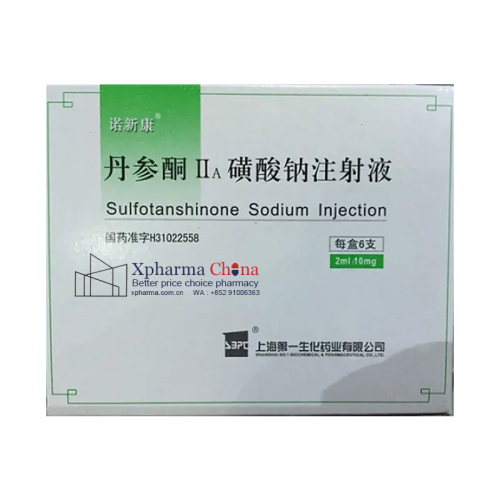
Nuoxinkang Sulfotanshinone Sodium Injection
Brand Name: 诺新康 ®(Nuoxinkang®)
Generic Name: Sulfotanshinone Sodium
Strength: 10 mg per 2 mL vial, 6 vials per box
Manufacturer: Shanghai SPH No.1 Biochemical & Pharmaceutical Co., Ltd.
Marketing Authorization Holder: Shanghai SPH No.1 Biochemical & Pharmaceutical Co., Ltd.
Approval Date in China: December 27, 2006
Registration Number: 国药准字H31022558
Storage: Seal tightly, store protected from light at room temperature. Keep out of reach of children. Refer to the full package insert for detailed storage specifications.
Price&Cost:Contact Us now for the best price of Sulfotanshinone Sodium(Nuoxinkang)
Only logged in customers who have purchased this product may leave a review.
Reviews
There are no reviews yet.