
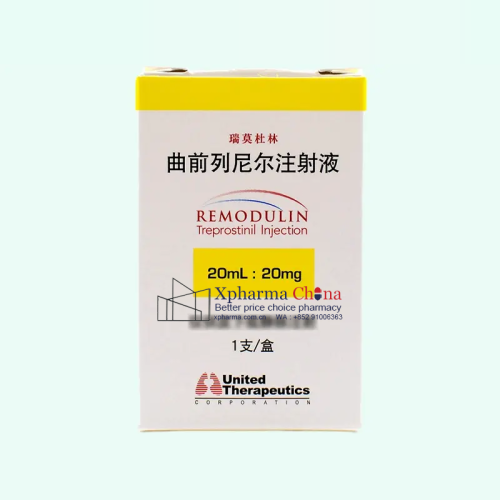
1. Description
Remodulin (treprostinil) is a synthetic prostacyclin analog, formulated as a sterile, clear, colorless to light yellow solution for continuous subcutaneous or intravenous infusion. Chemically, it is (1R,2R,3aS,9aS)-[[2,3,3a,4,9,9a-hexahydro-2-hydroxy-1-[(3S)-3-hydroxyoctyl]-1H-benz[f]inden-5-yl]oxy]acetic acid. It is supplied in multiple vial strengths (1mg/mL, 2.5mg/mL, 5mg/mL, 10mg/mL), with excipients including sodium chloride, sodium citrate, sodium hydroxide, hydrochloric acid and water for injection.
2. Indications
For the treatment of pulmonary arterial hypertension (PAH, WHO Group 1) in patients with NYHA Class II-IV symptoms, to improve exercise capacity, reduce clinical deterioration, and relieve associated symptoms such as dyspnea at rest or with minimal exertion. It is also indicated for patients who are transitioning from epoprostenol (prostacyclin) therapy due to intolerance or administration limitations.
3. Dosage and Administration
3.1 Administration Instructions
Remodulin is designed for continuous chronic infusion, delivered via a portable infusion pump. It can be administered subcutaneously (via a self-inserted subcutaneous catheter) or intravenously (via a central venous catheter, if subcutaneous infusion is not tolerated). It must not be administered as an IV bolus, and the solution should be inspected visually for particulate matter and discoloration prior to administration.
3.2 Dosage
Initial Dose: The recommended starting infusion rate is 1.25 ng/kg/min. If this dose is not tolerated due to systemic side effects, reduce the rate to 0.625 ng/kg/min.
Titration: Adjust the infusion rate in increments of no more than 1.25 ng/kg/min per week for the first 4 weeks, then 2.5 ng/kg/min per week thereafter, based on clinical response and tolerability.
Maintenance Dose: The usual effective long-term dose ranges from 20 ng/kg/min to 40 ng/kg/min; doses above 100 ng/kg/min are not routinely recommended due to limited safety data.
Renal/Hepatic Impairment: Reduce the initial and titration doses by 50-75% in patients with moderate to severe hepatic or renal impairment, to avoid drug accumulation.
4. Warnings and Precautions
Infusion Site Reactions: Subcutaneous administration commonly causes severe pain, erythema, bruising or induration at the catheter site, which may require symptomatic management or temporary switch to intravenous infusion.
Hypotension Risk: Treprostinil induces systemic vasodilation, which can lead to symptomatic hypotension, especially in patients with low baseline blood volume or concurrent antihypertensive therapy.
Rebound Pulmonary Hypertension: Abrupt interruption of infusion may cause rebound PAH exacerbation, leading to dyspnea, dizziness and even death. Never stop the infusion suddenly.
Bleeding Risk: As a prostacyclin analog, it inhibits platelet aggregation, increasing the risk of hemorrhage, especially in patients on anticoagulants.
Fluid Retention: Dose-dependent fluid retention, sometimes requiring diuretic therapy, may occur within the first weeks of treatment.
5. Contraindications
Severe hypersensitivity to treprostinil or any formulation excipients, presenting as anaphylaxis, angioedema or generalized urticaria.
Patients with severe decompensated heart failure originating from severe left ventricular systolic dysfunction, where vasodilator therapy may worsen cardiac output.
Concomitant use with other prostacyclin analogs via the same infusion line, to avoid unexpected drug overdose.
6. Adverse Reactions
Very Common (≥ 20%): Infusion site pain/redness, headache, diarrhea, nausea, jaw pain, vasodilation (flushing).
Common (5-20%): Hypotension, edema, rash, dizziness, pruritus, pain in extremity.
Serious Adverse Reactions: Severe hypotension, hemorrhage (including gastrointestinal and intracranial bleeding), rebound pulmonary hypertension after sudden discontinuation, sepsis related to intravenous catheter infection.
7. Drug Interactions
Antihypertensive Agents / Diuretics: Concomitant use may enhance the vasodilatory effect of Remodulin, significantly increasing the risk of symptomatic hypotension. Close blood pressure monitoring and dose adjustment are required.
Anticoagulants / Antiplatelet Drugs: Additive anti-aggregation effect increases bleeding risk; monitor coagulation indices regularly when co-administered with warfarin, aspirin or clopidogrel.
CYP2C8 Inhibitors: Strong CYP2C8 inhibitors (e.g. gemfibrozil) reduce treprostinil clearance, elevating its plasma concentration and increasing toxicity risk. Dose reduction is mandatory.
Sympathomimetic Agents: May partially counteract the vasodilatory effect of treprostinil, leading to reduced therapeutic efficacy for PAH.
8. Use in Specific Populations
Pregnancy: Use only if the potential clinical benefit justifies the potential risk to the fetus. No adequate and well-controlled human studies exist; animal studies show no direct teratogenicity but dose-related maternal toxicity.
Lactation: It is unknown whether treprostinil is excreted in human breast milk. Breastfeeding is not recommended during treatment, to avoid potential hypotension and diarrhea in nursing infants.
Pediatric Use: Safety and efficacy in patients under 16 years of age have not been established. Limited data show similar pharmacokinetics to adults, but dose titration must be done with extreme caution.
Geriatric Use: Elderly patients (≥ 65 years) may have higher sensitivity to hypotension and systemic side effects. Initiate treatment at a lower starting dose and monitor closely during titration.
Renal/Hepatic Impairment: Drug clearance is significantly reduced in moderate to severe impairment. Reduce initial dose and slow down the titration speed to prevent drug accumulation and adverse events.

Reviews
There are no reviews yet.